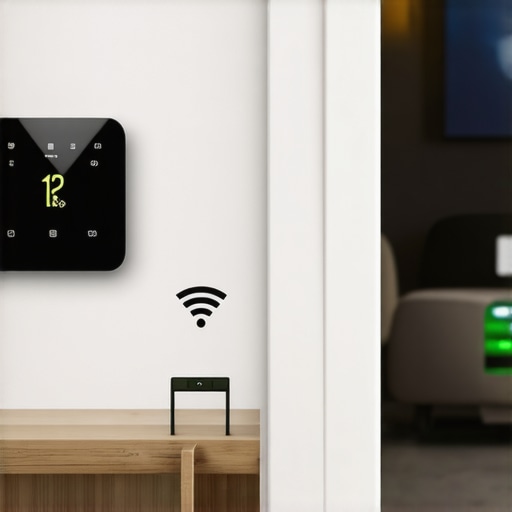
The Relentless Clicking of a Ghost in the Machine
I remember a call back in ’98, standing in a crawlspace in the middle of a Chicago blizzard, shivering while my lead tech, a chain-smoking legend we called ‘Iron Lung’ Larry, stared at a primitive mercury bulb thermostat. He grabbed me by the collar and barked, ‘You can’t cool what you can’t touch, and you can’t heat what you can’t control! The thermostat is the brain, kid. If the brain has a stroke, the heart—that expensive modulating furnace—just beats itself to death.’ Larry knew that airflow and control were the only things standing between a comfortable home and a cracked heat exchanger. Today, the mercury is gone, replaced by silicon and WiFi chips, but the physics haven’t changed. We’ve traded simple wiring for complex digital handshakes, and frankly, 90% of the ‘bad’ units I see are actually just smart thermostats having a nervous breakdown because a ‘Sales Tech’ slapped them on a wall without understanding HVAC load calculation services or static pressure.
Fault 1: The Power-Stealing ‘C-Wire’ Paradox and Voltage Sag
The most frequent disaster I encounter is the ‘power-stealing’ thermostat. Many DIY homeowners—and lazy techs—install a high-draw WiFi thermostat on an old four-wire system without a Common (C) wire. These thermostats try to ‘steal’ juice from the cooling or heating circuit to keep their little color screens glowing. In a high-efficiency modulating furnace repair scenario, this is catastrophic. The micro-load of the thermostat can cause the furnace control board to see a phantom call for heat, leading to ‘hunting’ where the gas valve chatters like a set of dentures in a freezer. By 2026, as we transition to even more sensitive A2L refrigerants and complex sensors, this voltage sag won’t just cause a flicker; it will trigger a full system lockout.
“The most expensive equipment in the world cannot overcome a bad duct system—or a control signal that’s drowning in electrical noise.” – Industry Axiom
The fix for 2026 is mandatory 24V dedicated power or the use of an ‘Add-a-Wire’ kit that doesn’t oscillate the secondary transformer. If you’re dealing with boiler repair services, this is even more critical, as those zone valves are notorious for burning out when a smart thermostat starts pulse-width modulating the power line.
Fault 2: Communication Protocol Mismatch and the ‘Silent’ Short Cycle
We are entering the era of the ‘Proprietary Wall.’ You buy a top-tier variable-speed air handler, but you want to use your favorite big-brand WiFi thermostat because the app is pretty. Here’s the problem: that air handler speaks a specific digital language—let’s call it ‘Tech-Talk’—while the thermostat is shouting in ‘Simple-Switch.’ When you force a universal thermostat onto a communicating zoning system installation, you lose the very efficiency you paid for. The system reverts to ‘legacy mode,’ turning your $15,000 Ferrari of an HVAC system into a 1980s tractor. You’ll see the compressor start and stop every eight minutes. In a cold climate like the Northeast, this ‘short cycling’ prevents the energy recovery ventilators from ever balancing the indoor air quality, leaving your house stuffy and your heat exchanger stressed. This is why programmable thermostat programming must match the equipment’s internal logic. If the thermostat doesn’t know how to ramp the blower motor, you’re just wasting gas.
Fault 3: The Sensor Loop Chaos in Zoning Systems
The third fault is the ‘Sensor War.’ I’ve seen houses where a WiFi thermostat is placed right under a supply vent or, worse, in a drafty hallway near an uninsulated door. In a complex air handler repair situation involving multiple zones, the thermostat might be telling the furnace to fire at 100% capacity while the dampers are 70% closed because the other zones are satisfied. This creates massive ‘static pressure,’ the silent killer of blowers.
“Improperly integrated controls can lead to a 30% reduction in seasonal efficiency and a 50% reduction in equipment lifespan.” – ASHRAE Standard 62.2
To fix this for 2026, we are moving toward ‘Distributed Intelligence.’ Instead of one ‘brain’ on the wall, we use remote sensors linked via Zigbee or Thread that average the temperature across the living space. This prevents the ‘monsoon effect’ inside your ducts where cold, humid air gets trapped and grows a science project on your evaporator coil. If you’re considering a new AC installation, you must ensure the combustion analysis on the heating side and the static pressure on the cooling side are both calibrated through the thermostat’s installer menu, not just the factory defaults. For more on this, check out the ultimate guide to AC installation.
Thermodynamic Zooming: Why Your Thermostat Settings Affect Latent Heat
In the North, we worry about sensible heat (temperature), but a bad thermostat integration ruins your latent heat (humidity) removal too. If the thermostat doesn’t support ‘dehumidification on demand,’ it won’t tell the blower to slow down when the humidity is high. You end up with a house that’s 72 degrees but feels like a locker room. This is where preventative maintenance contracts pay for themselves. A real tech—not a ‘Sparky’ or a ‘Tin Knocker’ who just slaps metal together—will check the ‘Delta T’ (temperature difference) and ensure the thermostat is actually communicating with the modulating furnace to pull that moisture out of the air. If you’re seeing frost on your windows or feeling a ‘chill’ even when the heat is on, your thermostat might be failing its 2026 integration test. You can read more about furnace repair myths debunked to see how control boards are often blamed for simple wiring errors. Don’t be the homeowner who spends $8,000 on a new unit when a $200 wiring fix and a proper HVAC load calculation would have solved the ‘ghost’ in your machine. Keep your coils washed, your filters fresh, and your C-wire connected. That’s the only way to survive the 2026 regulatory cliff without losing your mind or your savings. For those looking to keep their system running longer, look into preventative hvac repair tips.