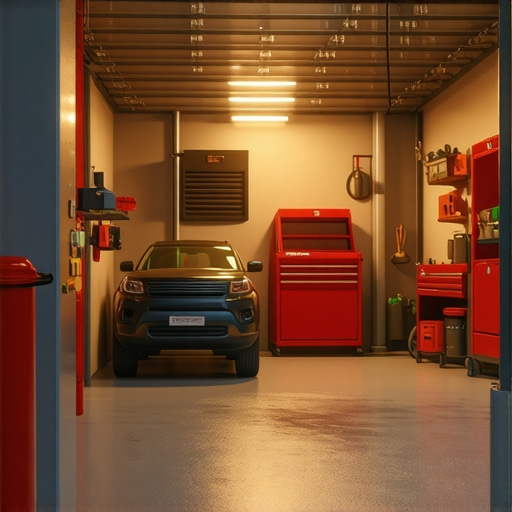
The Anatomy of a Frozen Workshop: Why Your BTUs Are Lying to You
I’ve spent three decades dragging my manifold gauges through sub-zero crawls in the Midwest, and if I’ve learned one thing, it’s that most garage heaters are installed by guys who think a ‘Manual J’ is a car transmission. You walk into a shop in January, the unit is screaming like a dying banshee, yet you can still see your breath. That’s not a heater problem; that’s a physics problem. Most folks think they can just slap a unit on a bracket, run some gas pipe, and call it a day. But 2026 isn’t 1995. With the shift toward SEER2 compliant upgrades and the phase-out of legacy gases, your shop heat needs to be more surgical than a heart transplant. If you’re tired of your tools being too cold to touch, you need to stop thinking about ‘heat’ and start thinking about thermal boundaries and static pressure.
“The most expensive equipment in the world cannot overcome a bad duct system or an improperly sized envelope.” – Industry Axiom
My old mentor, a man who could smell a cracked heat exchanger from the driveway, used to bark at me: ‘You can’t cool what you can’t touch, and you can’t heat what you can’t hold!’ He was a ‘Tin Knocker’ by trade, and he understood that horsepower is useless without control. He’d watch a guy install a 60,000 BTU unit in a two-car garage only to see the unit short cycle itself into an early grave because the static pressure was off the charts. That’s the first lesson every ‘Sparky’ or DIYer forgets: the air you move is just as important as the flame you light. If your return air is restricted, that blower motor is going to cook itself, and you’ll be looking for urgent furnace repair before the first snow melts.
Secret 1: The Manual J Logic and the Attic Insulation Trap
The biggest scam in the garage heater world is the ‘square footage’ rule. Don’t let a salesman tell you that a 500-square-foot shop needs X amount of BTUs. That’s lazy math. True HVAC pros use Manual J calculations to account for the R-value of your walls, the height of your ceilings, and specifically, the massive heat sink known as your concrete slab. In the North, your garage floor is essentially a giant block of ice. If you don’t account for that sensible heat loss, your heater will run 24/7. This is where attic insulation for heating comes into play. Most garages have zero insulation in the joists. You’re literally heating the neighborhood. Before you even think about low-GWP refrigerant retrofits or fancy new pumps, you need to seal the envelope. Use ‘Pookie’ (mastic) on every duct joint. If you can see daylight through your garage door seals, your new heater is just a very expensive desk fan.
Secret 2: The 2026 Regulatory Cliff and A2L Transition
We are entering the era of ‘Mildly Flammable’ refrigerants and hyper-efficient heat exchangers. By 2026, the old ‘gas-and-go’ mentality is dead. If you’re looking at hybrid garage systems that utilize heat pump technology, you’re dealing with leak detector integration requirements that didn’t exist two years ago. The new low-GWP refrigerant retrofits mean the ‘juice’ inside your lines is different, and the pressures are higher. You can’t just ‘top off the gas’ anymore. These systems require precise wiring repair for heating systems to handle the new sensors that sniff for leaks. If your installer doesn’t mention SEER2 compliant upgrades, they are selling you yesterday’s junk. The goal is to maximize the Coefficient of Performance (COP). In a shop environment, this means using geofencing temperature control to keep the slab at 50°F while you’re gone, then ramping up to 65°F ten minutes before you walk in. It prevents the ‘sweating slab’ syndrome where latent heat turns your floor into a skating rink.
“Standard 62.2 defines the roles of mechanical ventilation in maintaining acceptable indoor air quality in residential buildings.” – ASHRAE Standards
When you’re running a torch or a welder in a heated shop, you run into a major problem: CO and VOC buildup. This is why energy recovery ventilators (ERVs) are the secret weapon for 2026. An ERV allows you to bring in fresh, freezing air while ‘stealing’ the heat from the exhausted stale air. It keeps your lungs clean without throwing your heating dollars out the window. If you’re still relying on pilot light relighting for an old hanging ‘hot box,’ you’re missing out on the safety and efficiency of electronic ignition and modulated firing rates. I’ve seen too many shops nearly burn down because a wiring repair was bypassed with a jumper wire. Don’t be that guy. Ensure your system has proper leak detector integration to shut down the gas valve if things go sideways.
Secret 3: Airflow Architecture and the ‘Suction Line’ Truth
Airflow is king. If your garage heater is blowing directly onto your workbench, you’re doing it wrong. You want to create a ‘rolling’ air pattern that hugs the perimeter. This is where the tin knocker skills come in. Proper ducting—even in a garage—ensures that you don’t have cold pockets. And for the love of all that is holy, don’t ignore your furnace filter replacement. A clogged filter in a dusty woodshop will kill a blower motor in a single season. I’ve followed ‘Sales Techs’ who tried to sell a whole new system when the only issue was a $10 filter caked in sawdust. If you want to keep your shop warm, you need to understand strategies to extend your system’s life. This includes checking your suction line (it should be ‘beer can cold’ on a heat pump in cooling mode, but in heating, you’re looking for that discharge air temperature to hit a specific delta). If your delta-T is low, you’ve got a flow issue, not a ‘gas’ issue. For more on the technical side of things, check out these heating service hacks that actually work.
The Final Diagnosis: Maintenance vs. Replacement
Before you drop five grand on a new unit, look at the bones of your current system. Is it a simple wiring repair for heating systems that’s keeping you in the dark? Or is the heat exchanger rusted out from the humidity of parking a snow-covered truck inside? If the repair is more than 50% of the replacement cost, it’s time to go SEER2. You’ll save enough on your utility bill to pay for those new pneumatic tools you’ve been eyeing. Remember, a garage is the harshest environment for HVAC equipment. It’s dusty, it’s damp, and it’s subject to extreme temperature swings. If you’re not doing preventative maintenance, you’re just waiting for the unit to quit on the coldest night of the year. Get your Manual J calculations done right, invest in energy recovery ventilators, and stop treating your shop like an afterthought. Comfort is physics, not magic. If you need more help, you can always contact us to get the real story from a tech who’s actually turned a wrench.