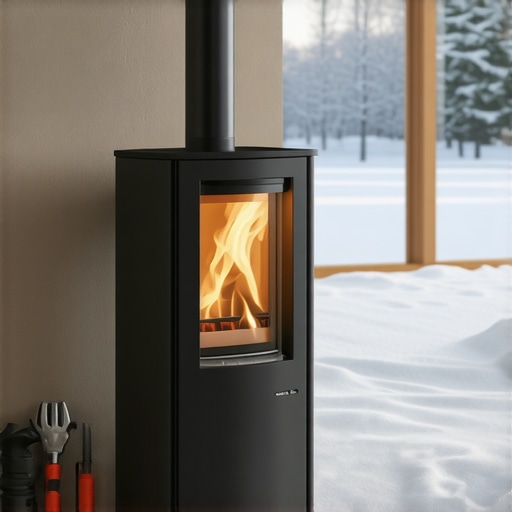
The Sound of a Cold House: Why Your Pellet Stove is Screeching
There is a specific kind of silence that happens at 3 AM in the middle of a February blizzard. It is the silence of a pellet stove that has decided to quit. As a technician who has spent three decades dragging tools through snowdrifts, I can tell you that silence is usually preceded by a very specific mechanical scream—the sound of a dry bearing or a jammed auger. My old mentor used to scream at me in the shop, ‘You can’t heat what you can’t vent!’ He wasn’t just talking about the chimney; he was talking about the fundamental physics of the heat exchanger. If the air can’t touch the metal, and the exhaust can’t leave the box, you aren’t an HVAC tech; you’re just a guy looking at a fancy metal box. Most of the ‘Sales Techs’ working today will look at a dead stove and immediately start talking about a $5,000 replacement, but 90% of the time, the fix is buried in the sensors or the airflow.
“The most expensive equipment in the world cannot overcome a bad duct system.” – Industry Axiom
Fix 1: The Thermocouple and the Millivolt Lie
One of the most common service calls I get involves pilot light relighting and thermocouple replacement. Here is the technical reality: a thermocouple isn’t just a copper wire; it is a heat-to-electricity transducer. It generates a tiny millivolt signal that tells the gas valve or the pellet controller that it is safe to keep feeding fuel. Over time, carbon buildup acts as an insulator. The sensor can’t ‘see’ the heat, so it shuts the whole system down. If you are struggling with a unit that won’t stay lit, don’t let a ‘Sales Tech’ tell you the control board is fried. Often, it is just a dirty sensor or a loose connection. I’ve seen homeowners get quoted for a full oil to gas conversion when all they needed was a $20 thermocouple and a bit of steel wool. When we talk about heating service innovations transforming 2025 climate control, we are often talking about more sensitive flame sensors, but the physics remains the same. Check the millivolts before you check your bank balance. For more on this, see furnace repair myths debunked by industry experts.
Fix 2: The Auger Jam and Static Pressure Physics
In the North, where the polar vortex turns your diesel to jelly, pellet stoves are the workhorses. But those pellets aren’t perfect. Fines—the dust at the bottom of the bag—mix with the ‘pookie’ (mastic) or just general moisture to create a concrete-like sludge in your auger. If you hear a ‘thunk-thunk’ sound, your auger motor is fighting static pressure. This is where thermodynamic zooming comes in: the stove needs to move a specific mass of fuel to meet the BTU demand. If the auger is restricted, the firebox temperature drops, the vacuum switch trips, and the unit goes into a safety lockout. I always tell ‘tin knockers’ and homeowners alike: clean your hopper every ten bags. While you’re at it, check the vacuum hose. If that hose is cracked, the stove thinks the door is open and won’t feed pellets. It’s a simple safety circuit that saves lives but causes a lot of ‘no heat’ calls. If your system is part of a new construction heating design, ensure the intake air isn’t pulling in debris from outside, which is a common oversight in 2025 builds.
Fix 3: The Smart Integration and The Dry Contact Mystery
We are seeing a massive surge in smart thermostat setup for pellet stoves. Most people think you can just slap a WiFi thermostat integration onto a 1990s stove and call it a day. It doesn’t work like that. Most pellet stoves use a ‘dry contact’ switch. If you push 24V from a Nest or Ecobee into a millivolt board, you will hear a ‘pop,’ and that sour, acidic smell of a burnt transformer will fill the room. You need a relay. Proper WiFi thermostat integration allows the stove to modulate based on actual room temperature rather than just a high/low setting, which saves you a fortune in fuel. This is part of the heating service hacks for comfort and savings in 2025 that I tell everyone who will listen. If you are also running radiator replacement projects or have an infrared heater installation in the garage, getting all these systems on a unified logic gate is the only way to survive a real winter without going broke.
“A venting system shall be designed and installed so as to develop a positive flow adequate to remove flue or vent gases to the outside atmosphere.” – NFPA 54 / ANSI Z223.1
Beyond the Stove: Air Quality and Total Comfort
If you’re already digging into your heating system, don’t ignore the air you’re breathing. Since pellet stoves and ventless gas heater services can sometimes dry out or affect indoor air quality, many of my clients are opting for UV light installation for HVAC. These lights sit in the return air drop and kill the biological growth that loves to hide in the dark, damp corners of a heat exchanger. It’s not just about the heat; it’s about the health of the ‘lungs’ of your home. Whether you are dealing with a radiator replacement in an old Victorian or a new construction heating design in a modern loft, the goal is the same: move the heat, vent the gas, and keep the ‘juice’ (electricity) flowing safely. Don’t wait until the ‘beer can cold’ days of summer or the ‘cracked heat exchanger’ days of winter to call a pro. Regular maintenance is the only thing standing between you and a ‘Sales Tech’ trying to meet his monthly quota on your dime. For a deeper look at system longevity, check out these top hvac repair strategies to extend your systems life.