The Sound of a Cold House: Why Your Pilot Light is the Ghost in the Machine
It’s 3:00 AM in January 2026, the outside temperature is dropping toward zero, and that familiar, rhythmic thrum of your furnace has been replaced by a silence so heavy it feels like a physical weight. You check the thermostat wiring upgrades you had installed last year, but the screen is a mocking blank slate or a flashing error code. This isn’t just a minor inconvenience; it’s a failure of the thermal envelope. As a tech who’s spent thirty years crawling through crawlspaces and dealing with emergency heating repair calls, I can tell you that most homeowners panic and call a ‘Sales Tech’—the kind of suit-and-tie guy who’ll try to sell you a 16-SEER replacement before he even puts his gauges on the unit. But before you shell out ten grand, let’s talk about the physics of the pilot light and why it’s probably just a $30 thermocouple acting up. My old mentor used to scream at me in the back of his van, ‘You can’t heat what you can’t touch!’ He was talking about heat transfer efficiency, but it applies to that tiny blue flame too. If that flame isn’t touching the sensor perfectly, the system thinks there’s a gas leak and shuts the whole party down to keep you from blowing your house into the next county.
“The most expensive equipment in the world cannot overcome a bad duct system.” – Industry Axiom
Step 1: The Forensic Diagnosis of the Thermocouple and Millivolt Signal
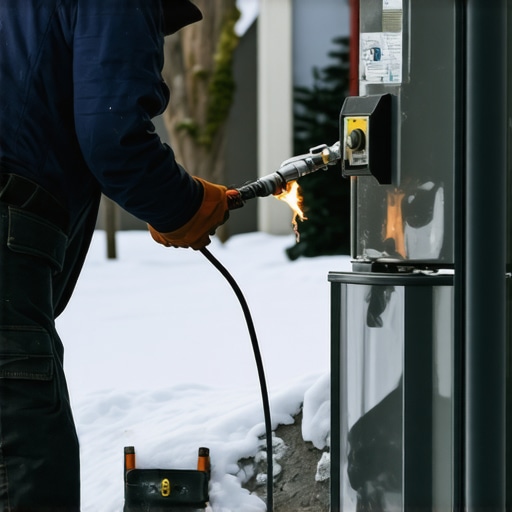
When you’re dealing with furnace repair services, you have to understand the ‘Logic of the Spark.’ In older systems and even some specialized church heating systems we still see in 2026, the pilot light isn’t just a flame; it’s a generator. When that flame hits the thermocouple—a probe made of two dissimilar metals—it creates a tiny electrical charge called millivolts. This tiny bit of ‘juice’ is what holds the gas valve open. If the pilot is out, you have no millivolts, and the safety magnet drops, cutting off the gas. First, look for the ‘Pookie’—that’s the gray mastic sealant—around the burner housing. If someone sloppy did a previous furnace filter replacement and knocked the assembly, the pilot might be misaligned. Clean the tip of the thermocouple with a piece of fine-grit sandpaper. You aren’t just cleaning soot; you’re ensuring the thermodynamic leap between the flame and the sensor is uninterrupted. If you’re seeing a yellow, lazy flame instead of a crisp blue cone, your gas pressure is off, or the orifice is clogged with dust. This is often where homeowners realize they need how to identify when furnace repair is urgent and why because a yellow flame produces carbon monoxide, the silent killer of the HVAC world.
[image_placeholder_1]
Step 2: The Gas Purge and Re-Ignition Protocol
Once you’ve cleaned the sensor, you need to purge the air. This is where most people get scared. You’ll turn the gas valve to the ‘Pilot’ position and depress the knob. You’re letting the ‘juice’ (the gas) flow through the small pilot tube. If you smell a faint scent of rotten eggs, that’s the mercaptan added to the gas. Don’t panic, but don’t strike a match yet. Wait for the air to bleed out. In steam boiler repair, this process is even more critical because of the massive thermal mass involved. While you’re down there, check your bypass humidifier repair needs; often, a leaking humidifier will drip right onto the pilot assembly, corroding the leads. Once the air is purged, use a long-reach lighter. Keep the knob depressed for at least sixty seconds. Why? Because the thermocouple needs time to reach its ‘Curie point’—the temperature where it generates enough millivolts to keep that solenoid held open. If it clicks off the moment you let go, your thermocouple is shot, or your manual J calculations were so far off that your unit is short-cycling and burning out sensors. This is a common issue we see when folks ignore furnace repair myths debunked by industry experts.
“Design heating loads shall be determined in accordance with the procedures described in the ACCA Manual J.” – ASHRAE Standard 183
Step 3: Stabilization and Airflow Optimization
If the flame stays lit, congratulations, you’ve beaten the immediate freeze. But a pilot light going out is usually a symptom, not the disease. In the cold North, we deal with cracked heat exchangers caused by restricted airflow. If you’ve recently done MERV filter upgrades to a MERV 13 or higher without checking if your blower motor can handle the static pressure, you’re choking the furnace. The heat builds up, the limit switch trips, and the resulting vibration or pressure change can blow out a weak pilot flame. A ‘Tin Knocker’ (duct specialist) will tell you that airflow is the lifeblood of the system. If your church heating systems are struggling, it’s rarely the boiler; it’s the hundred-year-old pipes or ducts that haven’t been balanced since the Truman administration. For 2026, we are seeing more people move toward geothermal heat pump systems to avoid these gas-related headaches entirely, as they rely on the constant temperature of the earth rather than a fragile flame. If you’re sticking with gas, ensure you aren’t falling for heating service innovations transforming 2025 climate control that suggest you can skip annual maintenance. A clean burner assembly is the only way to ensure that pilot stays lit when the polar vortex hits. Use some ‘Pookie’ to seal any leaks in the return air drop to keep the ‘Sparky’ (electrician) from having to deal with moisture in your thermostat wiring. Keeping your system in peak shape involves top hvac repair strategies to extend your systems life, ensuring you aren’t the one shivering at 3 AM next year.
http://James%20Carter
This post really highlights the importance of understanding the basics of furnace maintenance, especially when it gets so cold. I remember a few winters ago, I faced a similar situation where my pilot light kept going out unexpectedly. Turns out, it was that tiny thermocouple, which I hadn’t cleaned in years, causing the issue. Following the steps here—cleaning the sensor, purging the gas line, and checking airflow—made all the difference. What I found interesting is the emphasis on airflow’s impact on pilot stability. I wonder, in your experience, has upgrading filters or ductwork ever caused more trouble than good because of static pressure increases? For those dealing with older systems, do you think shifting to geothermal or heat pumps is a reliable long-term solution, especially in extreme cold? It feels like understanding and maintaining these small components often goes underappreciated until it’s too late, but proper upkeep really can prevent costly emergencies.