The Era of Flammable Refrigerants and the End of Cheap ‘Juice’
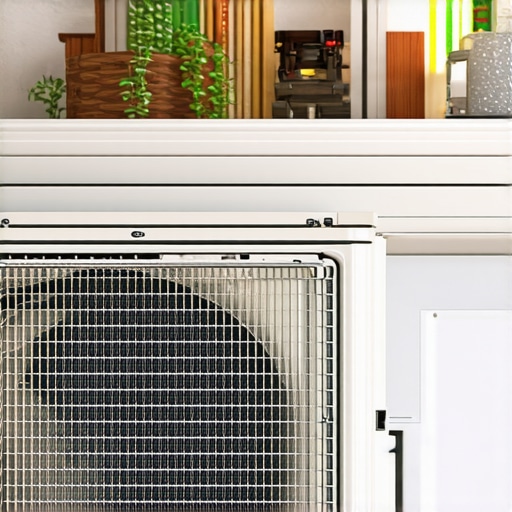
If you think 2025 was a headache for the HVAC industry, 2026 is going to feel like a full-blown migraine for homeowners. We are officially over the ‘Regulatory Cliff.’ The R-410A we’ve been using for two decades is being phased out in favor of A2L refrigerants like R-454B and R-32. These are classified as ‘mildly flammable,’ which means your new system now comes with leak sensors that look more like something out of a SpaceX module than a standard air handler. My old mentor used to scream at me in the back of a freezing service van, ‘You can’t cool what you can’t touch!’ He was talking about the physics of the evaporator coil. If the refrigerant isn’t there to absorb the latent heat, your unit is just a very expensive fan pushing hot, wet air around a miserable house.
“The most expensive equipment in the world cannot overcome a bad duct system or a neglected thermodynamic cycle.” – Industry Axiom
In the North, we deal with extreme swings. We spend half the year performing steam boiler repair and fixing radiators, and the other half trying to keep condensers from shaking themselves to death. When the ‘gas’ (refrigerant) starts to leak, it isn’t just about the cooling; it’s about the oil. Refrigerant carries the lubricant for your compressor. No juice means no oil, which leads to a ‘burnout’—a sour, acidic smell that tells every seasoned tech that the system is officially a boat anchor. If you’re looking for top hvac repair strategies, you need to understand the physics of the phase change. The refrigerant enters the evaporator as a low-pressure liquid, flashes into a vapor by absorbing heat from your home’s air, and then heads back to the compressor to be squeezed until it releases that heat outside. If there’s a hole, that cycle breaks.
Sign 1: The ‘Oil Slick’ and the Iridescent Stain
Unlike a water leak, a refrigerant leak is often invisible because the ‘gas’ evaporates instantly at atmospheric pressure. However, the oil mixed with it does not. In 2026, with these new thin-walled micro-channel coils, we are seeing more pinhole leaks than ever. If you look at your outdoor condenser or the base of your indoor evaporator coil and see an oily, dirt-caked stain, that’s not just ‘road grime.’ That is the lifeblood of your compressor leaking out. This is a common find during a combustion analysis or a routine HVAC repair visit. When the oil leaves, friction increases. The compressor gets louder, the ‘Sparky’ (electrician) sees higher amp draws, and eventually, the internal thermal overload snaps. Don’t let a ‘Sales Tech’ tell you that you need a whole new system just because of a stain, but if that leak is in a proprietary coil, the repair cost might make you flinch.
Sign 2: The ‘Beer Can Cold’ Suction Line is Bone Dry
In the trade, we look for the suction line (the thick, insulated copper pipe) to be ‘beer can cold.’ That condensation tells us the evaporator is properly saturated. If you touch that line and it’s lukewarm while the unit is running, you’re low on charge. By 2026, the cost of R-410A will be so high that ‘topping it off’ will feel like buying liquid gold. It’s a sealed system; it shouldn’t need a refill. If it does, you have a hole. In commercial settings, like during a commercial furnace repair or restaurant kitchen exhaust repair, we see these leaks triggered by vibration. A ‘Tin Knocker’ who didn’t secure the ducts properly can cause enough resonance to rub two copper lines together until they pop. If your suction line is dry and your vents are blowing 75-degree air, your system is failing the thermodynamic test.
Sign 3: Short Cycling and the A2L Sensor Alarm
Modern units built after 2025 are required to have Mitigation Boards and leak sensors. If you have a newer A2L system, the first sign of a leak might be the unit simply refusing to turn on, with a blinking LED code indicating ‘Refrigerant Detected.’ This is a safety feature because R-454B is ‘mildly flammable.’ It’s not going to explode like a Michael Bay movie, but it requires respect. If you find your system cycling on and off every five minutes (short cycling), it might be the low-pressure switch cutting power to protect the compressor from running dry. This is often where warranty service plans pay for themselves. Unlike an old-school R-22 beast that would run until it melted, these new machines are smart enough to commit suicide before they burn up. Whether you’re dealing with radiator replacement or cold climate heat pumps, the logic remains: if the pressures are wrong, the computer pulls the plug.
“Equipment shall be maintained in a safe and proper operating condition… Refrigerant leaks shall be repaired in accordance with EPA Section 608.” – ASHRAE Standard 15
The Cold Hard Truth for 2026
We see it every year: homeowners ignore a minor ‘hissing’ sound or a slight drop in performance until the first heatwave hits 95 degrees. By then, every reputable HVAC repair company is booked three weeks out. If you’re in a cold climate, you might be focused on boiler maintenance services or dryer vent cleaning, but don’t ignore the AC. A refrigerant leak in 2026 isn’t just a comfort issue; it’s a regulatory and financial minefield. If your system is over 12 years old and leaking, the transition to A2L makes the ‘repair vs. replace’ math very simple. You can’t keep patching a sinking ship with ‘Pookie’ (mastic) and hope for the best. Real HVAC work is about precision, vacuum pumps, and micron gauges. If your tech doesn’t pull a vacuum below 500 microns after a repair, fire them. They’re leaving moisture in the lines, and moisture plus refrigerant equals acid. And acid eats compressors from the inside out.