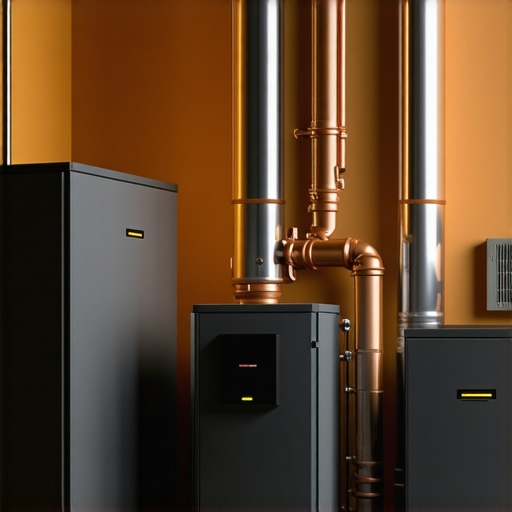
The Acoustic of Comfort: Why Your Furnace Is Lying to You
Listen. No, really listen. If you hear a roar coming from your floor registers that sounds like a freight train barreling through your living room, you aren’t experiencing ‘comfort.’ You’re experiencing a compromise. For thirty years, I’ve crawled through crawlspaces and balanced on icy rafters, and I’ve seen the same story every winter: a forced-air system struggling to keep up while the occupants shiver in a drafty house that feels like a desert. By 2026, the industry is finally waking up to what we ‘tin knockers’ and ‘wet-heads’ have known for decades. Hydronic heating—using water to move energy—is the undisputed king of the North. Whether we are talking about a massive warehouse heating solutions project or a residential two-stage furnace installation, the physics of water simply beats the physics of air every single time. Most homeowners think they need a bigger heater; what they actually need is a better medium for moving that heat.
“The most expensive equipment in the world cannot overcome a bad duct system.” – Industry Axiom
The Physics Lesson: You Can’t Heat What You Can’t Touch
My old mentor, Pete, used to scream at me until he was blue in the face: ‘You can’t cool what you can’t touch, and you can’t heat what you can’t hold!’ We were standing in a drafty Victorian during a polar vortex, and he pointed at a massive cast-iron radiator. He told me to think of heat like a liquid. In a forced-air system, you’re trying to carry that liquid in a sieve. Air is a terrible conductor. It’s light, it’s flighty, and the second the blower motor stops, the heat is gone. Water? Water is a tank. It has a high specific heat capacity, meaning it grabs onto those BTUs and refuses to let go. When we talk about heating service innovations transforming 2025 climate control, we are talking about harnessing that thermal mass. Hydronics don’t just blow hot air at you; they radiate energy into the objects in the room. This is why a house with hydronic floors at 68 degrees feels warmer than a forced-air house at 72. You’re being heated by radiation, not convection. For more on the technical side of modern systems, check out the heating service innovations transforming 2025 climate control.
Reason 1: Thermal Density and the Death of Short-Cycling
Let’s talk Thermodynamic Zooming. Air has a density of about 0.075 lbs per cubic foot. Water? It’s about 62.4 lbs per cubic foot. In plain English, water can carry over 3,000 times more heat than the same volume of air. When a two-stage furnace installation kicks on, it blasts the house with heat, hits the setpoint, and shuts off. The temperature then drops like a rock. This is ‘short-cycling,’ and it kills compressors and heat exchangers. In a hydronic setup, the water circulates through baseboard heater repair zones or under-floor PEX tubing, creating a steady, low-intensity heat. Even after the boiler stops, the water stays hot. This is why solar thermal heating integration works so well with hydronics—you can store that sun-generated heat in a tank and use it all night. It’s the difference between a flash in the pan and a slow-burning log. If you’re tired of the constant on-and-off, you might need to look at choosing the right HVAC fixes what homeowners need to know before spending another dime on air-side repairs.
Reason 2: Indoor Air Quality and the HEPA Myth
Sales techs love to push HEPA filter systems. They’ll tell you that a $500 filter will cure your allergies. Here’s the truth they won’t tell you: the filter only works if the air is moving. And if the air is moving, it’s kicking up every bit of pet dander, dust mite carcass, and skin flake hidden in your carpet. Forced air is a dust-delivery system. Hydronics, whether through radiators or radiant floors, don’t move air. They move energy. You don’t need a massive filtration system if you aren’t blowing the debris around in the first place. When we do a warehouse heating solutions install, IAQ is paramount. In a residential setting, it’s the difference between waking up with a dry throat and feeling refreshed. If you’re stuck with a furnace for now, at least learn about furnace repair myths debunked by industry experts to avoid getting scammed on ‘IAQ packages’ that don’t work.
“Hydronic heating systems provide superior comfort by minimizing air movement and maintaining consistent surface temperatures.” – ASHRAE Standard 55
Reason 3: Zoning Mastery and Snow Melt Systems
Try zoning a forced-air system. You end up with ‘bypass dampers’ that dump air back into the return, killing your static pressure and eventually freezing your coil (if the AC is running) or cracking your heat exchanger. It’s a mess. With hydronics, zoning is as simple as a manifold and a few zone valves. You can have the bedroom at 64, the living room at 70, and the garage at 50 without any ‘Sparky’ having to rewire your whole house. This precision extends outside, too. Snow melt systems installation is just hydronics for your driveway. Instead of breaking your back with a shovel, we run hot glycol through the concrete. It’s the ultimate flex in a North climate zone. When you integrate control board diagnostics into these systems, you can see exactly where every drop of hot water is going from your phone. If you’re planning a new setup, read this ultimate guide to AC installation expert tips for 2025 success, which covers how these systems integrate with cooling.
Reason 4: The 2026 Tech Integration
We aren’t in the 1950s anymore. Modern hydronic boilers are basically computers that happen to burn gas or use electricity. With voice control setup Alexa Google, you can adjust your floor temperature while you’re still under the covers. But the real magic is in the control board diagnostics. Modern systems can tell me exactly when a circulator pump is pulling too many amps before it actually fails. We also see portable heater safety checks becoming a thing of the past because people finally have reliable, zone-controlled heat. If you’re worried about the cost, remember that a properly installed hydronic system lasts 30-50 years. A furnace? You’re lucky to get 15 before the ‘tin’ starts to rot. For year-round peace of mind, consult the preventative HVAC repair tips for year-round efficiency.
The Verdict: Don’t Let a Sales Tech Talk You Into a Box
If a guy walks into your house with a shiny polo shirt and starts talking about ‘SEER ratings’ without looking at your actual heat loss, kick him out. He’s a ‘Sales Tech’ looking for a commission on a box. A real technician looks at the load, the envelope, and the fluid dynamics. Hydronics might cost more upfront than a basic AC installation or furnace swap, but it pays back in silence, health, and efficiency. Whether you need baseboard heater repair or a full-scale snow melt systems installation, the goal is the same: stop fighting the physics of air and start using the power of water. If your system is currently acting up, don’t wait for a total failure; find out how to identify when furnace repair is urgent and why. Stay warm, stay cynical, and keep your coils clean.