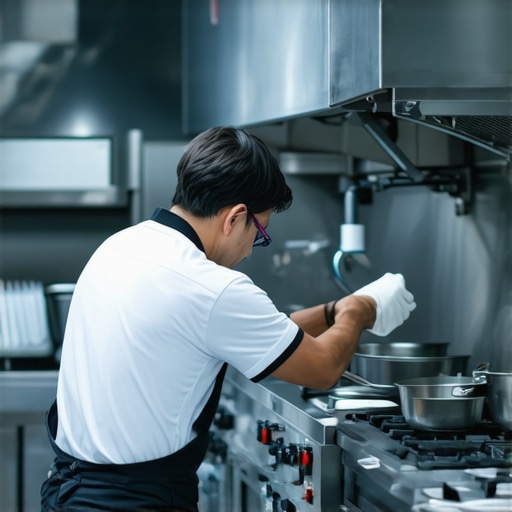
The Reckoning of the Kitchen Hood: Why 2026 Will Break Most Restaurants
I’ve spent thirty years crawling through grease-slicked vents and standing on frozen rooftops in the middle of a Chicago January, and if there is one thing I know, it is that the air doesn’t lie. You can trick a health inspector with a clean countertop, but you can’t trick physics. Most restaurant owners treat their exhaust systems like a ‘set it and forget it’ appliance. That era is ending. With the 2026 NFPA and ASHRAE updates looming, that rattling fan and the smell of old fry oil in the dining room aren’t just nuisances; they are red flags for a failed inspection. I remember my old mentor, a grizzly tin knocker who could calculate static pressure in his sleep, used to scream at me, ‘You can’t vent what you can’t supply!’ He would stand there in a kitchen that felt like a vacuum-sealed tomb and watch the back door whistle because the exhaust was sucking air through the keyholes. That is the fundamental truth of airflow architecture: balance is everything. Most of the ‘Sales Techs’ out there will try to sell you a whole new hood for fifty grand when your problem is actually a choked-up energy recovery ventilator or a dead blower motor. If your kitchen feels like a swamp and your staff is sweating through their whites before the lunch rush even starts, you are likely failing the latent heat battle.
“The most expensive equipment in the world cannot overcome a bad duct system.” – Industry Axiom
1. The Make-Up Air Crisis: Energy Recovery Ventilators (ERVs)
In the North, where we deal with a polar vortex every other Tuesday, you can’t just dump raw, 10-degree air into a kitchen to replace what the hood sucks out. That’s how you crack a heat exchanger and end up needing urgent furnace repair services. The fix for 2026 is the integration of high-efficiency energy recovery ventilators. These units are the lungs of your building. They take the heat from the outgoing exhaust and use it to pre-warm the incoming fresh air. We are talking about enthalpy—the total heat content of the system. If you aren’t using ERVs, your boilers are working double-time, and I’ve seen enough hotel boiler services calls to know that a stressed boiler is a ticking financial time bomb. Balancing the air pressure stops the ‘whistle’ and keeps the flame in your ovens from dancing like they’re at a disco, which is a major fire hazard. If your make-up air unit is dead, your exhaust fan is fighting against a vacuum, which leads to blower motor replacement sooner rather than later.
2. Neutralizing the Grease Ghost: UV Light Installation for HVAC
Inspectors in 2026 are going to be looking at more than just the visible grease on the baffles. They are looking at the secondary combustion risk inside the ducts. This is where UV light installation for HVAC and exhaust streams comes into play. By installing high-output UVC lamps in the hood plenum, we can trigger photodissociation. This is a fancy way of saying the UV light breaks down the grease molecules before they can stick to the ‘tin.’ It turns grease into a light powder that doesn’t ignite. I’ve seen ducts so full of ‘pookie’ (old mastic and grease) that they were basically giant fuses waiting for a spark. Integrating UV tech means your preventative HVAC repair tips list just got a lot shorter because your ducts stay clean for years, not months. It’s the difference between a routine annual heating inspection and a 4 AM call to the fire department.
“Ventilation systems shall be designed and installed such that the effluent is exhausted to the outdoors and replaced with an equal volume of makeup air.” – ASHRAE Standard 62.1
3. Digital Governance: Remote Thermostat Access & Wiring Upgrades
The days of a manual dial on the wall are dead. If you want to pass 2026 audits, you need thermostat wiring upgrades that allow for remote thermostat access and integration with the hood’s fire suppression system. I recently followed a ‘Sales Tech’ who told a restaurant owner they needed a $15,000 RTU replacement because the kitchen was too hot. All it actually needed was a proper blower motor replacement and a thermostat that actually talked to the make-up air unit. When the exhaust fan kicks on, the HVAC needs to know it. If they aren’t synced, you’re throwing ‘juice’ (refrigerant) at a problem that’s actually about air volume. Modern HVAC fixes involve smart sensors that monitor static pressure in real-time. If the pressure drops—meaning a filter is clogged—the system should alert your phone, not wait for the compressor to scream and die. This is especially vital for furnace filter replacement schedules in greasy environments; a clogged filter in a restaurant can kill a blower motor in a single weekend.
4. The Thermal Shield: Hydronic & Baseboard Heater Repair
In colder climates, the kitchen isn’t the only concern; it’s the prep areas and the loading docks. I’ve seen many 2026 compliance checklists that now emphasize the ‘Human Comfort’ factor for kitchen staff. This often means your back-of-house heating needs to be up to snuff. Whether it’s baseboard heater repair for the breakroom or ensuring the hotel boiler services cover the kitchen’s hot water and hydronic heating loops, you can’t have cold spots. Cold spots lead to condensation, and condensation in a kitchen leads to mold—an automatic inspection fail. If your heating system is struggling, don’t just ‘top off the gas.’ A sealed system shouldn’t leak. If you’re low on refrigerant or your boiler is losing pressure, you have a leak that needs a real technician, not a salesman with a clipboard. Check out the ultimate guide to AC installation if you’re thinking of a full overhaul, but often, a thorough cleaning and a few component upgrades will get you through the 2026 gate. If you have questions about your specific setup, don’t hesitate to contact us before the inspectors knock on your door.