The Anatomy of an Impending Educational Deep Freeze
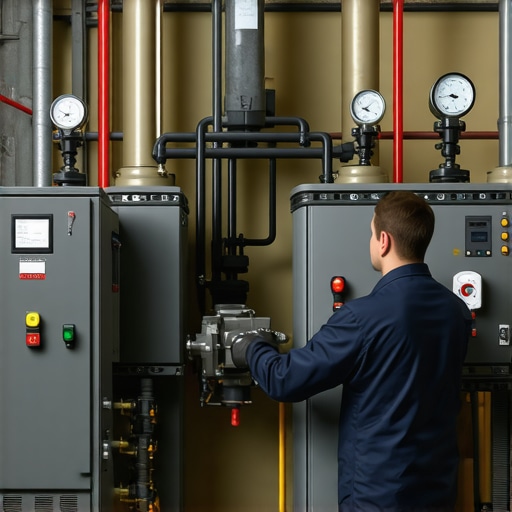
My old mentor, a guy who had more soot in his lungs than a Victorian chimney sweep, used to scream at me whenever I looked too long at a pressure gauge: ‘You can’t move heat you haven’t captured, and you can’t capture heat if your surfaces are insulated with scale!’ He’d whack the side of a cast-iron boiler with a pipe wrench just to hear the ring. To him, a boiler wasn’t a machine; it was a breathing beast that required respect. He taught me that airflow and heat exchange are the twin kings of any mechanical room. If you ignore the physics, the physics will eventually ignore your thermostat settings. As we barrel toward the 2026 academic year, school districts are facing a reckoning. The infrastructure is aging, the refrigerants are changing, and the margin for error has evaporated like steam from a leaky radiator valve.
‘The most expensive equipment in the world cannot overcome a bad duct system or a neglected heat exchanger.’ — Industry Axiom
We are currently entering a transition period where old-school steam boiler repair meets new-age inverter-driven compressors. If you’re a facility manager or a school board member, you’re not just maintaining a building; you’re managing a thermodynamic system that is under constant stress. Most ‘Sales Techs’ will walk into your mechanical room, see a bit of rust, and immediately quote you a $200,000 replacement. I’ve spent 30 years in the trenches, and I can tell you that 60% of those units just need a technician who actually knows how to use a combustion analyzer, not a guy who knows how to use a financing app.
1. Steam Boiler Decarbonization and Scale Mitigation
In the North, where the polar vortex likes to park itself over the playground, the steam boiler is the heart of the school. But it’s a heart that’s often clogged. When we talk about steam boiler repair, we aren’t just talking about fixing leaks. We are talking about the chemistry of the water. Every gallon of makeup water you pump into that system brings in minerals. When that water flashes into steam, those minerals stay behind, baking onto the heat exchanger surfaces. This creates ‘scale,’ which acts as a thermal insulator. You’re burning more gas (juice) to push heat through a rock wall before it ever hits the water. By 2026, if you haven’t performed a chemical descaling and checked your ‘Pookie’ seals on the breaching, you’re looking at a cracked section. That’s not a repair; that’s a catastrophe. You need to ensure your warranty service plans actually cover annual teardowns, not just a visual ‘once-over’ by a kid who can’t tell a gate valve from a globe valve.
2. Navigating the R-454B Refrigerant Transition Services
While the boilers handle the heavy lifting in January, the cooling side of the house is about to hit a regulatory cliff. The industry is moving away from R-410A. We are entering the era of R-454B refrigerant transition services. This isn’t just a simple swap. R-454B is an A2L refrigerant, which means it’s ‘mildly flammable.’ You can’t just dump this into an old R-22 or R-410A coil. The physics of the ‘gas’ are different. The ‘temperature glide’—the range of temperatures at which the refrigerant boils and condenses at a given pressure—is different. If your tech doesn’t understand subcooling and superheat in the context of A2L, they’ll slug your compressor and kill it in a week. This transition is why IAQ improvement services are becoming so critical; new systems require leak sensors and specific ventilation protocols to mitigate any potential A2L buildup. It’s also a prime time to look into heating service innovations that integrate these new standards.
‘All HVAC systems shall be maintained to provide the required outdoor air quantities and to ensure the removal of contaminants.’ — ASHRAE Standard 62.1
3. Zoning System Installation and Airflow Physics
The biggest complaint in any school? ‘Room 202 is a sauna, and Room 204 is a meat locker.’ This isn’t a ‘horsepower’ problem; it’s a zoning system installation problem. Most schools are over-tonned and under-ducted. When you have a massive blower pushing air into a static system, the air takes the path of least resistance. The ‘Tin Knocker’ who installed the original ductwork in 1974 probably didn’t account for modern computer labs or 30 kids with tablets. By installing smart dampers and inverter-driven compressors, we can modulate the capacity of the unit to match the load. Instead of the system being ‘all on’ or ‘all off,’ the inverter slows the compressor down to a hum, maintaining a precise dew point and removing latent heat (humidity) without ‘short cycling.’ If you don’t know how to identify when furnace repair is urgent, you’ll likely miss the signs of a failing blower motor trying to fight against high static pressure.
4. Safety Protocols: Portable Heaters and Ventless Services
When the boiler fails, teachers bring in space heaters. This is where the ‘Sparky’ (electrician) and the Fire Marshal get involved. Portable heater safety checks are non-negotiable for 2026. These devices pull massive amperage and are the leading cause of electrical fires in educational settings. If your main system is failing, don’t rely on 1,500-watt fire hazards. Instead, look into ventless gas heater services for temporary, localized heating in high-ceiling areas, provided they meet local codes and IAQ standards. Better yet, ensure your whole-home humidifiers (or whole-school units) are functioning. Moist air holds heat better than dry air. If your school is at 10% humidity, 72 degrees feels like 65. By bumping that humidity to 35%, you improve comfort and reduce the transmission of airborne viruses—a win for the budget and the nurse’s office. Don’t forget to look for rebate application assistance to offset these costs. Many utilities offer massive incentives for switching to high-efficiency boilers or VFD-driven pumps.
Preventive maintenance is more than a clipboard and a checklist. It’s about listening to the screech of a bearing before it seizes. It’s about smelling the acidic tang of a burnout before the compressor turns into a boat anchor. If you’re looking for preventative hvac repair tips, start with the basics: clean your coils, check your steam traps, and for the love of all that is holy, change your filters. In the world of commercial HVAC, there are no shortcuts—only long, expensive lessons in physics. Contact us today to get a real technician on your roof, not a salesman in a polo shirt.