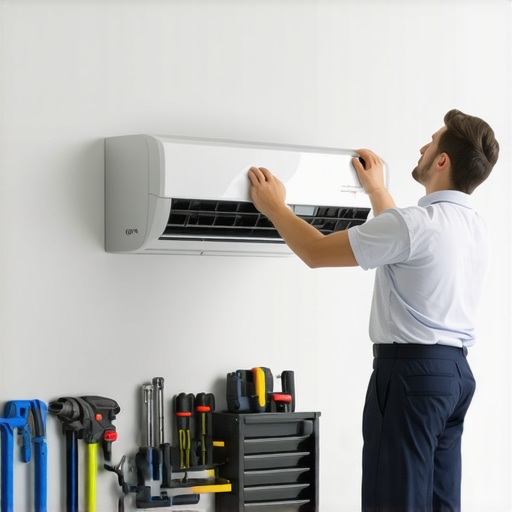
The Death of R-410A and the High Cost of Comfort
If you think the price of milk is getting out of hand, wait until you see the quote for a multi-head mini-split installation in 2026. We are standing on a regulatory cliff. The industry has effectively killed off R-410A refrigerant, replacing it with A2L fluids like R-454B. These new ‘mildly flammable’ juices require specialized sensors, updated tools, and a level of technical precision that most ‘trunk slammers’ just don’t have. If you’re looking at your old baseboard heater repair costs and thinking a heat pump is the answer, you’re right—but only if you don’t get taken for a ride by a ‘Sales Tech’ looking to pad their commission. I’ve spent thirty years in attics where the temperature hits 130 degrees, and I can tell you that the difference between a system that lasts twenty years and one that dies in five isn’t the brand name on the box; it’s the physics of the install.
“The most expensive equipment in the world cannot overcome a bad duct system—or in the case of ductless, a botched line-set evacuation.” – Industry Axiom
I remember following a ‘Sales Tech’ out to a property last November. He’d quoted this couple $18,000 for a five-zone mini-split system because their old boiler was ‘obsolete.’ I walked in, looked at the thermostat, and realized the ‘Sparky’ who wired the last repair had crossed a low-voltage lead. A $5 wire nut and ten minutes of my time saved them eighteen grand. That tech didn’t even own a manifold gauge; he just had a tablet with a financing app. This is why you need to understand the ‘Airflow Manifesto.’ Whether you are dealing with hotel boiler services or a simple blower motor replacement, the goal is moving BTUs, not just selling metal boxes.
Hack 1: The ‘Thermodynamic Zoom’ on Sizing
The biggest mistake in 2026 is over-sizing. Most guys see a 400-square-foot room and think ‘12,000 BTUs.’ That’s lazy. In a North/Cold climate, you’re fighting the ‘Polar Vortex’ effect. If you oversize a mini-split, it hits the setpoint in five minutes and shuts off. This is called short-cycling. It kills compressors and, more importantly, it fails to pull moisture out of the air. You end up with a room that’s 68 degrees but feels like a damp basement because the evaporator coil didn’t stay below the dew point long enough to remove the latent heat. Use a real Manual J calculation. If you’re integrating this with heating service hacks for comfort and savings in 2025, you’ll find that a smaller, modulating unit running at 40% capacity is far more efficient than a beast that constantly kicks on and off.
Hack 2: Leveraging SEER2 Compliant Upgrades for Tax Credits
In 2026, the federal government isn’t just suggesting SEER2; they are demanding it. SEER2 (Seasonal Energy Efficiency Ratio 2) accounts for the higher static pressure of modern installations. When you look at efficient HVAC repairs, you have to look at the total cost of ownership. The hack here is ‘Internal Stacking.’ By choosing a unit that qualifies for the highest tier of federal tax credits, you can often offset the 20% price hike we’ve seen since the A2L transition. Don’t just look at the sticker price. Look at the CEE (Consortium for Energy Efficiency) tiers. A unit that costs $1,000 more upfront might net you a $2,000 credit, making the ‘expensive’ unit the cheaper option.
Hack 3: The ‘Beer Can Cold’ Line Set Preparation
The ‘tin knockers’ of the world will tell you that the line set is just a pipe. They’re wrong. It’s the circulatory system of your home. In the old days, guys would ‘purge’ the lines with a bit of refrigerant and call it good. In 2026, with the high pressures of R-454B, you must demand a triple evacuation. I’m talking about pulling a vacuum down to 500 microns and holding it. If there is a single drop of moisture in that line, it reacts with the POE oil to create hydrofluoric acid. That acid will eat the windings off your compressor faster than you can say ‘warranty claim.’ This is why ac installation secrets that hvac pros won’t tell you often revolve around the tools they don’t want to use. A proper vacuum takes time, and time is money, but a ‘sour’ compressor is a death sentence for your budget.
Hack 4: Strategic Placement to Avoid ‘Airflow Dead Zones’
Where you put the indoor head matters more than the BTU rating. I’ve seen people mount heads directly above wood burning stove installations or near kitchen ranges where restaurant kitchen exhaust repair is a constant headache. The thermostat sensor in the head gets ‘confused’ by the localized heat and shuts down while the rest of the house is freezing. You want the head placed where it can establish a ‘laminar flow’—a smooth path for air to travel across the room, bounce off the far wall, and return. If you’re doing industrial heater services or large-scale hotel boiler services, you know that air is lazy; it takes the path of least resistance. Don’t let your mini-split blow directly onto a couch or a bed; you want it to wash the walls with tempered air.
Hack 5: The Hybrid Integration (Propane and Electric)
If you have an existing system, don’t rip it out. The smartest money in 2026 is in ‘Dual Fuel’ setups. Use your mini-split for 90% of the year, but keep your propane conversion services active for when the temperature drops below zero. Even the best ‘Hyper-Heat’ units lose efficiency when it’s -10°F outside. By using the mini-split as your primary and your old baseboard heater or furnace as a ‘backup,’ you extend the life of both. It’s like having a backup generator for your comfort. This is the core of top hvac repair strategies to extend your systems life. Don’t overwork the new tech when the old tech can handle the extreme ‘sensible’ load of a polar vortex.
“Standard 15 of ASHRAE requires specific leak detection sensors for A2L refrigerants in occupied spaces—skipping this to save money isn’t just cheap, it’s a code violation.” – HVAC Compliance Manual
The Bottom Line: Don’t Buy the Hype, Buy the Physics
Whether you’re looking for swamp cooler maintenance in the desert or wiring repair for heating systems in the tundra, the math doesn’t change. Thermodynamics is a cruel mistress. You can’t cheat the system. If a contractor offers you a price that seems too good to be true in 2026, they are likely skipping the nitrogen pressure test or reusing old, contaminated line sets. I’ve spent too many years fixing ‘new’ installs that failed because someone used ‘Pookie’ (mastic) to hide a leak instead of doing a proper flare. Invest in the install, not just the brand. Your wallet—and your sanity—will thank you when the first heatwave of July hits and your system doesn’t just hum, but actually cools.