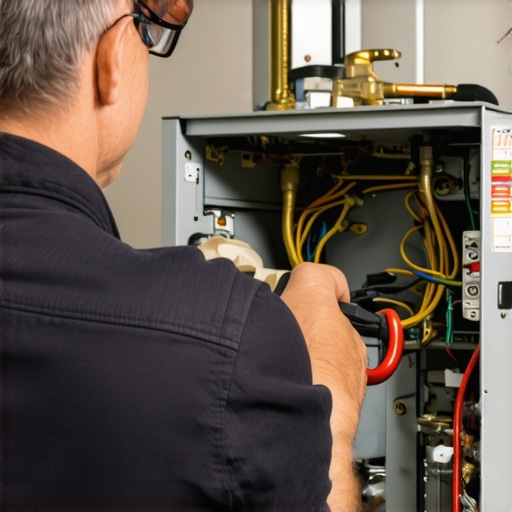
I’ve spent three decades crawling through spider-infested crawlspaces and baking in attics where the heat index hits 130 degrees. I’ve seen every ‘shortcut’ in the book, and let me tell you, the game is changing. If you think your furnace warranty is a golden ticket, you’re in for a cold awakening. We are approaching a regulatory cliff. As we move into 2026, manufacturers are tightening the screws on warranty claims, using every technicality to deny coverage for those who don’t follow the rules. I recently followed a ‘Sales Tech’—you know the type, smells like cheap cologne and carries a tablet instead of a pipe wrench—who quoted a young couple $12,000 for a new system. He told them their three-year-old high-efficiency furnace had a cracked heat exchanger. When I got there, I didn’t find a crack; I found a clogged condensate trap that was backing up water and tripping the pressure switch. A $100 fix, but if that ‘Sales Tech’ had touched it with his ‘universal parts,’ he would have voided their 2026 warranty faster than you can say ‘lawsuit.’
The Death of the ‘Handyman’ Fix: Why 2026 is Different
In the trade, we talk about the transition to A2L refrigerants and SEER2 compliant upgrades, but for the average homeowner, the biggest shift is in the fine print. Manufacturers like Carrier, Trane, and Goodman are now requiring digital proof of commissioning and annual service logs. If you aren’t using preventative maintenance contracts from a licensed professional, your 10-year parts warranty is essentially a piece of scratch paper. They want to see the static pressure readings. They want to know the temperature rise was clocked correctly. They want to know you didn’t let some ‘Sparky’ or ‘Tin Knocker’ wire in a non-OEM part that draws the wrong amperage.
“Equipment shall be installed in accordance with the manufacturer’s instructions and the requirements of this code.” – International Mechanical Code (IMC) Section 304.1
When we talk about furnace repair myths debunked by industry experts, the biggest myth is that all technicians are created equal. The reality is that the new 2026 standards require leak detector integration and specific sensors that shut the system down if a breach is detected. If your tech bypasses these to ‘get the heat back on,’ they aren’t helping you; they are killing your warranty and potentially your family.
Mistake #1: The ‘Universal’ Capacitor Swap
You’ll hear a screeching sound or a hum—that’s your blower motor trying to start without its ‘battery.’ Many homeowners call for capacitor replacement services and think any silver can with the right microfarad rating will do. Wrong. In the 2026 regulatory environment, using non-branded or ‘off-spec’ capacitors can cause harmonics that fry the Integrated Furnace Control (IFC) board. These boards are now $800 to $1,200. If the manufacturer sees a generic capacitor in the circuit when the board fails, they will deny the claim. It’s about more than just starting the motor; it’s about the ‘juice’ (refrigerant and electricity) being handled precisely as the ‘Airflow Architect’ intended.
Mistake #2: Improper Propane Conversion Services
If you live out in the sticks and rely on propane conversion services, this is where 90% of warranties die in the first year. Converting a natural gas furnace to propane isn’t just swapping orifices; it’s about adjusting the manifold pressure and ensuring the combustion doesn’t create ‘sooting.’ Soot is the acidic byproduct of bad combustion that eats through primary heat exchangers. I’ve seen ‘technicians’ eye-ball the flame color. That’s garbage. You need a digital manometer and a combustion analyzer. Without a record of those readings, you’re just guessing, and the manufacturer knows it. Proper identification of urgent furnace repairs starts with knowing when the chemistry of the flame is off.
Mistake #3: Neglecting IAQ Improvement Services and Filtration
Airflow is king. My old mentor used to scream, ‘You can’t cool what you can’t touch!’ The same applies to heating. If you have a dirty coil or a restricted filter, the heat exchanger will overheat. This causes the metal to expand and contract too violently, leading to those ‘cracks’ the sales techs love to lie about. But here’s the kicker: many new systems require IAQ improvement services like high-MERV filters or UV lights. If you install a MERV 16 filter on a system designed for a MERV 8 without modifying the ductwork, you increase the static pressure. High static pressure kills blowers and cracks heat exchangers. It’s like trying to run a marathon while breathing through a cocktail straw. Understanding strategies to extend your system’s life means respecting the physics of airflow.
Mistake #4: The DIY Bypass Humidifier Repair
In cold climates, everyone wants a bypass humidifier repair when the air gets dry enough to spark your cat. But if that humidifier isn’t plumbed correctly or the drain line is ‘Pookied’ (mastic) to the furnace cabinet, you’re inviting moisture where it doesn’t belong. I once saw a wall furnace installation where a homeowner tried to add a humidifier and ended up rusting out the entire burner assembly in two seasons. Moisture and high-voltage electronics don’t mix. Manufacturers will look for ‘evidence of external moisture intrusion’ the second they see rust on a control board.
“Failure to provide evidence of annual maintenance by a qualified technician shall void the limited warranty.” – Standard Manufacturer Warranty Language for 2025/2026 Models
Mistake #5: Skipping the Spa Heater and Radiant Floor Heating Integration Logs
If your furnace is part of a complex hydronic setup, including radiant floor heating installation or spa heater services, the complexity of the ‘logic’ increases. These systems often share a heat source or use a boiler/furnace combo. If the flow rates aren’t balanced, the heat exchanger will experience ‘thermal shock.’ When we perform heating service hacks for comfort and savings in 2025, we aren’t just looking at the furnace; we are looking at the whole thermodynamic loop. If you don’t have a record of the water chemistry and flow rates for your radiant system, the furnace manufacturer will blame the radiant system for any failure.
The Thermodynamic Zoom: Sensible vs. Latent Heat
Let’s talk physics. A furnace doesn’t just ‘make heat.’ It facilitates the transfer of energy from combustion to the air stream. In high-efficiency (90%+) units, we deal with latent heat. As the flue gases cool, the water vapor condenses, releasing extra energy. That’s why we call them ‘condensing furnaces.’ This condensate is acidic. If your preventative maintenance contracts don’t include a flush of the secondary heat exchanger and the drainage system, that acid will sit in the pan and eat the ‘suction line’ or the secondary coil. This is why innovations in heating service focus so much on the chemistry of the condensate.
Conclusion: Don’t Get Left in the Cold
The transition to 2026 is going to be a wake-up call for homeowners who think they can ‘get by’ with cheap repairs. Whether it’s a wall furnace installation or a complex radiant floor heating installation, the margin for error is shrinking. You need a tech who understands the difference between a ‘Sales Tech’ scam and actual thermodynamic reality. Don’t let a $20 capacitor turn into a $12,000 replacement because you didn’t have the right paperwork or the right parts. Comfort is physics, not magic. Make sure you’re on the right side of the law and the right side of the thermometer. For those looking to stay ahead, checking out the ultimate guide to HVAC success is a good place to start before the 2026 hammer drops.