The Anatomy of a Mid-Winter Mechanical Failure
The sound of a silent boiler at 3 AM in a five-story hotel is the loudest noise a facility manager will ever hear. It is the sound of impending refunds, bad reviews, and the inevitable 4 AM phone call to a tech like me who has spent three decades smelling burnt transformers and metallic soot. My old mentor used to scream at me, ‘You can’t cool what you can’t touch, and you can’t heat what you don’t circulate!’ This is the gospel of the Airflow Architect. Most hotel owners think a boiler is a ‘set it and forget it’ box in the basement, but physics is a cruel mistress. If your distribution system is choked or your combustion is out of whack, that expensive Energy Star heating certification isn’t worth the paper it is printed on. When we look at 2026, the guest expectations are higher than ever, and the equipment is more sensitive. If you aren’t looking at the system as a living, breathing organism, you’re just waiting for the next polar vortex to expose your negligence.
“The most expensive equipment in the world cannot overcome a bad duct system.” – Industry Axiom
1. The Combustion Analysis and Flame Signal Diagnosis
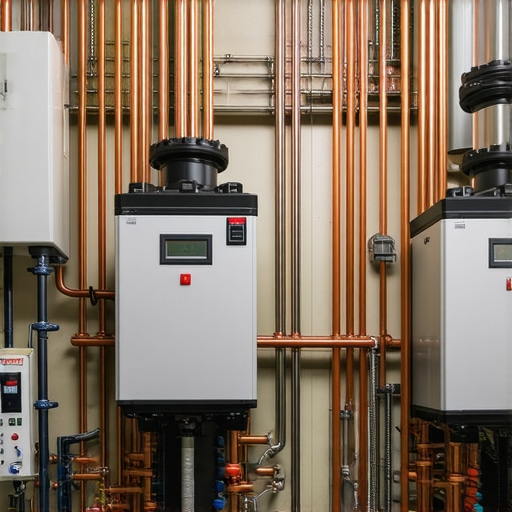
Most boiler failures start with a whisper, not a bang. I’ve walked into mechanical rooms that smelled like a sour mix of unburnt gas and acidic condensation—the classic signs of a failing heat exchanger or poor combustion. In a hotel setting, your boiler works harder than a tin knocker in July. We need to perform Thermodynamic Zooming on the flame sensor. If that sensor is even slightly fouled with carbon, it won’t send the micro-amp signal back to the control board, and the system will lockout just when the lobby fills with guests. This isn’t just about furnace filter replacement; it is about the chemistry of the burn. Modern high-efficiency boilers rely on precise air-to-fuel ratios. If your intake is pulling in debris or the exhaust is restricted, the AFUE rating drops, and your gas bill skyrockets. This is where top HVAC repair strategies come into play—cleaning the burner assembly isn’t a suggestion; it’s a requirement for survival in a cold climate like Chicago or the Northeast.
[image_placeholder_1]
2. Upgrading to Smart Control Logic and Thermostat Installation
I despise ‘Sales Techs’ who try to sell a new boiler when a control board is just confused. However, in 2026, the old mercury bulbs and manual dials are dinosaurs. A proper thermostat installation involving app-controlled heating systems allows a hotel manager to see a room failure before the guest even feels the chill. But here is the trap: you can’t just slap a smart stat on a three-wire system without checking the common wire or the C-transformer capacity. If you don’t have the ‘juice’ to power the WiFi chip, the system will short-cycle, killing the contactor and eventually the compressor on the AC side during the summer. For hotels, integrating these into a central BMS (Building Management System) is the only way to manage the load. This ensures that while you are focusing on heating service innovations, you aren’t creating a parasitic electrical draw that trips breakers during peak occupancy.
3. The Airflow Manifesto: ERVs and Distribution Logic
You can have the hottest water in the world flowing through your pipes, but if your energy recovery ventilators (ERV) are clogged, the guest rooms will feel like a stale tomb. Airflow is king. In the cold North, we fight the battle of sensible heat vs. latent heat every day. If the ERV isn’t balancing the incoming fresh air with the exhausted conditioned air, the boiler has to work double-time to overcome the ‘ventilation load.’ I’ve seen hotel hallways that felt like wind tunnels because the static pressure was so high the doors wouldn’t close. This is why airflow measurement services are vital. We use a manometer to check the pressure drop across the coils. If it’s too high, your blower motor is going to scream like a banshee and eventually fry its bearings. Don’t let a ‘sparky’ just swap the motor; find out why the tin is choking it first. Proper duct sealing with pookie is often the fix, not a bigger motor.
“Boilers must be inspected for proper venting and flame rollout to prevent CO poisoning.” – EPA Section 608
4. Spa Heater Services and Dehumidification Integration
Hotels aren’t just guest rooms; they are ecosystems. The pool area is usually the biggest headache for a boiler tech. If your spa heater services aren’t synced with your dehumidification services, you’re going to have ‘indoor rain’—condensation dripping from the ceiling. That moisture is acidic and it will eat through your ductwork faster than a tin knocker on a Friday afternoon. We need to ensure the boiler loop for the pool is isolated and that the heat exchanger isn’t scaling up from the pool chemicals. Scaling acts as an insulator; if the heat can’t jump from the flame to the water, it just goes out the flue, wasting money. If you’re seeing white flakes in your pool water, your boiler is literally dissolving from the inside out. This is why preventative HVAC repair tips always emphasize water chemistry as much as mechanical parts.
5. Warehouse Heating Solutions for the Atrium
Large hotel atriums are essentially fancy warehouses. Standard residential-style heating won’t cut it. You need warehouse heating solutions like high-intensity infrared or massive air handlers with steam coils. If you’re still using old-school swamp coolers for the ‘shoulder seasons,’ you need a strict swamp cooler maintenance schedule to ensure the pads aren’t a breeding ground for Legionella before the winter switchover. For the heating side, 2026 demands that we look at the ‘Regulatory Cliff.’ As refrigerants change, the way we use heat pumps as secondary heat sources for boilers is shifting. If your atrium feels like a fridge, check the stratification. You might have 80-degree air at the ceiling and 60-degree air where the guests are sitting. That is an airflow failure, not a boiler failure. We use airflow measurement services to re-balance the registers and keep the heat on the floor where it belongs. Understanding how to choose the right HVAC fixes for large spaces can save a hotel tens of thousands in utility waste.
The Final Word: Physics Doesn’t Care About Your Budget
In the end, a boiler is just a vessel for heat transfer. Whether you are dealing with a small boutique or a massive resort, the rules of thermodynamics are the same. If you ignore the ‘gas’ and the ‘juice,’ or if you think ‘pookie’ is just for amateurs, you will be the one explaining to a room full of angry guests why there is no hot water in January. Real maintenance isn’t a ‘Sales Tech’ looking for a commission; it’s a veteran with a multimeter and a combustion analyzer ensuring that your system is running at peak AFUE. Don’t wait for the screech of a failing pump. Get ahead of it. If you’re confused, reach out to the pros who know the difference between a minor tweak and a total system collapse.