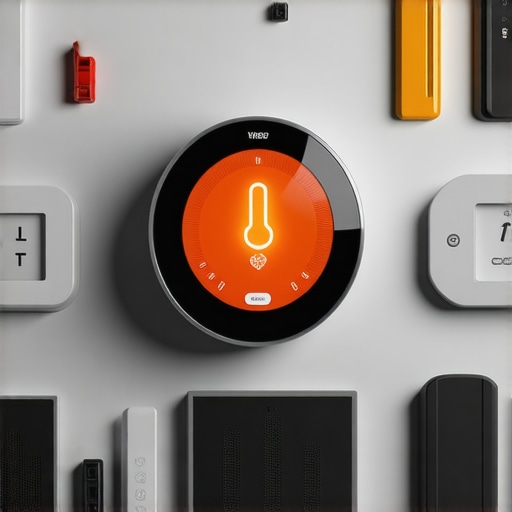
The Digital Deception: Why Your Smartphone Isn’t a Service Tech
It’s 4:00 AM in a mechanical room, the wind is howling across a frozen landscape, and I’m staring at a commercial furnace repair job that shouldn’t exist. The customer’s phone says the building is at 68 degrees, but the pipes are about to burst in the north wing. My old mentor used to scream, ‘You can’t heat what you can’t touch!’ This is why airflow matters more than horsepower. You see, these ‘smart’ systems are only as smart as the sensors they’re wired to, and if your ‘Tin Knocker’ didn’t understand static pressure, your app is just a digital paperweight. We are entering a regulatory cliff where 2026 represents a total reset for the HVAC industry. Between the phase-out of R-410A and the mandatory shift to A2L refrigerants, the hardware is getting more complex while the ductwork—the actual lungs of your house—is being ignored by ‘Sales Techs’ who just want to swap boxes and collect a commission. If you think your programmable thermostat programming is going to save an undersized system with restricted returns, you’re in for a cold awakening. Comfort isn’t a setting on a touchscreen; it’s a result of thermodynamics.
“The most expensive equipment in the world cannot overcome a bad duct system.” – Industry Axiom
1. The Relay Lag: When Software Outpaces Hardware
The first sign your system needs a 2026 reset is what I call the ‘Ghost in the Machine.’ You hear a click, the app says ‘Heating,’ but there’s nothing but dead silence from the registers. This often points to failing relay services or a control board that’s struggling to translate a digital signal into a mechanical action. In a commercial furnace repair context, these relays are the unsung heroes. They handle the high-voltage load required to kick-start heavy blowers and inductors. When a relay sticks, it’s not just a nuisance; it’s a fire hazard. By 2026, the sensors required for the new A2L refrigerants will add another layer of complexity. If your current board can’t handle basic relay tasks now, it will never communicate with the safety protocols coming next year. I’ve seen boards fried because a ‘Sparky’ wired the low voltage line too close to the high-tension leads, causing electromagnetic interference that made the app think the system was running when the gas valve was actually locked out. This is why professional HVAC repair is about more than just reading error codes; it’s about understanding the electrical path of least resistance.
2. The Propane Pivot: Fuel Conversion and Combustion Physics
If you’re moving from natural gas to propane, you can’t just flip a switch on an app. I’ve been called out to far too many propane conversion services where the previous guy didn’t change the orifices or the regulator spring. Propane has a higher BTU content and a different specific gravity than natural gas. If you don’t get the mixture right, you’ll end up with ‘sooting’—a nasty, carbon-heavy buildup that coats your heat exchanger and turns your high-efficiency furnace into a ticking time bomb of carbon monoxide.
“Design heating loads shall be determined in accordance with the procedures described in the ASHRAE Handbook—Fundamentals.” – International Mechanical Code (IMC)
This isn’t just theory. When we do a reset for 2026, we’re looking at the burner assembly. If you’re seeing a lazy yellow flame instead of a crisp blue one, your app won’t tell you, but your nose will—it’ll smell like a sour, half-burnt candle. That’s incomplete combustion. Whether it’s for a standard home or specialized furnace repair myths you’ve heard, the physics of gas pressure doesn’t care about your Wi-Fi signal.
3. The Pookie Factor: Why Your App Can’t Fix Static Pressure
One of the biggest scams in the industry is the ‘Sales Tech’ who tells you a new 96% AFUE furnace will solve your comfort issues while leaving your old, leaky, undersized ducts in place. I call it the ‘Pookie Factor.’ In the trade, ‘Pookie’ is the mastic we use to seal duct joints. If your ‘Tin Knocker’ didn’t use it, you’re probably heating your attic or crawlspace instead of your bedroom. This is where HVAC duct sealing becomes the real hero of 2026. High static pressure—the resistance the blower faces—kills modern variable-speed motors. These motors are designed to ramp up to overcome resistance, but they’ll burn themselves out trying to push air through a straw. If you notice your furnace sounds like a jet engine taking off but you only feel a whisper of air at the vents, your system is struggling. We often find that choosing the right HVAC fixes involves ripping out a ‘panned-air’ return and replacing it with a proper drop. Your app might show the temperature is rising, but it’s doing so with three times the energy consumption because the ‘gas’ is being wasted on friction and leaks.
4. The Latent Heat Crisis: Dehumidification in the Cold
Most people think dehumidification services are only for the humid summers of the South, but in the North, moisture control is a winter nightmare. In modern, tightly sealed homes—often the result of new construction heating design—we see a massive buildup of latent heat. If your furnace is oversized (a common mistake), it ‘short cycles.’ It heats the air (sensible heat) so fast that it never runs long enough to manage the moisture levels. You end up with frost on the inside of your windows and mold in the corners of your closets. A true 2026 reset involves looking at your system’s ability to move air slowly and consistently. This is where variable-speed blowers and dedicated dehumidifiers come in. If your ‘smart’ system is just turning on and off every ten minutes, it’s failing the physics test. We use psychrometric charts to ensure that the air leaving your coil is at the right dew point, even when it’s 10 degrees outside. It’s the difference between a house that feels ‘warm’ and a house that feels ‘comfortable.’
5. Niche Loads: From Snow Melt to Spa Heaters
Finally, a real reset for the upcoming year means looking at the specialized systems that drain your wallet. I’ve seen urgent furnace repair calls that turned out to be a failure in the snow melt systems installation. These systems use a heat exchanger to pump glycol through PEX tubing under your driveway. If the mixing valve fails, you’re either melting your concrete or sending 180-degree water into a system designed for 120. The same goes for spa heater services. These units live in high-corrosion environments. Chlorine and bromine eat copper heat exchangers for breakfast. If you aren’t checking the pH of the water and the integrity of the burners, that ‘smart’ spa app will be the last thing to know when the unit rots out. Real HVAC veterans know that ‘the juice’—the refrigerant or the fuel—must be handled with respect. Whether it’s a snow melt loop or a high-end spa, these systems require a mechanical reset that goes far beyond what any ‘Sales Tech’ can offer with a tablet and a smile. Comfort is earned through proper static pressure, correct orifice sizing, and the liberal application of Pookie.