The Ghost in the Heat Exchanger: Why Your Blue Flame Might Be Lying to You
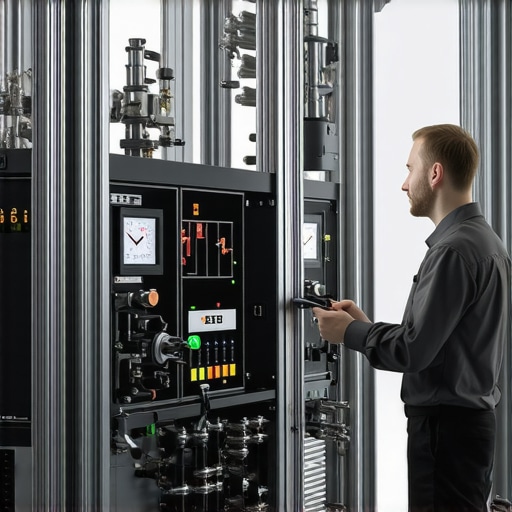
My old mentor, a man who had more soot in his lungs than a Victorian chimney sweep, used to scream at me every time I pulled out a flashlight instead of a tool bag. ‘You can’t see chemistry, kid! You can’t cool what you can’t touch, and you can’t fix what you can’t measure!’ He was talking about airflow, but he was also talking about the invisible dance of molecules inside a heat exchanger. Most guys in this trade—especially the ‘Sales Techs’ who are more interested in their commission than your CO levels—will look at a furnace flame and say, ‘It’s blue, it’s fine.’ That is a dangerous, expensive lie. A blue flame tells you almost nothing about the actual efficiency or safety of the burn. To really know what’s happening, you need a professional combustion analysis, and if your tech isn’t bringing a calibrated analyzer to your furnace tune-up services, you’re not getting a service; you’re getting a performance.
“The combustion process must be monitored to ensure that the equipment is operating safely and at its rated efficiency.” – ACCA Standard 4
The Physics of the Fire: Thermodynamic Zooming
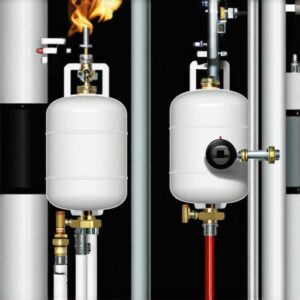
In the cold climates of the North, we don’t play around with heating. When we talk about combustion analysis, we are looking at the stoichiometric ratio—the perfect balance of fuel and air. In a perfect world, every molecule of methane or propane would find two molecules of oxygen and turn into CO2 and water vapor. But we live in a world of dirty blowers, cracked heat exchangers, and restricted vents. If you have too much air (excess air), you’re literally heating up the neighborhood by dumping heat out the flue. If you have too little, you produce Carbon Monoxide (CO), the silent killer that we prevent with carbon monoxide detector installation. When I perform a modulating furnace repair, I’m looking at how the unit handles varying fuel inputs. A modulating furnace is like a high-performance sports car; if the fuel-to-air mixture is off by even a fraction, the efficiency drops off a cliff. This is where remote thermostat access comes into play—not just for your comfort, but for monitoring run times that might indicate a system struggling with a poor burn. [IMAGE_PLACEHOLDER]
Propane Conversions and the Chemistry of Cold
For those off the natural gas grid, propane conversion services are a way of life. Propane is a different beast; it’s denser and requires more air for combustion than natural gas. If a gas line installation for furnaces isn’t sized correctly, or if the orifices aren’t swapped properly during a conversion, you’re looking at massive soot buildup. Soot acts as an insulator on the inside of your heat exchanger. Just a 1/16th of an inch of soot can reduce heat transfer by 20%. That means you’re paying for 100% of the fuel but only getting 80% of the heat. This is why efficient HVAC repairs are the blueprint for surviving a polar vortex without emptying your bank account. Whether it’s a wall furnace installation in a small cabin or a complex hydronic heating system in a mansion, the physics remain the same: if you aren’t analyzing the flue gases, you’re just guessing.
The Forensic Diagnosis: Anatomy of a Burnout
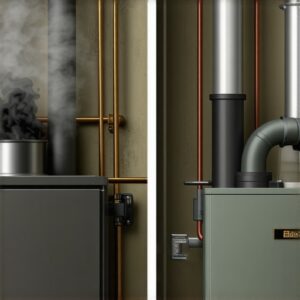
When I walk into a mechanical room, I’m not just looking at the box; I’m listening for the screech of a draft inducer motor and smelling for the acrid, sour scent of a failing heat exchanger. A ‘Sales Tech’ will see a 15-year-old unit and immediately quote you $12,000 for a replacement. I’d rather look at the manifold pressure. I recently followed a guy who told a homeowner their fireplace insert services were unnecessary and they needed a whole new HVAC system. All I found was a gas valve that was over-fired, causing the limit switch to trip. A simple adjustment using a manometer and an analyzer saved them thousands. This is the difference between a technician and a salesman. Understanding furnace repair myths debunked by industry experts is critical for any homeowner who doesn’t want to get taken for a ride.
“The most expensive equipment in the world cannot overcome a bad duct system.” – Industry Axiom
Static Pressure and the Tin Knocker’s Revenge
Airflow is the lifeblood of the system. You can have the most efficient modulating furnace on the market, but if the ‘Tin Knocker’ (duct guy) didn’t size the return air drops correctly, the system will ‘slug’ and overheat. High static pressure is like trying to breathe through a straw while running a marathon. It kills compressors in the summer and cracks heat exchangers in the winter. This is why we emphasize top hvac repair strategies to extend your systems life. We use ‘Pookie’ (mastic) to seal every joint because tape fails, and leaks lead to pressure imbalances that pull dust and CO into your living space. If you’re wondering how to identify when furnace repair is urgent, start by looking for soot around the burner door—that’s a sign of ‘flame rollout’ and a major red flag.
The 2025 Regulatory Cliff
As we move into 2025, the industry is changing. We are seeing new refrigerants and higher SEER2 and AFUE requirements. Staying ahead means more than just installing a box; it means understanding heating service innovations transforming 2025 climate control. Whether you are looking at expert tips for 2025 success or just trying to keep an old boiler running, the goal is always the same: safety and efficiency. Don’t let a ‘Sparky’ (electrician) try to diagnose your gas manifold, and don’t let a salesman tell you a cracked heat exchanger is ‘normal’ for an old unit. It’s a death trap. If you need real answers, contact us today for a real combustion analysis. Science doesn’t lie, even when the salesman does.