The Sound of a Silent 24V Transformer
I can still hear my old mentor, a grizzly veteran who smelled of silver solder and black coffee, shouting across a crawlspace: ‘You can’t cool what you can’t touch, and you can’t touch anything if your controls are screaming in a language the furnace doesn’t speak!’ He was a master of the physics of airflow, and he taught me that horsepower is useless without control. This is the fundamental truth behind every smart thermostat installation. Homeowners think they are just swapping a plastic box on the wall, but they are actually re-engineering the brain of a multi-thousand-dollar thermodynamic machine. When you mess up the wiring, you aren’t just losing your Wi-Fi connection; you’re potentially frying a control board or forcing a gas furnace repair that could have been avoided with a simple volt meter check.
“The most expensive equipment in the world cannot overcome a bad duct system—or a poorly integrated control interface.” – Industry Axiom
In the cold Northeast, where we deal with cracked heat exchangers and the constant hum of a draft inducer motor, the thermostat is the gatekeeper. It’s the difference between a warm home and a 3 AM emergency call because the flame rollout switch tripped due to short cycling. Most people think they are ‘handy’ until they see the ‘No Power’ message on their sleek new screen. They forget that an HVAC system is a closed loop of electrical signals and refrigerant pressures. If you’re looking for how to identify when furnace repair is urgent and why, start by checking if your ‘smart’ tech is actually making your system stupid.
The Anatomy of the Control Circuit
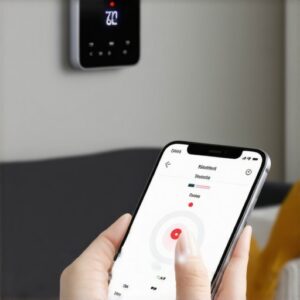
To understand wiring errors, you have to understand the 24-volt transformer. Your furnace takes 120V line voltage and steps it down to 24V AC to run the controls. This is the ‘juice’ that powers the contactors and relays. In the old days, a thermostat was just a mercury switch—a dumb mechanical bridge. Today, a smart thermostat is a computer. Computers need a constant power source. This is where the infamous ‘C-wire’ or Common wire comes in. It completes the circuit back to the transformer so the thermostat can stay powered without ‘stealing’ energy from the heating or cooling wires.
When I’m out on a commercial furnace repair, the most common error I see is ‘power stealing’ gone wrong. Some smart thermostats try to pulse the ‘W’ (heating) or ‘Y’ (cooling) lines to get just enough juice to keep their batteries charged. On an older unit, this might just cause a faint click. On a modern system, it can confuse the integrated circuit board, leading to erratic draft inducer motor repair needs because the relay is chatter-firing like a machine gun. This ‘chatter’ generates heat, and heat kills electronics.
The ‘C-Wire’ Trap and the Myth of the Blue Wire
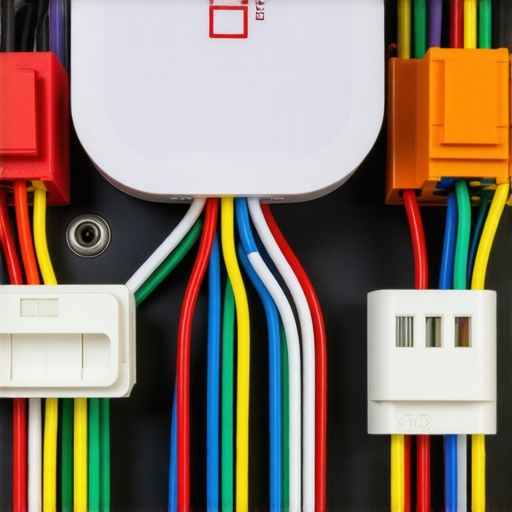
Don’t trust the colors. If I’ve learned anything in 30 years as a ‘tin knocker’ and tech, it’s that the ‘Sparky’ or the guy who installed the original wire might have been colorblind or just lazy. Just because a wire is blue doesn’t mean it’s connected to the Common terminal at the furnace. I’ve seen ductless mini-split installation jobs where people tried to use standard 24V thermostats on DC-communication lines. That’s a $600 mistake. You have to physically open the furnace cabinet and verify that the wire goes to the ‘C’ terminal on the control board. If you don’t have a C-wire, don’t just guess. You need a ‘C-wire adapter’ or to pull a new bundle of 18/5 or 18/7 thermostat wire.
Ignoring this leads to ‘short cycling.’ In a cold climate, short cycling is the enemy of the heat exchanger. Every time your furnace starts, the metal expands. When it stops, it contracts. If your smart thermostat is turning the system on and off every five minutes because it’s losing power, you are essentially fatigue-testing your furnace. This is a fast track to a cracked heat exchanger and a dangerous carbon monoxide situation. If you suspect your system is already suffering, you should check out furnace repair myths debunked by industry experts to see why ‘topping off’ or ‘just a simple fix’ isn’t always the answer.
Millivolt Systems and the Gas Line Danger
If you have a ventless gas heater or an older pool heater repair situation, you might be dealing with a millivolt system. These don’t use 24V; they generate a tiny bit of electricity from a standing pilot light hitting a thermopile. If you hook a smart thermostat directly to a millivolt gas valve, you will fry the valve instantly. You need an isolation relay. This is where a ‘Sales Tech’ would tell you that you need a whole new $15,000 system. In reality, a $30 relay and a bit of ‘Pookie’ (mastic) to seal the wire hole can save the day. The same logic applies to gas line installation for furnaces; the controls must match the mechanical delivery. You wouldn’t put a Ferrari engine in a lawnmower, so don’t put a high-draw smart controller on a delicate millivolt circuit without protection.
“Proper sizing and installation of controls are just as critical to system longevity as the equipment itself.” – ACCA Manual J Standards
We also see issues with oil to gas conversion. When switching fuels, the entire sequence of operations changes. An oil burner has a primary control with a cad cell; a gas furnace has an IFC with a flame sensor. If your thermostat isn’t configured for the correct fuel type in the ‘pro-installer’ settings, you might find your blower motor running when it shouldn’t, or worse, not running when the heat is blasting. This leads to the high-limit switch tripping, which is the system’s way of screaming, ‘I’m melting!’
Swamp Coolers and High Head Pressure
In drier regions or during transitional seasons, even swamp cooler maintenance is affected by smart controls. While most evaporative coolers use simple multi-speed switches, integrating them into a smart home system requires specific relays to handle the high-amp draw of the pump and the blower. If you wire these wrong, you risk a fire. In the HVAC world, we call the refrigerant ‘gas’ or ‘juice,’ and the suction line should be ‘beer can cold.’ But if your thermostat is sending a cooling signal and a heating signal at the same time—a common error when the Rh and Rc jumpers are misplaced—you’ll have high head pressure that can cook a compressor in a single afternoon.
For those looking for long-term reliability, top HVAC repair strategies to extend your system’s life always include a professional annual heating inspection. During these inspections, we don’t just vacuum out the dust; we check the ‘amperage draw’ of your components while the thermostat is calling for a load. We see if that new smart stat is causing a voltage drop that makes your contactors hum and pit.
The Verdict: Physics vs. Convenience
A smart thermostat is a tool, not a miracle. It won’t fix a pool heater that has a scaled-up heat exchanger, and it won’t fix a gas furnace repair need that’s actually caused by a clogged filter or a bad draft inducer motor. If you are doing a ductless mini-split installation, stick to the manufacturer’s proprietary controls unless you are using a tested interface module. Comfort is a matter of physics—enthalpy, latent heat, and static pressure. Wiring a thermostat is the final step in a long chain of mechanical events. Do it right, and you’ll enjoy the efficiency promised by heating service innovations transforming 2025 climate control. Do it wrong, and you’ll be calling me on a Saturday night when the ‘juice’ stops flowing and the house starts freezing.