The Ghost of Heat Past: Why Your Sanctuary is Freezing While the Budget Melts
I’ve spent thirty winters crawling through the crawlspaces of 19th-century steeples and balancing steam boiler repair jobs that would make a nuclear engineer sweat. Most church boards think the solution to a cold congregation is a bigger furnace. They’re wrong. My old mentor, a man who could smell a cracked heat exchanger from the parking lot, used to scream at me, ‘You can’t heat what the air doesn’t reach!’ He’d stand in the middle of a drafty nave, pointing at the 40-foot ceilings, and explain that if the air isn’t moving where the people are sitting, you’re just subsidizing the local utility company to heat the rafters. This is the fundamental physics of church heating: heat rises, but parishioners sit in the bottom six feet of the room. If your furnace ignition repair was successful but the pews are still ice-cold, you don’t have a burner problem; you have a physics problem.
The biggest scam in the industry today is the ‘Sales Tech’ who walks into a church and immediately quotes a $100,000 replacement because the ‘unit is old.’ Look, age is a number, but static pressure is a reality. Before you even look at high-efficiency furnace installation, you need to look at the bones.
‘The most expensive equipment in the world cannot overcome a bad duct system.’ – Industry Axiom
In these old buildings, the HVAC duct sealing is usually non-existent. You’re losing 30% of your BTU capacity into the attic or the basement before it even hits a register. That’s why we use ‘Pookie’—that thick, grey mastic—to seal every joint. Forget duct tape; it’s for sticking posters to walls, not for HVAC. When we talk about heating service hacks for comfort and savings in 2025, we’re talking about stopping the leaks and forcing the ‘gas’ to do its job.
The Steam and Biomass Reality: Beyond the Standard Box
In the North, where the wind bites through the stone walls, we deal with steam boiler repair and biomass boiler services. Steam is a beautiful, violent beast. It’s about latent heat—the energy released when steam turns back into water. If your pipes are banging like a tin knocker on a deadline, your traps are failed or your headers are pitched wrong. You aren’t just losing comfort; you’re burning money. Some forward-thinking parishes are even looking at solar thermal heating integration to pre-heat their water, which is a solid move if you’ve got the roof real estate. But even the best boiler is useless if your IAQ improvement services aren’t addressed. You’ve got a thousand people breathing in a confined space; if you don’t have energy recovery ventilators (ERVs), you’re either breathing stale air or dumping all your expensive heat out a window just to get some oxygen.
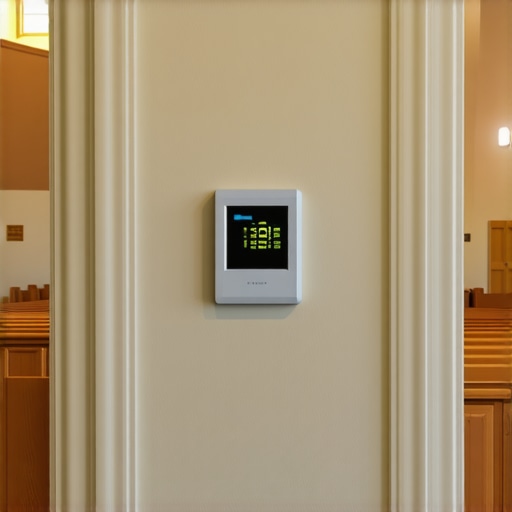
Let’s talk about the 2025 transition. We’re moving away from old refrigerants, but in the heating world, the shift is toward app-controlled heating systems. For a church, this is a literal godsend. You don’t need to heat the sanctuary to 72 degrees on a Tuesday morning for a staff meeting of three people. Zoning and remote scheduling are the only ways to survive the rising costs of fuel. If you’re still using a manual dial on the wall, you’re lighting the collection plate on fire. I always tell my clients to check out efficient HVAC repairs: the blueprint for cooler summers and warmer winters to understand how these modern controls interface with ancient iron.
The Airflow Manifesto: Why Comfort is a Science
When the ‘Sparky’ finishes the wiring and the furnace ignition repair is verified, the real work begins. We look at the ‘suction line’—well, in heating, we look at the return air. Most churches are starved for return air. You can’t push air into a room if you aren’t pulling it out. This creates high static pressure, which kills blower motors and makes the system ‘short cycle.’
‘Design for the required airflow, then design the equipment to provide it.’ – ACCA Manual J Standards
If your HVAC duct sealing is tight and your dryer vent cleaning (don’t laugh, church kitchens have massive lint build-up) is done, you’ve won half the battle. If the air isn’t reaching the back rows, we don’t need a bigger furnace; we need better distribution. Sometimes that means preventative HVAC repair tips for year-round efficiency, and sometimes it means admitting the original installer in 1964 didn’t know a CFM from a hole in the ground. If you’re ready to stop guessing and start measuring, you can always contact us for a real diagnostic, not a sales pitch.
The Maintenance Trap: Avoiding the Emergency Call
Every July, I see the same thing. People forget the furnace exists until the first frost. Then the phone rings off the hook because of a simple furnace ignition repair that could have been caught in October. You need to know how to identify when furnace repair is urgent and why before you’re standing in front of a shivering congregation on Christmas Eve. We check the ‘juice,’ we check the heat exchanger for cracks (the ‘widow maker’), and we make sure the combustion air is clear. For churches, balancing the budget means avoiding the $1,200 emergency Sunday morning call-out fee. Stick to the top HVAC repair strategies to extend your system’s life and you might just make that boiler last another decade. It’s not magic; it’s just physics, sweat, and a little bit of Pookie. For more details on our standards, feel free to review our privacy policy or check our guides on choosing the right HVAC fixes: what homeowners (and vestries) need to know.