The Physics of a Digital Divorce
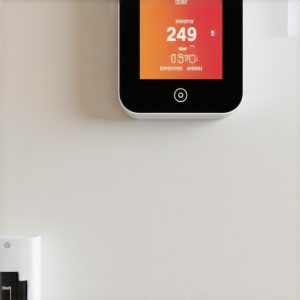
My old mentor used to scream, ‘You can’t cool what you can’t touch!’ but when it came to controls, he was even more vocal. He would slap the side of a galvanized return drop and yell, ‘This tin doesn’t care about your Wi-Fi! Airflow matters more than horsepower, and a thermostat is just a switch with a college degree!’ He was right. We spend thousands on high-efficiency furnaces and radiant floor heating installation, but when the smart thermostat setup fails, you’re left with a very expensive, silent box in the basement. Troubleshooting a smart thermostat that won’t talk to your furnace isn’t about software; it’s about the 24-volt electrical handshake that makes thermodynamics possible. In the frozen climates of the North, where a cracked heat exchanger or a failing flame sensor can lead to a ‘no-heat’ emergency, understanding this communication is vital for survival. When the mercury drops and your phone app says ‘No Connection,’ you aren’t just fighting a glitch; you’re fighting the physics of heat transfer.
“Design heating loads shall be determined in accordance with ACCA Manual J or another approved equivalent computational procedure.” – ACCA Manual J Standards
The Forensic Diagnosis: Anatomy of the 24-Volt Circuit
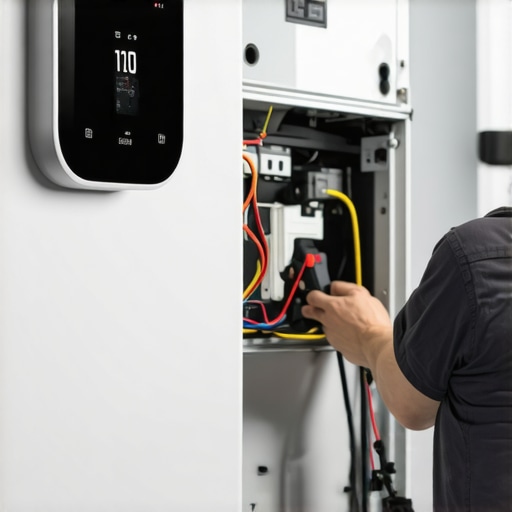
In the HVAC world, we deal with two types of electricity: the ‘Sparky’ stuff (120V or 240V that powers the blower and inducer) and the ‘Juice’ (the 24-volt control circuit). When your smart thermostat loses its mind, the problem is almost always in the low-voltage loop. Think of the thermostat as the brain, the furnace control board as the nervous system, and the R, W, and C wires as the literal nerves. If your thermostat isn’t talking, we start at the transformer. We use a multimeter to check for ‘ghost voltage’—that annoying residual charge that looks like power but lacks the amperage to pull in a contactor. If you don’t have a solid 24 volts between the R (Power) and C (Common) wires, your smart thermostat is just a plastic brick on the wall. This is a common issue in church heating systems or large restaurant kitchen exhaust repair scenarios where long wire runs cause significant voltage drops. Without that C-wire, many smart thermostats try to ‘power steal’ from the W or Y terminals, which can cause ‘chattering’ at the furnace board and eventually fry the logic chips.
The Hidden Killers: Safety Lockouts and Predictive Maintenance Alerts
Sometimes, the thermostat is screaming for heat, but the furnace is refusing to listen. This isn’t a communication failure; it’s a protective strike. Modern furnaces are equipped with a safety chain: the high-limit switch, the rollout switch, and the pressure switch. If your attic insulation for heating is poor, causing the furnace to run for hours on end, the internal temperature of the heat exchanger can spike. When that limit switch trips, the board cuts power to the gas valve and the W terminal. Your thermostat might show a predictive maintenance alert, but it can’t tell you that the real culprit is a clogged filter or a pilot light relighting failure in older units. We perform a combustion analysis to see if the system is actually breathing. If the oxygen-to-fuel ratio is off, or if we detect carbon monoxide, the system locks out. You might think the ‘smart’ tech is broken, but it’s actually the efficient HVAC repairs protocol saving your life. Don’t fall for furnace repair myths debunked by industry experts that suggest a simple reset will fix a safety lockout.
“All combustion-powered equipment must be vented to the outdoors in a manner that prevents the recirculation of flue gases into the building’s air intake.” – ASHRAE Standard 62.1
The Airflow Manifesto: Humidity and Static Pressure
In cold climates, we often integrate steam humidifiers into the ductwork. If your smart thermostat is supposed to control humidity but isn’t, you have to look at the ‘Pookie’ (mastic) on the plenum. If the ‘tin knocker’ who installed your ducts didn’t seal the bypass, your static pressure will be all wrong. The thermostat might be sending the signal, but the solenoid valve won’t open if the humidistat sensing bulb is covered in dust or located in a dead-air pocket. This is why heating service hacks for comfort and savings in 2025 always emphasize physical inspection over digital adjustments. For those with radiant floor heating installation, the troubleshooting gets even more complex because you’re dealing with thermal lag. The thermostat might stop ‘talking’ because the floor sensor has shorted out, leading the system to think the room is already at 100 degrees when it’s actually 60. Understanding these nuances is part of top HVAC repair strategies to extend your system’s life.
When to Pull the Plug: Repair vs. Replace
If you’ve checked the 3-amp fuse on the board, verified the C-wire, and performed a soft reset, yet the ‘digital divorce’ persists, you might be looking at a dead control board. A new board can cost $500, while a basic furnace might be $4,000 to $8,000 depending on the AFUE rating. If your system is over 15 years old, investing in financing for heat pump installs might be smarter than putting a new brain in an old body. You need to know how to identify when furnace repair is urgent and why before you spend money on a smart thermostat that the furnace is too old to understand. In the end, comfort is about physics, not just pretty touchscreens. If your ‘smart’ home feels like an ice box, stop looking at the app and start looking at the wires.