The First Fire: Dust or Danger?
It is 2 AM on a Tuesday in the dead of a January freeze. You just dropped ten grand on a new construction heating design and the thermostat finally kicks the inducer motor into gear. You expect the sweet, warm embrace of forced air, but instead, your nostrils are hit with a sharp, acrid, chemical stench. It smells like a Tupperware container met its demise in the bottom of a dishwasher. Most homeowners panic, and rightfully so. You start wondering if your emergency heating repair bill is about to double. As someone who has spent thirty years as a master tech, let me tell you: that smell is the furnace trying to tell you a story about its birth in a factory or its struggle for breath.
My Mentor’s Lesson: You Can’t Heat What You Can’t Touch
My old mentor, Smitty, used to scream at me in the back of a freezing service van, ‘You can’t cool what you can’t touch, and you can’t heat what you can’t move!’ He was a legendary tin knocker who believed that airflow was the only thing standing between a comfortable home and a mechanical meltdown. One afternoon, we were looking at a warehouse heating solutions project that was failing. The client complained of a ‘burning wires’ smell. Smitty didn’t look at the electrical panel first; he looked at the return air drop. The unit was starving for air. Because the industrial heater services team had undersized the ductwork, the heat exchanger was getting so hot it was actually off-gassing the high-temp paint on the cabinet. It wasn’t an electrical fire—it was a physics failure.
“The most expensive equipment in the world cannot overcome a bad duct system.” – Industry Axiom
The Forensic Diagnosis: Why the Plastic Stench?
When we talk about that burning plastic smell in new systems, we have to look at the mechanical anatomy of the unit. Inside that cabinet, you have the heat exchanger, the blower motor, the control board, and miles of wire harness. In 2025, manufacturing standards have changed. To prevent corrosion during shipping, many brands coat their heat exchangers in a thin film of oil. The first time that furnace flame sensor cleaning isn’t enough to keep the unit running and the burners truly stay lit, that oil reaches its flash point. It off-gasses. But there is a darker side to that smell. Sometimes, a lazy installer leaves a shipping label or a plastic manual packet inside the blower housing. When the system ramps up, that plastic melts onto the secondary heat exchanger. If you’re dealing with a crawl space heating solutions setup, moisture can exacerbate these smells, turning a minor off-gassing event into a full-blown olfactory assault.
The Mechanical Anatomy: Components Under Stress
Let’s talk gas and juice. Your furnace is a controlled explosion in a box. The heat exchanger’s job is to transfer that heat to the air without letting the combustion products (the bad stuff) mix with your breathing air. In new construction, sometimes the commercial furnace repair guys see ‘ghost’ smells caused by pookie (mastic) that hasn’t fully cured. This sealant is vital for preventing leaks, but if it’s applied too heavily near the supply plenum, the heat makes it smell like melting vinyl. If the smell persists past the first 48 hours of operation, you aren’t looking at ‘break-in’ anymore. You are looking at a wire harness that might be touching a hot surface or a failing capacitor that’s about to vent its internal fluids.
The Airflow Manifesto: Why Static Pressure is Your Enemy
Most ‘burning’ smells are actually airflow issues. If your new construction heating design didn’t account for the TESP (Total External Static Pressure), your blower motor is working too hard. It’s like driving your car in first gear at 60 miles per hour. The motor windings get hot, the varnish on the copper wire begins to melt, and you get that distinct ‘burning plastic’ aroma. This is why efficient HVAC repairs always start with a manometer, not a screwdriver. If you’ve recently opted for a ductless mini-split installation in a specific room, you might notice a different smell—more like ozone. That’s usually the ionizer or the high-voltage dust collector doing its job, but in a central furnace, ozone means a sparky didn’t tighten a terminal block, and you’ve got an electrical arc.
“A furnace is a controlled fire in a box; any deviation from that control is an emergency.” – Service Manual Standard
Industrial Stakes: Warehouse and Restaurant Systems
In the world of industrial heater services and restaurant kitchen exhaust repair, the smells are even more intense. A warehouse unit is often an oversized beast that moves massive volumes of air. When these smell like burning plastic, it’s often because the belt on the blower is slipping. Friction creates heat; heat melts rubber. In a restaurant, if the makeup air unit isn’t balanced with the exhaust, you can actually pull flue gases back into the kitchen, which carries a sour, acidic scent that people often confuse with melting plastic. This is where identifying urgent furnace repair becomes a matter of life and death, not just comfort.
Maintenance Hacks: From Flame Sensors to Humidifiers
Don’t let a sales tech convince you that a smell means you need a $15,000 system. Sometimes, a furnace flame sensor cleaning is all it takes to stop a unit from short-cycling, which is a major cause of component overheating. If you have whole-home humidifiers installed, check the water panel. If the solenoid is sticking, it can create a localized hot spot that smells like burning electronics. I’ve seen cases where a crawl space heating solutions duct was resting against a hot water pipe, melting the outer jacket and sending those fumes through the vents. If you want to avoid these headaches, focus on preventative HVAC repair tips that emphasize keeping the system clean and the airflow unobstructed.
The Financial Verdict: Repair vs. Replace
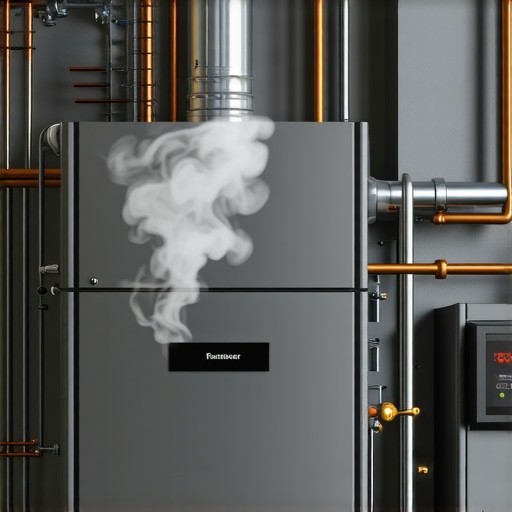
Is that smell worth an emergency heating repair call? If the smell is accompanied by a buzzing sound or a visible haze, shut the breaker off immediately. You are dealing with an electrical failure. If it’s just a faint ‘new car’ smell for the first few hours of a new install, it’s likely just the oils burning off. However, never ignore a smell that reminds you of rotten eggs (that’s the mercaptan added to natural gas) or a metallic, ozone scent. In 2025, with the transition to newer refrigerants and higher-efficiency heat exchangers, the materials used in furnaces are more sensitive than ever. Understanding the myths of furnace repair can save you thousands. Comfort isn’t magic; it’s physics. Keep your filters clean, your pookie sealed, and your ears open to the sounds of your system.