The Physics of Ventilation: A Hard Lesson from Big Sal
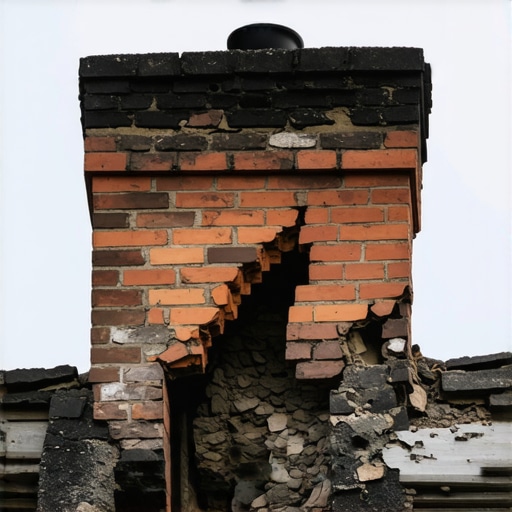
My old mentor, a grizzly veteran we called Big Sal, used to scream at me until his neck veins turned purple: ‘You can’t burn gas if you can’t dump the trash!’ By ‘trash,’ he meant the combustion byproducts—Carbon Monoxide, CO2, and a massive amount of water vapor. He’d stand in a freezing basement in Chicago, pointing a calloused finger at a rusted-out flue pipe, and yell, ‘The chimney is the furnace’s lungs. If those lungs collapse, the house dies.’ It was a physics lesson I never forgot. Most ‘Sales Techs’ today will see a tripped rollout switch and immediately try to sell a sweet grandmother a $15,000 system. But a real technician knows that 90% of the time, the furnace is screaming for help because its throat—the chimney liner—is choked shut by a collapsing masonry wall. We are dealing with thermodynamics here, not magic. If the sensible heat from the furnace can’t escape, it stays in the heat exchanger until the metal cracks. This is why understanding the integrity of your chimney is the first step in avoiding emergency heating repair during a polar vortex.
“All masonry chimneys shall be lined with a material that will resist corrosion, softening, or cracking from flue gases at temperatures up to 1800°F.” – NFPA 211: Standard for Chimneys, Fireplaces, and Vents
1. The T-Pit ‘Shrapnel’ (Clay Shards)
The most obvious sign of a terminal chimney liner is ‘shrapnel’ at the base of your flue. When I pull the vent pipe out of the wall to inspect the ‘T-pit,’ and I see chunks of terra cotta clay, the diagnosis is clear. This is the liner delaminating. Natural gas is clean-burning, but its exhaust is highly acidic. When that warm vapor hits the cold masonry of a North-climate chimney, it hits the dew point and turns into acidic condensate. That liquid eats the mortar and causes the clay tiles to flake off (spalling). Eventually, these flakes pile up until they block the entire flue, forcing Carbon Monoxide back into the home. If you see this, you don’t just need a furnace guy; you need a pro who understands heating service hacks for comfort and savings like installing a stainless steel liner.
2. Efflorescence: The Chimney’s White Tears
If you see a white, fuzzy, salt-like substance on the exterior of your brick chimney, that’s not just ‘old house charm.’ It’s efflorescence. This happens when moisture inside the chimney—caused by a failing liner—leaches through the brick, carrying minerals to the surface where they evaporate. In cold climates, this is a death sentence. That moisture will freeze and thaw, eventually turning your brick into dust. This is where a preventative HVAC repair check can save you tens of thousands in masonry costs. If the liner is gone, the moisture has nowhere to go but through your walls.
3. The ‘Wet Window’ Syndrome
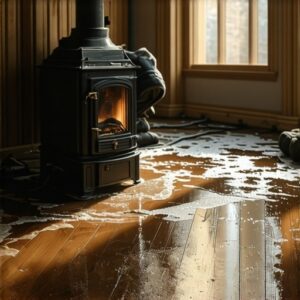
In the dead of winter, if you notice your windows are constantly fogged up or dripping with water, your furnace might be back-drafting. A collapsing liner restricts the ‘draft’—the negative pressure required to pull exhaust up and out. This increases the latent heat and humidity inside the home because combustion byproducts (which are largely water vapor) are leaking into your living space. While a whole-home humidifier is great for comfort, you don’t want your furnace acting as a humidifier via exhaust leaks. This is a massive red flag for Carbon Monoxide poisoning.
“The most expensive equipment in the world cannot overcome a bad duct system or an improperly drafted flue.” – ACCA Manual J / Industry Axiom
4. The Acidic Sour Smell
A properly venting furnace should have no smell. If you walk near your mechanical room and catch a whiff of something acidic, sour, or ‘burnt,’ the chimney is failing to create a ‘draw.’ This is often the smell of the ‘gas’ (refrigerant techs call it juice, but here we mean the fuel) not combusting completely or the condensation eating through the galvanized vent pipe. I’ve seen ‘tin knockers’ (duct guys) try to patch these pipes with ‘pookie’ (mastic), but if the liner is collapsed, no amount of sealant will fix the back-pressure.
5. Wiring Decay and Relay Failures
When heat can’t escape up the chimney, it builds up in the furnace cabinet. I’ve seen hundreds of cases where a ‘Sparky’ (electrician) is called for wiring repair for heating systems because the wires are brittle and cracking. This isn’t an electrical problem; it’s a thermodynamic one. The excess heat from the poor draft is ‘cooking’ the relay services and the control board. If you are constantly replacing capacitors or relays, check your chimney. The heat has to go somewhere, and if it’s not going up, it’s roasting your components.
6. Pilot Light Instability and Rollout
Does your furnace keep shutting down for no reason? Modern furnaces have a ‘rollout switch.’ If the exhaust can’t go up the chimney, the flames literally ‘roll out’ toward the front of the burner to find oxygen. This trips the safety switch. If you’re constantly resetting your furnace, you are in danger. This is why furnace repair myths often lead people to believe they just need a new sensor, when they actually need a new flue. In some cases, homeowners switch to dual fuel heat pump systems specifically to bypass the need for a masonry chimney altogether.
7. CO Detector Alarms
This is the final, non-negotiable sign. If your CO detector chirps, do not wait. A collapsed liner is the leading cause of CO buildup in older homes. While you’re at it, ensuring a smart thermostat setup with voice control via Alexa or Google can help you monitor system runtimes, but it won’t save you from a blocked flue. You need a physical inspection. We often see this when people perform a new gas line installation for furnaces without relining the old oversized chimney—it’s a recipe for disaster.
The Forensic Conclusion: Repair or Replace?
If your chimney liner is toast, you have two choices: Reline it with a UL-listed stainless steel sleeve or abandon the chimney and install a high-efficiency (90%+ AFUE) furnace that vents through the side wall with PVC. Both require a professional who knows the difference between a ‘Sales Tech’ pitch and actual mechanical science. Don’t let a failing chimney turn your home into a combustion chamber. Check your T-pit, watch for the white salts, and listen to the draft. Physics doesn’t lie, even if the guy trying to sell you a new air purifier integration does.