The Sound of a Silent Furnace: A Forensic Diagnosis of Airflow Neglect
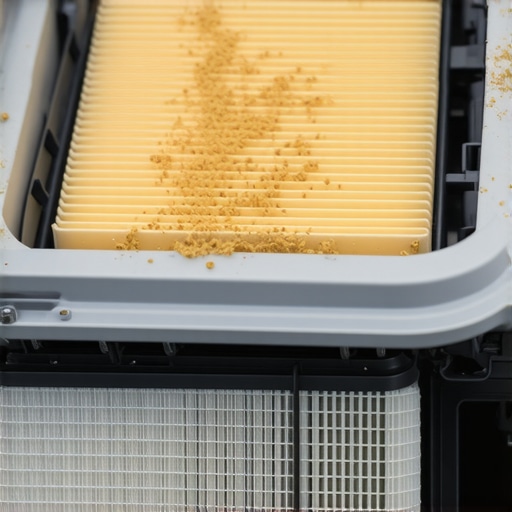
It usually starts with a whistle—a high-pitched, desperate wheeze coming from your return air vent. Then, the silence hits. It is 2 AM in the middle of a February deep freeze, and your house is dropping to 55 degrees. You go to the basement, and instead of the comforting hum of the blower, you smell it: that sharp, ozone-heavy scent of electrical death. You pull the service door, and there it is—a filter so caked in dust and pet dander it looks like a slab of dryer lint. You just killed a $600 ECM motor because you forgot a $10 piece of pleated fabric. This isn’t just a ‘maintenance mishap’; it is a fundamental violation of thermodynamics. As a technician who has spent three decades in the trenches, I have seen this movie a thousand times, and it never has a happy ending for the homeowner’s wallet.
The Physics Lesson: Why ‘Iron Lung’ Miller Was Right
My old mentor, a man we called ‘Iron Lung’ Miller because he could sniff out a gas leak from a block away, used to scream at me in the van: ‘Kid, you can’t heat what you can’t touch!’ He was talking about the boundary layer of air on the heat exchanger. In the North, where we deal with cracked heat exchangers and the constant threat of carbon monoxide, airflow is everything. When that filter gets restricted, the Total External Static Pressure (TESP) skyrockets. Think of it like trying to run a marathon while breathing through a cocktail straw. The blower motor—especially the modern, high-efficiency ECM motors we see in AI-driven HVAC optimization systems—tries to compensate by ramping up its RPMs to maintain the CFM (Cubic Feet per Minute) programmed into its logic board. It works itself to death, generating internal heat until the windings melt or the control module fries.
“Residential duct systems should be sized to handle the required airflow at a static pressure that does not exceed the blower’s capability.” – ACCA Manual D
The Anatomy of a Blower Death
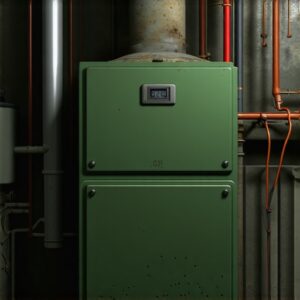
Let’s look at the mechanical anatomy of this failure. Your blower motor is the heart of the system. In a heating cycle, the combustion process heats the heat exchanger. The blower’s job is to pull return air across that hot metal, stripping the sensible heat and moving it into your living room. When the air is choked off by a dirty filter, the heat exchanger can’t shed that thermal energy. It overheats, often tripping the high-limit switch. But before the switch can save the system, the motor has already been fighting a losing battle against static pressure. If you have a furnace repair urgency, the blower is often the first casualty. The motor bearings, under constant stress from the high RPMs, start to screech—a sound like a fork in a blender—before finally seizing. By the time a ‘Sparky’ or a ‘Tin Knocker’ gets there to look at the duct design services, the damage is done.
The Climate Factor: Polar Vortex Physics
In cold climates like Chicago or the Northeast, the ‘monsoon effect’ isn’t your enemy—flame rollout is. When airflow is restricted, the internal temperature of the furnace cabinet rises to dangerous levels. This causes the metal in the heat exchanger to expand and contract violently. Eventually, you get stress fractures. This is why combustion analysis is non-negotiable during a service call. If I find a dead blower and a dirty filter, I am immediately checking for CO. A cracked heat exchanger isn’t just a repair; it’s a life-safety issue that usually leads to a full system replacement. If you are lucky, you might just need a preventative HVAC repair to replace the capacitor and the motor, but if that ‘gas’ (the fuel, not the refrigerant) isn’t burning clean due to back-pressure, you’re in trouble.
“The most expensive equipment in the world cannot overcome a bad duct system or a neglected filter.” – Industry Axiom
The Math: Repair vs. Replace
So, the motor is dead. Now what? You are looking at a $500 to $1,200 repair depending on whether it’s a standard PSC motor or a programmable ECM. A lot of ‘Sales Techs’ will use this moment to scare you into a $15,000 install. Don’t fall for it. If the heat exchanger passes a visual and combustion test, replace the motor and fix the airflow. This is where priority service memberships pay for themselves; they catch these dirty filters before they kill the motor. If your system is over 15 years old and you’re seeing signs of radiator replacement needs or baseboard heater repair issues elsewhere, then we can talk about financing for heat pump installs. But don’t let a ‘Sales Tech’ sell you a new unit just because you were lazy with the filter. Check the ‘Suction Line’—is it beer-can cold in the summer? Check the discharge air—is it scorching in the winter? If not, the ‘Pookie’ (mastic) on your ducts and a clean filter are your best friends.
Thermostat Installation and Optimization
Modern thermostat installation can actually help prevent this. Many smart thermostats now track ‘run time’ and can alert you to a pressure drop or a filter change. They can even be integrated into industrial heater services for larger properties. But a thermostat is only as smart as the person changing the filter. If you ignore the ‘Change Filter’ light, you are essentially signing a death warrant for your blower. Whether you have a high-end furnace or you’re dealing with older boiler systems needing radiator replacement, the logic remains the same: restrict the flow, and the machine will break.