The Cold Truth About High-Efficiency Heating
Look, I’ve spent thirty winters crawling through crawlspaces and dragging my tools across frozen gravel in the Midwest. I’ve seen the industry change from the old ‘cast iron’ beasts that lasted fifty years but burned gas like a leaky tanker to the new, sleek high-efficiency units that are essentially computers with burners. If you’re here because your old furnace finally gave up the ghost and a guy in a crisp white shirt just quoted you $12,000, sit down. You need to understand the physics of what you’re buying. My old mentor, a grizzly veteran who could smell a cracked heat exchanger from the driveway, used to scream at me, ‘You can’t cool what you can’t touch, and you can’t heat what you don’t control!’ This is why airflow matters more than horsepower. A 96% AFUE furnace is a paperweight if your tin knocker didn’t size the return air drops correctly.
“The most expensive equipment in the world cannot overcome a bad duct system.” – Industry Axiom
The Regulatory Cliff: Why Prices Are Climbing in 2025
We are standing on a regulatory cliff. If you haven’t heard about the R-410A phase-out and the transition to A2L refrigerants like R-454B, you’re about to feel it in your wallet. Even though we’re talking about a furnace, the entire HVAC ecosystem is shifting. The new units require more sensors, more ‘smarts,’ and frankly, more expensive components. When you ask about AC installation secrets, you’ll find that the cost of the raw materials—the copper, the aluminum, and the microprocessor-driven boards—is skyrocketing. A heating service call today isn’t just about a guy with a pipe wrench; it’s about a technician with a multimeter and a laptop. We’re seeing a 15-25% jump in equipment costs just because of the new EPA mandates for lower Global Warming Potential (GWP) gases.
The Anatomy of a High-Efficiency Installation
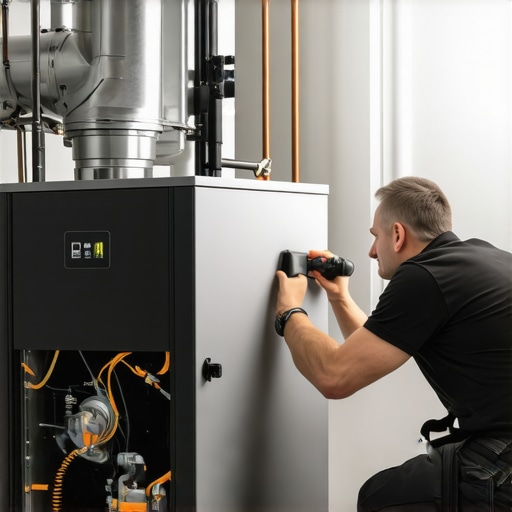
When you jump from an 80% furnace to a 90%+ model, it’s not a ‘slide-in’ replacement. Your old 80% unit vented through a chimney or a B-vent. A high-efficiency unit is a condensing furnace. It creates acidic condensate—basically ‘furnace sweat’—and it has to be vented through PVC. This means we often have to include a chimney liner installation or a complete re-venting strategy to move those flue gases safely. If the draft inducer motor repair costs on your old unit are piling up, it’s usually because the motor is working too hard against a restricted vent. In a high-efficiency setup, that inducer motor is a variable-speed precision instrument. If your installer doesn’t mention the condensate pump or the neutralizer kit, they’re cutting corners. That acid will eat your floor drain if you aren’t careful.
The Thermodynamics of the ‘North/Cold’ Zone
In the North, we deal with the polar vortex and flame rollout. The enemy isn’t just the cold; it’s the moisture. High-efficiency furnaces use a secondary heat exchanger to squeeze every last bit of latent heat out of the combustion process. This is where the magic (and the cost) happens. If you’re considering a ductless mini-split installation as a supplement, you’re looking at a smart move for those cold spots, but the primary furnace remains the heavy lifter. You’ll also need to think about thermostat installation. A basic ‘dumb’ thermostat won’t cut it. You need programmable thermostat programming or, better yet, geofencing temperature control to ensure the unit isn’t short-cycling. Short-cycling is the silent killer; it’s like stop-and-go traffic for your heat exchanger, causing metal fatigue and premature failure.
“Proper sizing and installation of HVAC systems are critical to ensure that the equipment operates at its rated efficiency.” – ASHRAE Standard 152
The Real Numbers: Where Your Money Goes
Why does it cost $6,000 to $10,000? Let’s break it down. You’ve got the box itself, but then you’ve got the contactor repair risk-proofing, the new gas lines, and the labor. A real pro will perform a Manual J load calculation. Most ‘sales techs’ just look at the old unit and match the BTUs. That’s a scam. Your house has changed—new windows, better insulation, maybe a new addition. If you oversize a high-efficiency furnace, it will reach the setpoint too fast, never hitting its peak efficiency, and you’ll be left with a clammy, uncomfortable house. We also have to look at solar thermal heating integration for those looking to truly go green, though that adds another layer of complexity to the heating service. Don’t forget that urgent furnace repair is always more expensive than a planned replacement. If you’re limping a 20-year-old unit along with pookie (mastic) and prayers, you’re playing a dangerous game with carbon monoxide.
The Verdict: Is It Worth It?
Is high-efficiency worth the 40% premium? If you live in a climate where the furnace runs six months a year, yes. The savings in ‘juice’ (gas) will pay back the difference in 5-7 years. But you have to vet your tin knocker. Ask them about static pressure. Ask them why they aren’t using a chimney liner if you have a shared water heater vent. If they give you a blank stare, show them the door. For those in more temperate zones, an evaporative cooler services check or a simple heat pump might be better, but for the true North, the furnace is king. Make sure you understand furnace repair myths before signing a contract. A good install is a marriage between physics and craftsmanship, and you shouldn’t settle for a cheap date when it comes to your family’s safety.