The Ghost in the Machine: Why Your High-Tech Switch is Failing You
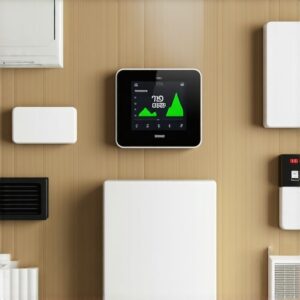
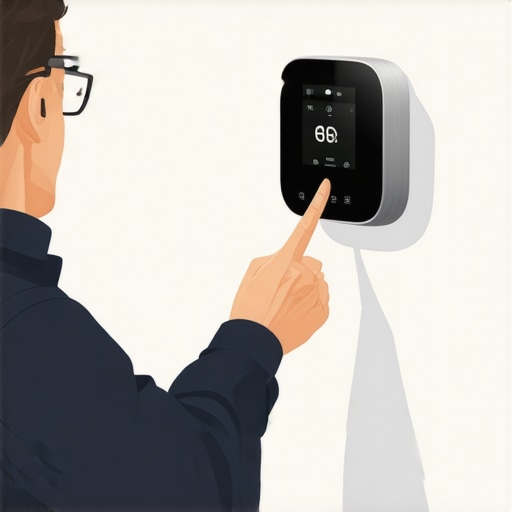
Look, I’ve spent thirty years crawling through blown-in fiberglass and sweating through my shirt in attics that feel like the belly of a steamer. I’ve seen every ‘revolutionary’ gadget that’s hit the supply house since the 90s. But nothing gets my blood boiling quite like a homeowner who thinks they’ve ‘hacked’ their utility bill just because they slapped a shiny, glass-faced smart thermostat on the wall. You see the relay click, the backlight glows, and you think you’re saving money. But in the mechanical room, your furnace is screaming. Without a professional smart thermostat setup, you aren’t running an efficient home; you’re just running a fancy remote control that’s slowly killing your compressor.
The Physics Lesson: Why Airflow Matters More than Horsepower
My old mentor, a man who could sniff out a refrigerant leak from the driveway, used to scream at me every morning: ‘You can’t cool what you can’t touch!’ This is why airflow matters more than horsepower. He’d stand over a 5-ton unit and point at a dirty 1-inch pleated filter, telling me that the most expensive equipment in the world is just a paperweight if the static pressure is wrong. When you DIY a thermostat installation, you’re often ignoring the thermodynamic reality of your home’s envelope. The thermostat doesn’t know your return air drop is undersized or that your ‘Tin Knocker’ friend used too much tape and not enough ‘Pookie’ (mastic) on the seams.
“The most expensive equipment in the world cannot overcome a bad duct system.” – Industry Axiom
In the North, where the polar vortex turns your outdoor unit into an ice cube, calibration is everything. We aren’t just dealing with sensible heat—the temperature you see on a thermometer. We’re dealing with the total heat content of the air. If your thermostat isn’t calibrated to understand the lag time of a geothermal heat pump system or the specific ramp-up profile of a high-efficiency furnace, it will short-cycle. Short-cycling is the silent killer. It’s the constant stopping and starting that cooks capacitors and wears down the contactors until you’re left with the acidic, sour smell of a compressor burnout at 3 AM in January.
The Anatomy of a Control Board: Diagnostics and Calibration
When I crack open a furnace cabinet for control board diagnostics, the first thing I look for is ‘chatter’—those rapid-fire relay clicks that mean the thermostat and the board are speaking different languages. A pro doesn’t just hook up the ‘juice’ (power) and walk away. We perform system performance testing to ensure the ‘deadband’—that temperature range between the system kicking on and off—is optimized for your specific ductwork. If it’s too tight, the system ‘hunts’ and kills your efficiency. If it’s too wide, you’re freezing one minute and roasting the next.
This is especially critical when dealing with air purification integration. Modern IAQ (Indoor Air Quality) systems need the blower to run at specific speeds to effectively move air through UV lights or HEPA filters. A standard ‘plug-and-play’ setup often neglects these secondary systems. If the thermostat doesn’t know how to talk to the fan properly, that $2,000 air scrubber you bought is just sitting there doing nothing while your house fills with dander. To avoid these pitfalls, homeowners should look into heating service hacks for comfort and savings in 2025 to see how integration actually works.
Climate Reality: The North’s Unique Thermodynamic Demands
Up here, the enemy isn’t just the cold; it’s the humidity—or lack thereof. During an annual heating inspection, I often find smart thermostats that are trying to run the blower like they’re in a Florida swamp. In a cold climate, we need to manage the heat exchanger temperature carefully to prevent ‘flame rollout’ or cracked metal. If your thermostat calls for a 5-degree jump in ten minutes, it might force the system into a high-stage fire that stresses the metal. This is how you end up needing urgent furnace repair because your ‘smart’ device literally cracked your system’s heart.
“Design heating and cooling loads shall be determined in accordance with the procedures described in ACCA Manual J.” – ASHRAE Standards
And let’s talk about those shop heater services and wood burning stove installation scenarios. If you have a secondary heat source, a basic smart thermostat gets confused. It senses the heat from the stove, thinks the whole house is warm, and lets your pipes freeze in the north bedroom. A professional calibration includes setting up remote sensors and ‘lockout’ temperatures so the geothermal heat pump systems and the backup heat work in a choreographed dance, not a wrestling match.
The Rebate Trap and the Professional Edge
I get it—everyone wants the utility company to pay for their upgrades. That’s where rebate application assistance comes in. Most of these high-tier rebates require proof of professional installation and system performance testing data. If you DIY it, you might save $100 on labor but lose $500 in rebates because you can’t provide the commissioning report. Beyond the money, it’s about the long game. Using top hvac repair strategies includes making sure the brain of the system—the thermostat—isn’t sending the wrong signals to the ‘Sparky’ (electrician) work inside the unit.
Ultimately, a thermostat is a tool, not a solution. It’s the difference between a scalpel in the hands of a surgeon and a scalpel in the hands of a toddler. If you want real savings, you need to stop thinking about the wall-mounted box and start thinking about the entire thermodynamic cycle. From the suction line (which should be ‘beer can cold’ in summer, but that’s a story for another day) to the heat exchanger’s AFUE rating, every piece must be in sync. Don’t let a ‘Sales Tech’ talk you into a $15,000 system when your current one just needs a brain that’s actually been calibrated by someone who knows what a manifold gauge set is for. If you’re ready to stop guessing, contact us to get the physics right the first time.