The Silence of the North: Why Your Furnace’s Remote Brain is the Only Thing Standing Between You and a Flooded Basement
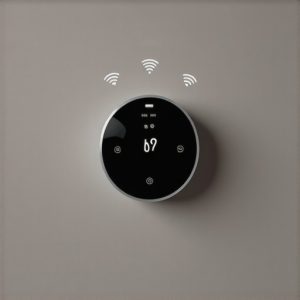
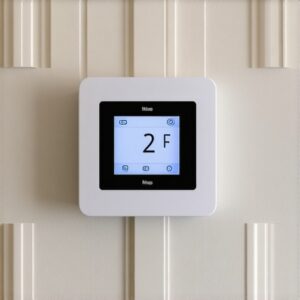
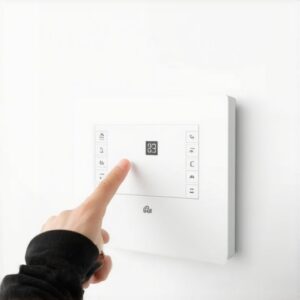
There is a specific kind of silence that haunts every HVAC tech who’s been in the game since the days of R-12. It’s not the quiet of a well-oiled machine; it’s the dead, heavy silence of a furnace that’s given up the ghost in the middle of a sub-zero January night. I’ve seen it a hundred times. A homeowner returns from a week in Cabo, opens the front door, and is met with a three-foot icicle hanging from the chandelier because a $20 capacitor failed, the house froze, and the copper pipes turned into grenades. My old mentor used to scream at me during my apprenticeship, ‘You can’t heat what you can’t touch!’ He was talking about airflow, but the logic applies to remote monitoring too. If you aren’t ‘touching’ your system via your phone, you’re just gambling with physics. This is why system performance testing and smart tech aren’t just for the ‘Sparky’ or the tech-obsessed—they are the literal lifeblood of modern home preservation.
The Forensic Diagnosis: Anatomy of a Winter System Failure
When we talk about modulating furnace repair or why your unit stopped blowing hot air, we have to look at the mechanical anatomy. Your furnace isn’t just a box that makes fire. It’s a complex ecosystem of a control board diagnostics, induced draft motors, and the heart of the beast: the heat exchanger. If you’re traveling and your pilot light relighting fails—or more likely, your Hot Surface Igniter (HSI) cracks—the system goes into a ‘hard lockout.’ Without an app-controlled thermostat to scream ‘Low Temp Alert’ at your phone, that house temperature will drop at a rate determined by your attic insulation for heating. If your insulation is thin, you’ve got about six hours before the crawlspace reaches the 32°F danger zone. This is where hospital HVAC zoning logic actually applies to residential homes; you need to know exactly what every ‘zone’ is doing in real-time. To understand the stakes, we look at the bibles of the industry.
“The most expensive equipment in the world cannot overcome a bad duct system, nor can it protect a home it cannot monitor.” – Industry Axiom (Derived from ACCA Manual J Principles)
When the gas line installation for furnaces is done right, but the heat exchanger cleaning is neglected, the system works harder, increasing static pressure and wearing out the blower motor. A smart thermostat monitors the ‘run time.’ If the app shows your furnace has been running for 4 hours straight and the temp is still dropping, you know you have a mechanical failure or a breached thermal envelope. This is the ‘Forensic Diagnosis’ in action. You aren’t just guessing; you’re looking at the data. I’ve seen warehouse heating solutions that use less monitoring than some modern smart homes, and frankly, that’s a mistake. You need to know when your fireplace insert services aren’t enough to keep the pipes from cracking.
The Thermodynamic Reality: Latent Heat and the Freeze Point
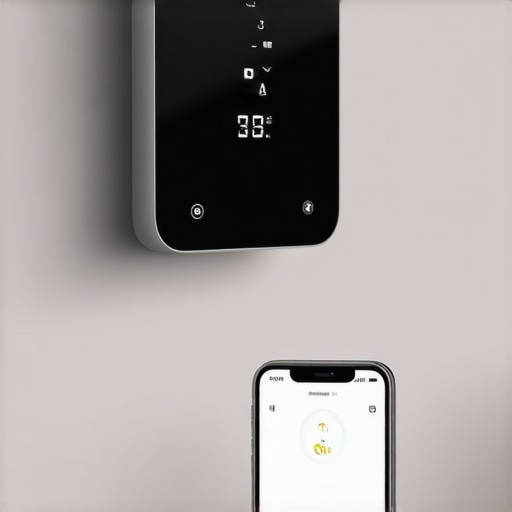
In the North, the enemy is sensible heat loss. As the outdoor ambient temperature plummets, the Delta T (temperature difference) between your living room and the outdoors stretches the limits of your equipment. A modulating furnace is designed to sip gas and maintain a steady state, but it relies on the thermostat to tell it when to ramp up. If your control board diagnostics trigger an error code while you’re in another time zone, an app-controlled interface allows you to see the exact fault. Is it a pressure switch? A limit switch? Or did the gas line installation for furnaces develop a regulator issue? Knowing this allows you to call for urgent furnace repair before the water in your secondary heat exchanger or your domestic lines begins to expand. Remember, water is one of the few substances that expands when it freezes, exerting up to 30,000 PSI of pressure. No copper pipe stands a chance against that.
“Failure to maintain minimum indoor temperatures during unoccupied periods is the primary cause of catastrophic plumbing failure in cold climates.” – ASHRAE Standard 55 (Adapted)
I remember following a ‘Sales Tech’—those guys who care more about their commission than your system performance testing—who told a customer they needed a whole new $12,000 system because their ‘smart thermostat was incompatible.’ Total ‘gas’ (and I don’t mean refrigerant). I spent twenty minutes re-wiring the C-wire and saved that lady five figures. The truth is, these thermostats are your first line of defense. They allow you to set ‘Safety Temps.’ If the house hits 45°F, you get a push notification. That’s the difference between a $150 service call and a $50,000 insurance claim for water damage. You can find more about these heating service hacks in our 2025 guide.
The Math: Repair ($500) vs. Catastrophe ($8,000+)
Let’s talk numbers, because every ‘Tin Knocker’ and tech knows the ledger always wins. A high-end Wi-Fi thermostat costs about $250. Heat exchanger cleaning and a seasonal tune-up might run you another couple hundred. Compare that to the cost of a ‘Sales Tech’ trying to upsell you on new installation when you don’t need it. But the real math is the cost of failure. If you’re traveling and the pilot light relighting fails on an older 80% AFUE furnace, or the flame sensor gets coated in carbon, the unit stops. Without remote monitoring, the attic insulation for heating only buys you time. Once the warehouse heating solutions logic fails (big open spaces losing heat), the pipes in the exterior walls are the first to go. Using top repair strategies, like installing a smart leak detector that syncs with your thermostat, is the only way to be sure. Most people don’t realize that hospital HVAC zoning tech is now available for your home, allowing you to monitor the temperature in the basement specifically, which is where the ‘juice’ usually stops flowing first.
The Airflow Manifesto: Why Pookie and Performance Matter
You can have the smartest thermostat in the world, but if your ductwork is held together with prayer and cheap tape instead of ‘Pookie’ (mastic), you’re losing 30% of your heat before it reaches the vents. This leads to short-cycling, which is the fastest way to kill a compressor or a blower motor. When you are away, you want your system running at peak efficiency. This requires system performance testing to ensure the static pressure isn’t redlining. If the modulating furnace repair was done by a hack, they might have ignored the airflow settings, leading to a system that ‘thinks’ it’s heating but is actually tripping the high-limit switch. This is why you need preventative repair tips to ensure that when you’re away, the ‘brain’ (thermostat) and the ‘muscles’ (furnace) are communicating perfectly. Don’t be the homeowner who ignores a heat exchanger cleaning only to find out their fireplace insert services can’t keep up with a dead furnace in a blizzard. Real comfort is physics, not magic. It’s about managing the latent and sensible heat loads with precision, and if you can’t do that from your phone in 2025, you’re living in the dark ages of HVAC. Stay ahead of the freeze, keep your ‘gas’ where it belongs, and never trust a tech who doesn’t check your static pressure.