
The Airflow Manifesto: Why Your Tight House is Rotting Your Roof
My old mentor, a grizzled tin knocker who spent forty years breathing in more fiberglass than oxygen, used to scream at me every time I reached for a refrigerant manifold: ‘You can’t treat air you don’t control!’ He’d smack the side of a galvanized plenum and remind me that airflow matters more than horsepower. He was right. In our quest for Energy Star heating certification and houses sealed tighter than a submarine, we’ve created a monster. We’ve locked the moisture inside, and that moisture is heading straight for your attic. When that warm, humid air hits the cold underside of your roof deck, it reaches the dew point, condenses, and starts a science experiment that ends with you paying for a full mold remediation.
“The most expensive equipment in the world cannot overcome a bad duct system.” – Industry Axiom
If you think a bigger furnace is the answer, you’ve been talking to a Sales Tech. Those guys want to sell you a 100,000 BTU beast when your HVAC load calculation services probably show you only need 60,000. Over-sizing a unit is the fastest way to ruin a home. An oversized system short-cycles, meaning it never runs long enough to actually manage the latent heat load. You get a house that’s warm but feels like a damp cave. This is where the Heat Recovery Ventilator (HRV) comes in. It is the lungs of the modern home, and without it, your attic is a ticking time bomb of fungal growth.
The Thermodynamics of Attic Decay
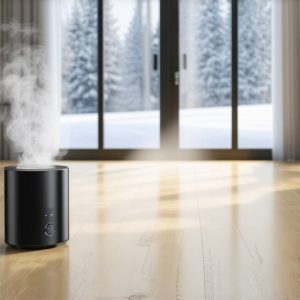
Let’s talk physics, not marketing. In a cold climate, the ‘stack effect’ is always at work. Warm air rises and finds every tiny hole around your recessed lights and top plates. This air is loaded with moisture from your showers, your cooking, and even your breath. When this air enters the attic, it meets the frigid roof sheathing. The temperature drop triggers condensation. I’ve seen attics where the rafters were literally dripping in the middle of January. You don’t just need more insulation; you need to manage the pressure and the moisture. [IMAGE_PLACEHOLDER_1] An HRV works by taking that stale, wet air and exhausting it outside. But unlike a simple bath fan that just throws away the energy you paid for, the HRV passes that air through a core—usually aluminum or specialized plastic—where it meets incoming fresh, dry air from outside. The two streams don’t mix, but they trade heat. The incoming air is pre-warmed, saving your heating service from working overtime, while the moisture is dumped out a dedicated flue pipe installation or wall vent.
Control Board Diagnostics and the Human Element
I recently walked into a job where the homeowner was convinced their furnace was dying. The ‘Sales Tech’ before me had already quoted a two-stage furnace installation for twelve grand because the ‘control board was fried.’ I looked at the board, saw three blinking amber lights, and knew exactly what was wrong. It wasn’t the board; it was a high-limit switch tripping because the static pressure was through the roof. The filters were clogged with what looked like dryer lint, and the HRV hadn’t been serviced since the Bush administration. A $50 limit switch and a thorough cleaning of the HRV core saved that homeowner thousands. Don’t let anyone sell you ‘juice’ (refrigerant) or a new compressor until they’ve checked the control board diagnostics properly. The board is the brain, but it’s only as good as the sensors telling it what to do.
“Ventilation is the intentional introduction of outdoor air into a space.” – ASHRAE 62.2
The Myth of the ‘Self-Cleaning’ Attic
People think ridge vents and soffit vents are enough. In theory, they are. In reality, a bird builds a nest in your soffit, or an insulation contractor gets lazy and covers the baffles with blown-in cellulose, and your airflow dies. Once airflow stops, mold starts. If you’re dealing with an oil to gas conversion, you have an even greater opportunity to get your ventilation right. Gas furnaces produce a lot of water vapor as a byproduct of combustion. If your flue pipe installation isn’t pitch-perfect, or if your chimney liner is crumbling, that moisture is staying in your house. An HRV acts as a safety net, ensuring that even if the house is sealed tight for efficiency, the air remains dry and healthy.
Beyond the Attic: HEPA and UV Logic
If you’re already worried about mold in the attic, you should be worried about the spores in your ductwork. While the HRV handles the moisture, HEPA filter systems and UV light installation for HVAC handle the biology. A HEPA filter is dense—it’s like trying to breathe through a piece of plywood—so your blower motor needs to be rated for the high static pressure. Don’t just slap a thick filter in a system designed for 1-inch cheapies; you’ll kill the motor and find yourself needing a ‘Sparky’ (electrician) to trace a blown circuit. UV lights are great, but they aren’t magic wands. They need ‘dwell time’—the light has to hit the mold on the coil for a specific amount of time to kill it. I install them over the evaporator coil because that’s where the moisture lives during the cooling season. In the winter, the HRV is your primary defense against the dampness that fuels mold growth.
Maintenance vs. Disaster
I’ve seen what happens when people ignore their ventilation. I’ve crawled through crawlspaces that smelled like a sourdough starter gone wrong and attics where the plywood was so soft I nearly fell through the ceiling. Swamp cooler maintenance is a joke in the North—we don’t use them because we already have too much moisture in the air. Instead, we focus on balancing. If you have a two-stage furnace, make sure your technician actually sets up the dip switches on the board for the correct CFM (Cubic Feet per Minute). Most guys leave them on factory settings, which means you’re not getting the efficiency or the dehumidification you paid for. Proper furnace repair isn’t just about swapping parts; it’s about tuning the system to the specific envelope of your home. If you suspect your attic is becoming a swamp, check your HRV filters, clear your intake vents of snow and debris, and stop letting Sales Techs tell you that a ‘gold-plated air purifier’ is the fix for a fundamental airflow problem.