The Physics of Survival: Why Your Chimney is More Than Just a Hole in the Roof
My old mentor used to scream, ‘You can’t cool what you can’t touch, and you can’t heat what you can’t vent!’ This is why airflow matters more than horsepower, and it’s why I’m obsessed with chimney liners. He’d stand in a freezing mechanical room in the dead of January, pointing his grease-stained finger at a crumbling masonry flue, and tell me that a boiler is only as good as the draft it creates. If the draft fails, the house becomes a gas chamber. Over thirty years in this trade, crawling through tight crawlspaces and working on church heating systems that haven’t been touched since the Nixon administration, has taught me one thing: the ‘Silent Killer’ (Carbon Monoxide) doesn’t care about your aesthetics; it cares about thermodynamics. When we talk about the safety benefits of a properly sized chimney liner, we aren’t talking about a luxury upgrade. We are talking about the basic physics of keeping combustion byproducts out of your lungs and preventing your house from rotting from the inside out.
‘A chimney shall be capable of producing a draft sufficient to remove all products of combustion and shall be sized in accordance with the equipment manufacturer’s instructions.’ – NFPA 54 / ANSI Z223.1 National Fuel Gas Code
The Forensic Diagnosis: Anatomy of a Failing Draft
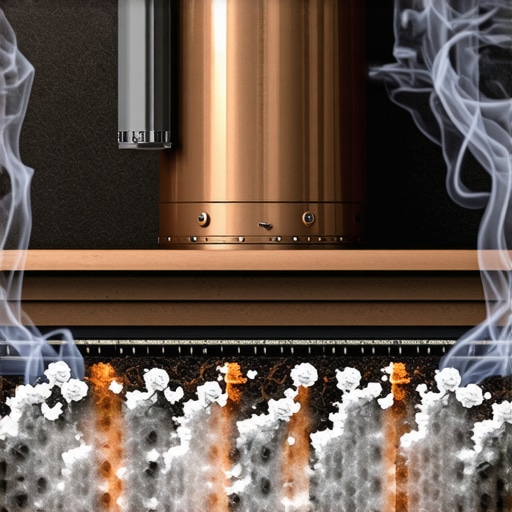
In the North, where the polar vortex turns your furnace into a marathon runner, we deal with the brutal reality of cracked heat exchangers and failing vents. When I walk into a basement for a heat exchanger cleaning, I’m not just looking for soot. I’m looking for the white, powdery residue of aluminum oxide or the tell-tale rust flakes that scream ‘backdrafting.’ If you have a modern, high-efficiency furnace or boiler being vented into an oversized, old-school brick chimney, you have a physics problem. The flue gases from high-efficiency equipment are much cooler than the old ‘gas guzzlers’ of the 80s. Because they are cooler, they don’t rise as fast. If that chimney is too wide, the gases linger, cool down to the dew point, and turn into acidic condensate. This ‘chimney rain’ eats through mortar joints and eventually leaks CO into your living space. This is why identifying when furnace repair is urgent often starts with looking at the chimney, not just the burner.
The Trap of the Oversized Flue
Many homeowners think bigger is better. In HVAC, bigger is usually a disaster. If your liner is oversized, the ‘velocity’ of the exhaust drops. Imagine trying to blow a marble through a straw versus a four-inch PVC pipe. You need that concentrated pressure to overcome the cold air sitting at the top of the chimney. Without it, you get ‘flame rollout,’ where the fire literally jumps out of the burner because the exhaust has nowhere to go. This is a common call for our 24/7 heating emergency response teams. We find scorched wires and melted plastic because the ‘draft’ was non-existent. A properly sized stainless steel liner creates a tight, smooth path that maintains the ‘stack effect,’ ensuring that every cubic inch of toxic gas is pulled out of the home. It’s the difference between a healthy lung and one filled with fluid. For larger facilities, like hotel boiler services, the stakes are even higher. You’ve got hundreds of people sleeping above a mechanical room; if that venting isn’t perfect, you aren’t just a tech—you’re a liability.
The ‘Pookie’ and the Tin Knocker: Why Craftsmanship Prevents Catastrophe
I’ve followed ‘Sales Techs’ who try to sell a sweet old lady a $20,000 system when all she needed was a liner and a pilot light relighting. They ignore the venting because they don’t want to get their hands dirty or deal with a tin knocker who knows how to properly transition a flue. When we install a liner, we don’t just ‘drop it in.’ We ensure the connections are sealed with high-temp silicone or ‘Pookie’ (mastic) where appropriate, and that the ‘Sparky’ (electrician) hasn’t run wires across the hot vent pipe. We also integrate UV light installation for HVAC to keep the air clean, but remember: no air purifier in the world can scrub out Carbon Monoxide. You need a physical barrier. This is why top HVAC repair strategies always include a rigorous inspection of the chimney’s structural integrity. If you’re doing a new construction heating design, the liner is the first thing we calculate, not the last.
‘The most expensive equipment in the world cannot overcome a bad duct system—or a failing vent.’ – Industry Axiom
The Financial Reality: Rebates and Longevity
I get it—liners aren’t sexy. You’d rather spend that money on a smart thermostat. But consider this: an unlined chimney allows moisture to seep into your heat exchanger. When that moisture meets heat, it creates a corrosive soup that will kill a new furnace in five years. We offer rebate application assistance for high-efficiency upgrades, and often, those rebates can help offset the cost of the necessary venting changes. Furthermore, preventative maintenance contracts are the only way to catch a liner that’s been damaged by a chimney fire or structural settling before it becomes a midnight emergency. Whether it’s baseboard heater repair in a small apartment or complex church heating systems, the venting is the foundation of safety. If you are smelling something ‘off’—a sour, acidic scent—or noticing condensation on your windows in the winter, stop reading and contact us immediately. It’s not just a ‘drafty’ house; it’s a failure of the thermodynamic system. Physics doesn’t take days off, and neither does the danger of a poorly sized flue. Keep your ‘juice’ in the lines and your exhaust in the liner, and you’ll sleep a lot better when the mercury drops to zero.