The Sound of a Cold House: When the Sequence of Operations Fails
Listen to that sound. Click. Click. Hummm. That is the sound of a furnace that wants to keep you warm but is being held hostage by its own safety protocols. In my thirty years of crawling through fiberglass-filled attics and dodging spiders in damp crawlspaces, I have learned that a furnace isn’t just a box that makes fire; it is a complex logic engine. When your furnace clicks but fails to ignite, it is telling you a story in a language most homeowners don’t speak. But as a veteran who has seen more control board diagnostics than I have seen hot meals, I am here to translate. This isn’t just about comfort; in a cold climate, a non-starting furnace is a race against frozen pipes and the silent threat of carbon monoxide.
The Forensic Diagnosis: A Story from the Trenches
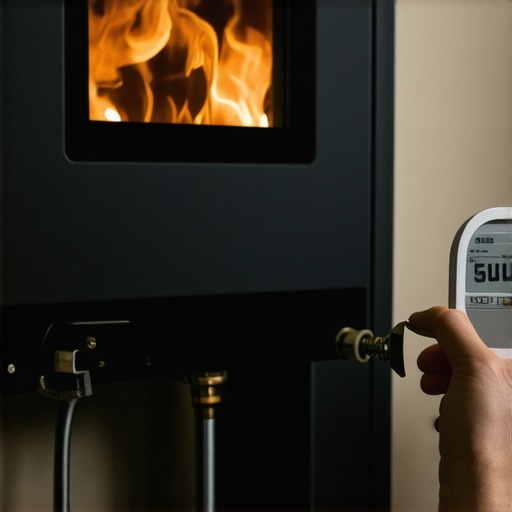
I remember a call last January during a polar vortex. A ‘Sales Tech’ from one of those big-box companies had just left a frantic grandmother’s house. He’d looked at her ten-year-old furnace, saw it clicking, and immediately quoted her $14,000 for a full system replacement, claiming the control board was ‘fried’ and the heat exchanger was ‘probably cracked.’ When I showed up for a second opinion, I didn’t reach for a sales brochure; I reached for my multimeter. I watched the sequence of operations. The inducer motor kicked on, the pressure switch closed, but the igniter never glowed. It wasn’t a $14,000 failure. It was a $150 fix. A tiny spider had spun a web inside the burner orifice, blocking the gas flow. This is why I despise the sales-driven side of this industry. Real HVAC work is about physics and troubleshooting, not commissions. Knowing how to identify when furnace repair is urgent and why can save you from these predatory tactics.
“The most expensive equipment in the world cannot overcome a bad duct system.” – Industry Axiom
The Mechanical Anatomy: Why the Click Happens
To understand the click, you have to understand the ‘Sequence of Operations.’ Think of it like a relay race. If the first runner doesn’t hand off the baton, the race stops. First, the thermostat calls for heat. The control board wakes up and sends 120 volts to the inducer draft motor. This little fan clears out any residual combustion gases. Once it hits full speed, it creates a vacuum that closes the pressure switch. If that switch doesn’t close because of a blocked vent or a cracked hose, the whole thing stops. No click, no fire. But if the switch closes, the board then sends power to the igniter—that’s the part that glows white-hot. Finally, the board opens the gas valve. That is the ‘click’ you hear. If you hear the click but no ‘whoosh’ of flame, you have a delivery problem or an ignition failure. This is where furnace repair myths debunked by industry experts become vital; many think it’s ‘just a fuse’ when it’s actually a safety lockout.
Thermodynamic Zooming: The Physics of Combustion
In a cold climate, we deal with extreme temperature differentials. When we talk about AFUE (Annual Fuel Utilization Efficiency), we are talking about how much of the gas you pay for actually turns into heat for your home. A 96% AFUE furnace uses a secondary heat exchanger to pull latent heat out of the exhaust gases. This causes the exhaust to condense into water, which is why high-efficiency furnaces have PVC drain lines. If that drain line freezes or clogs, the furnace shuts down. It’s a safety feature. The ‘click’ followed by silence often means the flame sensor didn’t detect a flame within four seconds. The board ‘thinks’ there is gas leaking into the house without a fire to burn it, so it slams the valve shut. This is a critical safety step to prevent a ‘boom’ that could level a house. If your system is old, you might even consider a heating service innovations transforming 2025 climate control upgrade, like a cold climate heat pump or a hybrid system, to avoid these combustion headaches altogether.
The Airflow Manifesto: Ductwork and HEPA Systems
You can have the best furnace in the world, but if your ‘tin knocker’ (the duct installer) was lazy, you’re throwing money away. I’ve seen 5-ton units strangled by 3-ton ductwork. This creates high static pressure, which is like trying to breathe through a cocktail straw while running a marathon. It overheats the heat exchanger and causes ‘flame rollout,’ a dangerous condition where the fire licks out of the cabinet. This is why HVAC duct sealing is not an ‘add-on’—it’s a requirement for system health. Furthermore, if you are running HEPA filter systems, you must ensure your blower motor can handle the resistance. A thick filter is great for allergies, but it can kill a blower motor if the static pressure isn’t managed. We often recommend demand-controlled ventilation or heat recovery ventilators (HRV) to bring in fresh air without losing your hard-earned BTUs.
Control Board Diagnostics and Modern Solutions
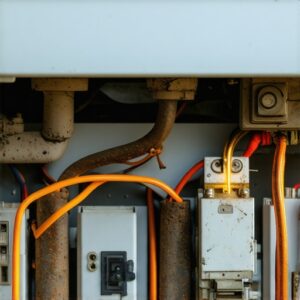
Modern furnaces are smarter than they used to be. Most have a blinking LED light on the control board. That’s not just a decoration; it’s a Morse code for technicians. Three blinks might mean ‘pressure switch stuck open,’ while five blinks could mean ‘flame sensed out of sequence.’ We are seeing a massive shift toward app-controlled heating systems that can actually alert me, the technician, before you even realize your house is getting cold. This 24/7 heating emergency response capability is changing the game. We can now see if a wood burning stove installation has messed with the home’s pressure balance, causing a furnace to back-draft. It’s about looking at the house as a single, breathing organism.
Repair vs. Replace: When to Pull the Plug
If you’re staring at a $1,200 repair bill for a furnace that’s over 15 years old, you’re at the ‘Regulatory Cliff.’ By 2025, new refrigerant regulations and efficiency standards are going to make equipment even more expensive. If your heat exchanger is cracked, don’t walk—run away from that unit. A cracked exchanger can leak carbon monoxide into your HEPA filter systems and distribute it to every room. It’s not worth the risk. However, if the ‘click’ is just a dirty flame sensor or a failed capacitor, spend the $200 and keep your ‘gas’ (refrigerant) and your money. Don’t let a sales tech talk you into a new system because of a ‘sparky’ (electrical) issue that takes ten minutes to fix. Use ‘pookie’ (mastic) to seal your ducts, keep your coils washed, and respect the physics of airflow. Comfort isn’t magic; it’s science. If your furnace is clicking, it’s not just a nuisance—it’s a diagnostic signal. Pay attention to it before the silence of a cold house becomes your reality. “,”image”:{“imagePrompt”:”A macro shot of a modern furnace control board inside a dark utility room, featuring a blinking red diagnostic LED and a professional technician’s hand holding a multimeter probe against a terminal, with the metallic surface of a heat exchanger in the soft-focus background.”,”imageTitle”:”Furnace Control Board Diagnostic Testing”,”imageAlt”:”An HVAC technician uses a multimeter to diagnose a clicking furnace control board in a residential basement.”},”categoryId”:0,”postTime”:””}