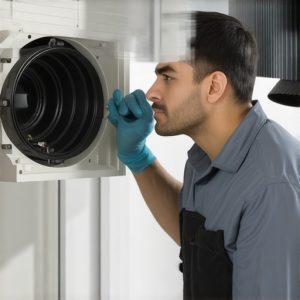
My old mentor used to scream, ‘You can’t cool what you can’t touch!’ He was a mean old tin knocker who could smell a gas leak from the driveway, but he knew the truth about airflow. Back in the day, houses were ‘leaky’—you had natural air changes because the construction was, frankly, a bit sloppy. Fast forward to 2025, and we’ve got these ‘tight’ houses wrapped in spray foam insulation. It’s great for the electric bill, but it’s a disaster for your lungs and your equipment if you don’t understand the physics of ventilation. When you seal a house with spray foam, you’ve essentially turned it into a plastic bag. Without a way for that bag to breathe, you’re just stewing in your own CO2, VOCs from your furniture, and latent heat that refuses to leave. This is where Energy Recovery Ventilators (ERVs) come in, and quite frankly, if you have a spray foam house without one, you’re doing it wrong.
The Airflow Manifesto: Why Static Pressure is Your Master
In the world of real HVAC—not the nonsense ‘Sales Techs’ try to push—airflow is the only thing that matters. When you install a high-efficiency system, like those supported by heating service hacks for comfort and savings in 2025, you have to account for the resistance that air faces. We call this static pressure. In a tight, foam-insulated home, the air becomes stagnant. You can’t just rely on a standard bath fan to clear the air; you need a balanced approach. Closing vents in these homes is a cardinal sin. It throws off the entire balance of the system, causing the blower motor to work twice as hard to push air through a choked duct. I’ve seen brand new motors burn out in three years because some ‘sparky’ or homeowner thought they were saving money by shutting off the guest room air. It’s physics, not magic. You need a zoning system installation that actually communicates with the equipment, or you’re just killing your compressor slowly.
“The most expensive equipment in the world cannot overcome a bad duct system.” – Industry Axiom
Thermodynamic Zooming: Latent Heat and the Dew Point
Let’s talk about the ‘sticky’ feeling. In a foam-insulated home, the sensible heat (the temperature you see on the thermostat) might be 72°F, but the latent heat (the humidity) is through the roof. When your AC unit runs, the evaporator coil drops below the dew point of the indoor air to pull that moisture out. However, in a super-insulated home, the unit might reach the target temperature so fast—we call this short-cycling—that it never has enough ‘runtime’ to actually dehumidify. You end up with a house that is 70°F but 70% humidity. It feels like a cold swamp. An ERV fixes this by exchanging the energy from the stale, humid exhaust air with the incoming fresh air. It doesn’t just swap air; it swaps the enthalpy. This is critical when you are integrating choosing the right HVAC fixes for modern builds.
The Tech Stack: Variable Speed and Hyper-Heat
To combat the challenges of a tight home, you need equipment that doesn’t just have two settings (On and Off). Variable speed furnace services are mandatory here. These blowers can ramp up and down slowly, maintaining constant airflow and better humidity control. Combine that with hyper-heat heat pumps, which can pull heat out of the air even when it’s 15 below zero outside, and you have a system that can handle the specific thermal envelope of a spray-foam house. But here’s the kicker: all that tech needs predictive maintenance alerts. If your ERV filter is clogged with ‘Pookie’ (mastic) or just standard dust, your indoor air quality goes to zero. I always tell my customers that capacitor replacement services are the most common repair, but a failed ERV is the most common reason for a ‘stale’ smelling house. You have to keep the ‘gas’ (refrigerant) at the right levels, sure, but you have to keep the air moving too.
“Ventilation shall be provided in accordance with the requirements of ASHRAE 62.2 to ensure acceptable indoor air quality in residential buildings.” – ASHRAE Standards
The Reality of Modern HVAC Repairs
Don’t let a ‘Sales Tech’ tell you that you need a whole new $20,000 system just because your air feels heavy. Sometimes, it’s as simple as thermostat wiring upgrades to allow for demand-controlled ventilation. This tells the ERV to kick into high gear only when CO2 levels rise or when you’re actually in the room. If you’re looking for financing for heat pump installs, make sure the quote includes the ventilation strategy. A heat pump in a foam house without an ERV is like a Ferrari with no exhaust pipe—it’s not going to run right for long. For those in drier climates, evaporative cooler services might cross your mind, but they are the enemy of a foam house; you’re just pumping moisture into a sealed box. Stick to the science. Check out the top HVAC repair strategies to extend your system’s life to see how maintenance keeps these complex systems from eating themselves. In the end, comfort isn’t about the number on the wall; it’s about the physics of the air you’re breathing. Keep your coils clean, your filters fresh, and for heaven’s sake, let your house breathe with an ERV.