Why Your AC Breaker Trips Every Time the Compressor Tries to Start
It’s a scenario I’ve seen play out more times than I can count over the last few decades. It’s 90 degrees outside, the humidity is thick enough to chew, and you’re sitting in your living room waiting for that sweet relief of cold air. You hear the thermostat click. There’s a faint, momentary hum from the outdoor unit, and then – snap. Silence. The lights might flicker for a millisecond, and suddenly the house feels even hotter because you know exactly what happened: the circuit breaker tripped.
I’m Harold Workman, and as a Master Electrician and HVAC Designer, I’m here to tell you that while this is incredibly frustrating, your breaker is actually doing its job perfectly. It’s not just a “glitch” or a nuisance; it’s a safety mechanism designed to prevent your house from catching fire. When that compressor tries to kick in and the breaker flips, it’s because the system is drawing way more power than the wires can safely handle. Before you go running to the electrical panel to flip that switch back on for the third time, let’s sit down for a minute. I want to explain exactly why this is happening and what we need to do to fix it before a small electrical hiccup turns into a very expensive pile of scrap metal in your backyard.
The Science of the “Startup Surge”: LRA vs. RLA
To understand why your breaker is acting up, we have to talk about how a compressor starts. Think of your AC compressor like a car stuck in deep mud. To get it moving, you have to give it a whole lot of gas to overcome that initial resistance. Once it’s rolling, you can let off the pedal and it stays moving with much less effort. In the world of an electrician, we call these two stages Locked Rotor Amps (LRA) and Rated Load Amps (RLA).
The Locked Rotor Amps (LRA) is the “startup surge.” It is the amount of current the motor draws the very instant it tries to start turning from a dead stop. This surge is typically five to six times higher than the current required to keep the motor running. For example, if your AC runs at 15 amps (RLA), it might need 80 or 90 amps just to get that compressor spinning for a fraction of a second. This is a massive “overcurrent on startup” event that every HVAC system is designed to handle.
However, if the compressor is “stuck” – perhaps due to internal mechanical failure or a lack of electrical assistance – it stays in that LRA phase for too long. Instead of a split-second spike, it tries to pull 90 amps for a full second or two. Your breaker is designed to tolerate a brief spike, but it won’t tolerate a sustained surge. It sees that massive heat building up in the wire and trips to protect the insulation from melting. If your breaker trips immediately upon startup, it’s a clear sign that the compressor is failing to transition from its “startup” phase to its “running” phase. This is one of the most common compressor startup issues we diagnose in the field.
Common Culprit #1: The Failing Capacitor
If I had a nickel for every bad capacitor I’ve replaced, I’d have retired to a beach in Hawaii years ago. The capacitor is a small, cylindrical component that acts like a temporary battery boost for your compressor. Its job is to store up a charge and release it at the exact moment the compressor needs to start, providing the necessary “torque” to get the motor spinning. It’s essentially the kick-start for your AC.
Over time, due to heat and electrical wear, these capacitors lose their ability to hold a charge. They might bulge at the top or leak oil, but sometimes they look perfectly fine even when they’re dead. When a capacitor is weak, the compressor tries to start but doesn’t have that extra “kick” it needs. It sits there hummed and stalled, drawing maximum LRA until – you guessed it – the breaker trips. This is a classic case of why Why Your AC Keeps Blowing Fuses and When to Call an Electrician is a topic every homeowner should understand. A $200 capacitor fix today can save you from a $3,000 compressor replacement tomorrow. If you keep resetting the breaker with a bad capacitor, you are forcing the compressor to overheat, which eventually cooks the internal windings.
Common Culprit #2: Dirty Coils and Airflow Blockages
You might be wondering, “Harold, how can a dirty air filter trip an electrical breaker?” It sounds like a stretch, but it’s actually a very direct relationship. Your AC works by moving heat. If the outdoor condenser coils are caked in dirt, lawn clippings, or cottonwood seeds, the system can’t release the heat it gathered from inside your house. This causes the refrigerant pressure (specifically the “head pressure”) to skyrocket.
When the pressure is high, the compressor has to work significantly harder to pump the refrigerant through the lines. Harder work equals more electrical current. Eventually, the amp draw exceeds the rating of the breaker. This is why we emphasize Top HVAC Repair Strategies to Extend Your System’s Life. Regular maintenance, like spraying off your outdoor coils with a garden hose (carefully!), keeps the pressures low and the amp draw within a safe range. If your system starts up fine but trips the breaker after 5 or 10 minutes of running, dirty coils are almost always the prime suspect. The heat builds up, the pressure rises, the amps climb, and the breaker finally says “enough.”
The “Scary” Stuff: Grounded Compressors and Short Circuits
Now we get into the heavy-duty problems. If your breaker trips the absolute millisecond the compressor tries to engage – often with a loud *pop* or even a visible spark at the panel – you might be dealing with a “grounded” compressor. Inside your compressor, there are copper windings that are insulated by a thin coating. If that insulation breaks down due to age, acid in the system, or extreme overheating, the electricity can jump from the winding directly to the metal casing of the compressor.
When this happens, you have a direct short to ground. This is a violent electrical event. The current flow is nearly infinite for a microsecond before the breaker interrupts the circuit. In this situation, there is no “fixing” the electrical issue without replacing the compressor itself, or more likely, the entire outdoor unit. This is exactly when you need an electrician HVAC expert Mill Creek WA to come out and “meg” the compressor. We use a specialized tool called a megohmmeter to test the integrity of the insulation. If the reading is zero, the compressor is dead, and no amount of resetting the breaker will bring it back to life.
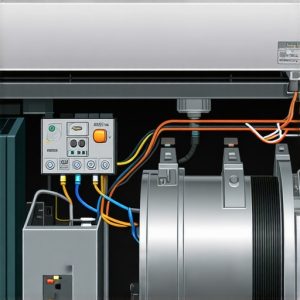
Beyond the compressor, a short circuit could also be hiding in the wiring between the house and the unit. Rodents love to chew on the colorful “spaghetti” of wires inside your AC cabinet, and a frayed wire touching the cabinet frame will trip that breaker every single time.
Is it the AC or the Electrical Panel?
Sometimes, the AC unit is perfectly healthy, but the electrical system feeding it is tired. Circuit breakers are mechanical devices with springs and plastic parts inside. Over decades of heat cycles, they can become “weak.” A 30-amp breaker that has tripped a dozen times might start tripping at 20 amps. This is what we call “nuisance tripping.”
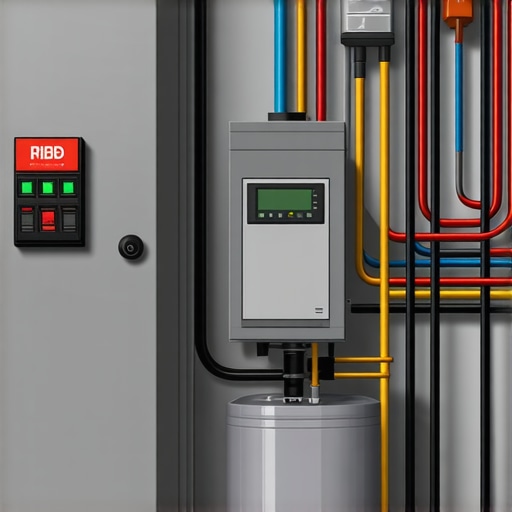
Furthermore, older homes often have undersized electrical panels that weren’t designed for the high-efficiency, high-draw appliances of today. If your lights dim significantly every time the AC starts, it’s a sign that your home’s electrical “roadway” isn’t wide enough for the traffic. In these cases, the solution isn’t an HVAC repair, but an electric panel upgrade Bothell WA. Upgrading to a modern panel with high-quality breakers ensures that your AC has the stable power supply it needs to start and run without stressing the rest of your home’s electronics. We also see issues where the wire size is too small for the distance the electricity has to travel, leading to “voltage drop,” which forces the compressor to pull more amps to compensate. It’s a vicious cycle that only a qualified electrician can properly diagnose and solve.
Troubleshooting: What You Can Check vs. When to Call a Pro
Before you call in the cavalry, there are a few things you can safely check yourself. First, look at your air filter. If it looks like a wool sweater, replace it. Second, go outside and look at your condenser. Are there bushes growing into it? Is it covered in dirt? Clear away any debris. Third, check the “disconnect” box near the outdoor unit. Sometimes wasps build nests in there, and their nests can actually cause a bridge between electrical terminals, leading to a trip. If you’re seeing Why Flickering Lights When the AC Starts is a Job for an Electrician, that’s a signal that the issue is likely on the supply side.
However, if the filter is clean and the coils are clear, it’s time to stop. Do not attempt to open the electrical panel or the AC control box unless you are trained to do so. We’re dealing with 240 volts of electricity – enough to be fatal. A professional HVAC installers or technician will use a multimeter to check the capacitor’s microfarad rating and an amp clamp to see exactly how much current the compressor is pulling during that startup surge. We can also determine if Why Your High-Efficiency AC Installation Requires a Dedicated Electrical Circuit is the missing piece of the puzzle for your home.
The Real Cost of Repairs (2024/2025 Data)
I know the first thing everyone thinks about is the wallet. Based on current market data for the 2024 and 2025 seasons, here is what you can generally expect for these types of repairs. Keep in mind that prices vary by region and the specific brand of your equipment.
- Diagnostic Call: Most reputable companies charge between $150 and $300 just to get a pro to your door with a truck full of tools. This usually covers the first 30-60 minutes of troubleshooting.
- Capacitor Replacement: This is the most common fix. Expect to pay between $200 and $450. While the part itself isn’t expensive, you’re paying for the technician’s expertise to ensure the right size is installed and the system is tested safely.
- Hard Start Kit: If your compressor is just getting old and “stiff,” we can install a Hard Start Kit. This is essentially a super-charged capacitor that helps the motor overcome LRA faster. These run between $250 and $500.
- Compressor Replacement: This is the big one. If the compressor is grounded or mechanically seized, replacement costs range from $800 to $2,800, with an average around $1,200 for the part and labor. In many cases, if the unit is over 10-12 years old, we recommend a full system replacement instead.
Understanding Efficient HVAC Repairs: The Blueprint for Cooler Summers and Warmer Winters can help you decide whether to patch an old unit or invest in a new one. Sometimes, there are AC Installation Secrets That HVAC Pros Won’t Tell You regarding rebates and efficiency gains that make replacement the smarter financial move.
Conclusion & Call to Action
At the end of the day, a tripping breaker is a warning, not a suggestion. It’s your electrical system’s way of screaming that something is wrong. Don’t keep flipping that breaker back on. Each time you do, you risk causing a permanent “short to ground” or even an electrical fire. Most AC breaker tripping issues start as small, fixable problems like a weak capacitor or dirty coils. If you catch them early, you can avoid the “scary stuff” like a total compressor failure.
If your AC is giving you the cold shoulder (or rather, the hot one), give us a call. Contact Heat Pros Services for a professional inspection. We’ll get into the guts of your system, check those LRA levels, and make sure your electrical panel is up to the task. Let’s get your home cool again before a small electrical issue turns into a full system replacement. Stay cool, and stay safe!