The Sound of a Wet Furnace: A Forensic Diagnosis of Bypass Humidifier Failure
I’ve spent thirty winters crawling through crawlspaces and balancing on joists, and if there’s one thing I’ve learned, it’s that water and electricity have a toxic relationship. When you hear that rhythmic drip-drip-drip hitting your furnace’s heat exchanger, you aren’t just looking at a minor annoyance; you’re looking at a potential control board diagnostics nightmare. My old mentor, a man who had more silver in his hair than a brazing rod, used to scream, ‘You can’t manage what you can’t contain!’ He wasn’t talking about the air—he was talking about the moisture. He taught me that airflow is the soul of the machine, but moisture management is its heartbeat. If your bypass humidifier is leaking, your system’s heartbeat is skipping, and your furnace is effectively drowning in its own shoes.
A bypass humidifier is a simple beast, but simplicity is where most ‘Sales Techs’ get tripped up. They’ll try to sell you a whole new furnace for $12,000 because they saw a water stain on the cabinet. That’s a scam. Most of the time, the issue is a $40 part or a fifteen-minute flush. You’ve got a 6-inch pipe—the ‘bypass’—diverting warm air from your supply plenum, pushing it through a wet honeycomb pad (the water panel), and back into the return. It’s a thermodynamic dance. The air absorbs latent heat to evaporate that water, raising the relative humidity so your skin doesn’t flake off like a dry croissant in January. But when that water doesn’t stay in the tray, it’s time to look at the anatomy of the failure.
“Humidification equipment must be installed such that it does not provide a reservoir for microbial growth or allow liquid water to enter the airstream of the HVAC system.” – ASHRAE Standard 62.1
The Mechanical Anatomy: Why the Leak Happens
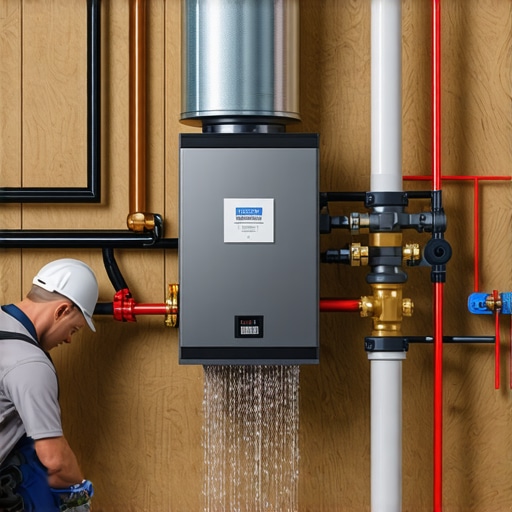
First, we look at the solenoid valve. This is the gatekeeper. It’s an electromagnetic valve that opens when the humidistat calls for moisture. If a piece of sediment—common in hard water areas—gets lodged in that valve, it won’t seat properly. It stays ‘cracked,’ weeping water onto the pad 24/7. Eventually, that pad saturates, the scale buildup (calcium and magnesium) creates ‘bridges,’ and the water starts trekking across those mineral bridges right onto your gas line installation for furnaces or, worse, your blower motor. [IMAGE_PLACEHOLDER]
Second, we check the distribution tray. If the ‘Tin Knocker’ who installed your ductwork didn’t level the humidifier cabinet, the water will pool on one side of the tray and overflow. It’s basic physics. Gravity doesn’t care about your comfort. If you’re seeing water on the floor, check the drain line. These lines are usually clear vinyl tubing that gets choked with ‘white dust’—calcium deposits—or algae. When the line is blocked, the water has nowhere to go but out the front cover. This is why bypass humidifier repair is often just a matter of clearing the path.
The Math of the Drip: Repair vs. Disaster
If you ignore a leaking humidifier, you’re playing Russian roulette with your furnace’s brain. I’ve seen control board diagnostics reveal thousands in damage because a $10 drain line was clogged. Water hits the board, shorts the 24V transformer, and suddenly you’re in a 24/7 heating emergency response situation on a Tuesday night. If your unit is over 15 years old and the cabinet is rusted out, sure, we talk about financing for heat pump installs or a new furnace. But if the metal is sound, we fix the leak. Maintenance isn’t just a suggestion; it’s the only way to keep your airflow measurement services from showing a massive drop in efficiency due to a scaled-over evaporator pad.
“The most expensive equipment in the world cannot overcome a bad duct system or a neglected maintenance schedule.” – Industry Axiom
The Forensic Flush: How to Clean Your Drain Line Like a Pro
To flush the line, you first kill the power. Don’t be the person who gets zapped because they were too lazy to flip the service switch. Disconnect the vinyl drain tube from the bottom of the humidifier. If it’s brittle, toss it and get new ‘juice’ for the drain. Take a shop vac to the end of the line or use a specialized CO2 flush tool to blow out the ‘pookie’ and scale. If you’re dealing with a furnace flame sensor cleaning at the same time, you might as well check the humidifier orifice. It’s a tiny plastic insert that regulates the flow of ‘gas’ (water, in this context). If that’s gunked up, the water sprays instead of flows, leading to—you guessed it—more leaks. Proper airflow measurement services will often show that a clean, clear humidifier actually helps maintain the integrity of the heat exchanger by preventing localized rusting.
Climate Context: The Northern Winter Fight
In our region, the air gets bone-dry. We’re not just fighting temperature; we’re fighting the lack of latent heat. If your humidifier is down, your furnace has to run longer to make the house ‘feel’ warm, because dry air accelerates evaporation from your skin, cooling you down. This is where air purification integration becomes vital. You want clean, moist air, not a swamp in your basement. If you’re considering wood burning stove installation or fireplace insert services to supplement your heat, remember those dry the air out even faster. You need that bypass humidifier working perfectly to balance the physics of a cold climate winter. If you’ve reached the point where you’re tired of the DIY struggle, looking into top hvac repair strategies can save your equipment from an early grave.
Don’t let a ‘Sales Tech’ tell you a leak means the end of the world. It’s a call to action. Check your water panel annually. If it looks like a piece of coral reef, change it. Flush your lines. Ensure your gas line installation for furnaces is dry and corrosion-free. And if you’re ever in doubt, call a veteran who knows the difference between a broken system and a dirty one. For more on keeping your system alive through the winter, check out how to identify when furnace repair is urgent. Real HVAC work isn’t about shiny brochures; it’s about understanding the psychrometrics of your home and keeping the water in the pipes and the heat in the air.