The Sound of a Potential Fire: When the Breaker Won’t Stay Set
It’s 3:00 AM in the middle of a January cold snap, and the rhythmic ‘click-thud’ of a tripped circuit breaker is the only thing keeping your house from staying warm. You reset it, and within minutes, the smell of ozone and hot dust fills the room. That isn’t just the ‘smell of winter’; that is the scent of an electrical circuit under extreme duress. When an electric baseboard heater starts drawing too much current, it’s not just an efficiency problem—it’s a forensic investigation into why your home is trying to pull more ‘juice’ than your wiring can handle. My old mentor used to scream, ‘You can’t heat what you can’t touch!’ He was talking about the physical contact between the heating element and the air, and this is why resistance matters more than just plugging a unit into the wall. If the heat isn’t leaving the element, the internal temperature of the unit spikes, resistance changes, and suddenly your 20-amp circuit is screaming for mercy.
“The most expensive equipment in the world cannot overcome a bad duct system.” – Industry Axiom
In the world of electric heater services, we see this constantly in older homes throughout the North. A baseboard heater is essentially a giant resistor in a box. It works on the principle of Joule heating: electrons fight their way through a high-resistance wire, creating friction that manifests as heat. But when things go wrong—loose wire nuts, oxidized connections, or a failing bimetal thermostat—that resistance isn’t controlled anymore. If you’ve been searching for furnace repair services or ways to manage your heating load, you need to understand the ‘Sparky’ side of the equation. High amperage is often a symptom of ‘thermal runaway’ or a partial short-to-ground that hasn’t quite hit the threshold to fully trip the breaker instantly but is cooking the insulation off your wires.
[image_placeholder_1]
The Forensic Anatomy of a High-Amperage Fault
Let’s do a deep dive into the mechanical anatomy of your heater. You have the calrod element, the limit switch, and the thermostat. If you are using heating service innovations transforming 2025 climate control, you might have a smart building management system monitoring this, but most old-school baseboards are ‘dumb’ tech. When dust and pet hair (the ‘felt’ of the HVAC world) coat the aluminum fins, the element can’t shed heat. This increases the internal temperature of the wire. In some materials, as temperature increases, resistance decreases, causing a spike in current draw—this is the ‘Thermal Trap.’ If your unit is ancient, the internal insulators might be cracking. This allows a ‘trace’ amount of current to leak to the metal casing. It’s not enough to blow the fuse immediately, but it’s enough to make your meter spin like a top. This is where top hvac repair strategies to extend your systems life become critical; sometimes, the only ‘fix’ is a total replacement of the element before it burns your house down.
The Math of the Melt: Amps vs. Voltage
You need to understand the physics of the ‘Gas’ (refrigerant) vs. the ‘Juice’ (electricity). Most baseboard heaters run on 240 volts. If your utility company is delivering ‘dirty’ power or if there is a voltage drop because you’re at the end of a long rural line, the heater has to pull more amperage to deliver the same wattage. Wattage is your heat output. If Volts go down, Amps must go up to maintain the Watts. This is why efficient hvac repairs involve checking the terminal voltage under load. If you see charred wire nuts—what we call ‘pookied’ connections when they are covered in melted plastic—you have a high-resistance connection. Ironically, a high-resistance connection at a wire nut creates a localized heat source that can reach 500 degrees Fahrenheit while the rest of the heater stays cold.
“Equipment shall be installed in a neat and workmanlike manner, ensuring all electrical connections are torqued to manufacturer specifications to prevent resistive heating.” – NFPA 70: National Electrical Code
Why Airflow Still Rules the North
Even though there’s no blower motor in a standard baseboard, airflow is king. These units rely on natural convection. Cold air from the floor is sucked into the bottom, heated, and rises out the top. If you have ‘Tin Knockers’ who didn’t respect choosing the right hvac fixes and placed furniture right in front of the heater, the convection cycle breaks. The heat builds up inside the metal housing, and that bimetal strip in the thermostat starts to warp and fail. This can lead to ‘welded contacts,’ where the heater never turns off. If you are also dealing with urgent furnace repair issues or need a hot water heater repair, you’re likely seeing a pattern of electrical stress across your whole home. This is why expert tips for 2025 success include moving toward smart building management to catch these current spikes before they become catastrophic.
The Solution: Cleaning, Tightening, and Tech
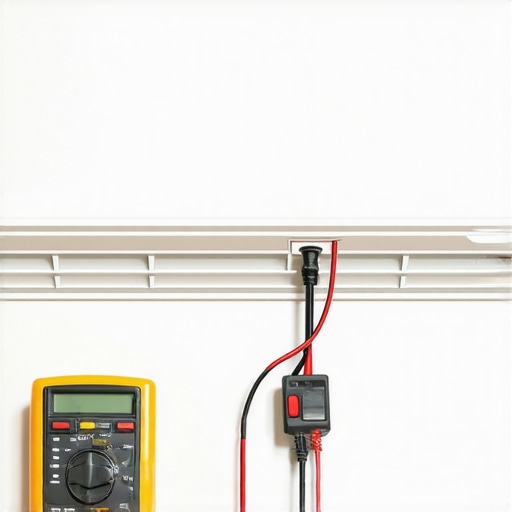
If your heater is drawing too much current, the first step is a ‘Forensic Clean.’ Vacuum the fins, but don’t bend them. Then, have a tech—not a ‘Sales Tech’ looking to sell you a whole new house—check the resistance of the element with an Ohmmeter. If the math doesn’t match the nameplate (Volts / Amps = Ohms), the element is shot. We also recommend remote thermostat access so you can see if a unit is ‘sticking’ on when it shouldn’t. If you’re in a humid climate, don’t forget about dehumidification services, as damp air can actually lead to faster oxidation of electrical terminals. Finally, if you have a boiler, don’t ignore boiler repair services just because you’re focused on one electric room; a balanced home is a safe home. For all your concerns, you can always contact us to get a real tech on the job, not a suit with a clipboard.