The Sound of a Dying Heart: Why Airflow Alone Won’t Save Your System
It is 3 AM in the middle of a January polar vortex, and the only thing standing between a family and a frozen pipe catastrophe is a small, silver canister no bigger than a can of soup. As a technician who has spent thirty years crawling through crawlspaces and balancing on ice-covered rooftops, I have seen more compressors murdered by a $20 part than by actual mechanical old age. Most ‘Sales Techs’ will walk up to a unit that isn’t humping and immediately start writing a quote for a $12,000 high-efficiency furnace installation or a new cold climate heat pump. They’ll tell you the ‘juice’ is gone or the compressor is grounded. Usually, they are lying. The compressor is the heart of the system, but the capacitor is the pacemaker. When it fails, the heart stops beating, and if you keep trying to force it, the windings melt into a sour, acidic mess that ruins the entire system.
The Physics Lesson: Why You Can’t Cool (or Heat) What You Can’t Kickstart
My old mentor, a grizzly guy named Miller who could sniff out a refrigerant leak from the curb, used to scream at me, ‘You can’t cool what you can’t touch, and you can’t touch it if the motor won’t spin!’ He was obsessed with the idea that HVAC is just a game of moving heat from where it isn’t wanted to where it doesn’t matter. In a cold climate, your heat pump is working double-time to extract every bit of latent heat from the freezing outdoor air. The capacitor’s job is to create a phase shift in the electrical current, giving the compressor motor the ‘kick’ it needs to start against high head pressure. Without that phase shift, the motor stays in a ‘locked rotor’ state, drawing massive amounts of amperage, heating up the internal windings until the thermal overload switch finally gives up the ghost. This is why preventative HVAC repair tips for year-round efficiency always start with the electrical components. If the capacitor is even 10% out of its rated microfarads (MFD), you are effectively asking your compressor to run a marathon while holding its breath.
“The most expensive equipment in the world cannot overcome a bad duct system, but a failing capacitor will destroy even the best-engineered compressor in a single season.” – Industry Axiom
Forensic Diagnosis: The Multi-Meter Never Lies
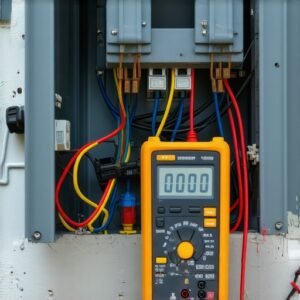
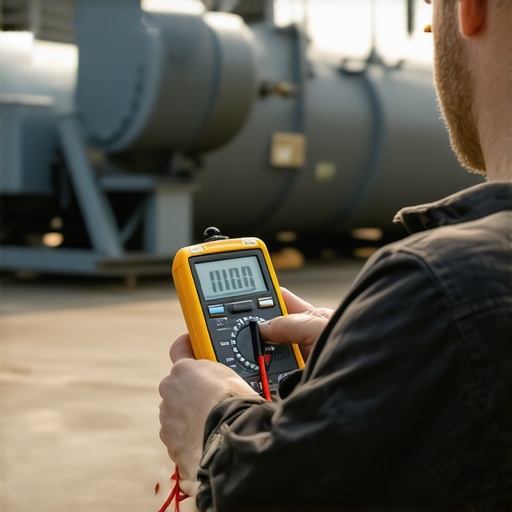
When I approach a unit for control board diagnostics, I’m not looking at the fancy voice control setup Alexa Google integrations or the occupancy sensor installation data first. I’m looking at the capacitor. A capacitor is essentially two conductive plates separated by an insulator. Over time, the electrolytic fluid inside degrades due to the brutal temperature swings of the North. In a church heating system, where the units might sit idle for days and then be asked to ramp up to 100% capacity instantly, this stress is magnified. [IMAGE_PLACEHOLDER] To perform the test, you must safely discharge the stored energy (the ‘juice’) so you don’t get a ‘Sparky’ special. We measure the MFD between the ‘Herm’ and ‘Common’ terminals. If a 45 MFD capacitor reads 38, it’s a ticking time bomb. It might start the unit today, but during a defrost cycle in a blizzard, it will fail, leading to a 24/7 heating emergency response call that could have been avoided with simple HVAC maintenance plans.
The Thermodynamic Zoom: Heat, Resistance, and Failure
Let’s look closer at the thermodynamics. When the capacitor is weak, the compressor takes longer to reach its operational speed. This delay increases the ‘Inrush Current.’ This current generates heat—not the good kind of heat that warms your living room, but the kind that breaks down the varnish on the motor windings. Once that varnish cracks, the refrigerant (which is a solvent) starts to turn into an acid. This is the ‘sour’ smell every pro knows. This is why we push for HVAC repair early. If you catch it while it’s just a weak capacitor, it’s a cheap fix. If you wait until the compressor is ‘hunting’—that rhythmic buzzing sound followed by a click—you’re looking at a full system replacement. This is especially critical for high-efficiency furnace installation and modern heat pumps that use R-410A or the newer A2L refrigerants, which operate at much higher pressures than the old R-22 ‘gas’ we used to use.
“Refrigerant circuit integrity is mandatory; any technician failing to diagnose electrical precursors to compressor failure is in violation of the spirit of EPA Section 608.” – Technical Standards Overview
The Regulatory Cliff and Modern Efficiency
As we move into 2025, the industry is shifting toward demand-controlled ventilation and smarter diagnostics. But no amount of occupancy sensor installation can fix a physical component failure. I’ve seen church heating systems where the board was throwing dozens of codes, and the previous ‘Tin Knocker’ tried to replace the entire control board when the issue was just a bulging capacitor. If you want to avoid the ‘Sales Tech’ trap, you need to understand the math. A capacitor replacement is a fraction of the cost of a new unit. Check out our top HVAC repair strategies to extend your systems life to see the breakdown. Whether you are dealing with a residential split system or a massive commercial air handler, the physics remain the same: voltage, amperage, and capacitance must be in harmony. Don’t let a $20 part turn into a $15,000 nightmare. If your unit is making a new sound, or if your lights flicker when the AC kicks on, stop searching for DIY fixes and call a pro who actually knows how to use a meter. You can find more about the urgency of these situations at how to identify when furnace repair is urgent and why. Comfort is physics, not magic, and a healthy capacitor is the foundation of that physics.