The Sound of a $10,000 Mistake
I remember my old mentor, a grease-stained veteran named Miller who could diagnose a compressor bypass leak just by touching the suction line, used to scream at me during my apprenticeship: ‘You can’t cool what you can’t touch!’ He wasn’t talking about the equipment; he was talking about the physics of airflow. If that air isn’t hitting the evaporator coil because of a choked filter or a collapsed return, you aren’t moving heat; you’re just burning electricity and killing a compressor. This brings me to the harsh reality of the 2025 HVAC landscape. We are currently standing at a regulatory cliff. The death of R-410A is here, and the transition to A2L refrigerants like R-454B means that the ‘juice’ is getting more expensive and the systems more complex. If you think you can skip your annual evaporative cooler services or ignore that screeching air handler repair, you are playing a dangerous game with your manufacturer’s warranty.
“The most expensive equipment in the world cannot overcome a bad duct system or a lack of recorded maintenance.” – ACCA Manual J Standards
The Forensic Diagnosis: Why Your Warranty is a Contract, Not a Guarantee
Most homeowners view a warranty as a safety net. In reality, it’s a legal agreement. If you look at the fine print from brands like Trane, Carrier, or Rheem, there is always a clause regarding ‘evidence of annual maintenance.’ If your compressor slugs out because of liquid floodback—usually caused by a lack of airflow measurement services or a filthy coil—the manufacturer can, and will, deny the claim. They’ll ask for your service logs. If you can’t produce them, you’re on the hook for a $3,000 part and the labor to install it. This is why preventative HVAC repair tips for year-round efficiency aren’t just suggestions; they are your insurance policy. I’ve seen ‘Sales Techs’ try to push a full replacement for a $20 capacitor, but I’ve also seen homeowners lose a whole system because they didn’t want to pay for a thermostat installation that actually communicated with their variable speed furnace services.
The Physics of the Southwest: Heat, Head Pressure, and Hard Starts
Living in a dry, high-heat climate means your equipment is under a different kind of stress than a unit in the humid South. Out here, 115°F ambient temperatures lead to massive head pressure. The ‘gas’ (refrigerant) gets so hot it struggles to reject heat at the condenser. This is where swamp cooler maintenance becomes a secondary savior for some, but for those on central air, it’s about the capacitor. Heat cooks these silver cans. When they fail, the compressor tries to start against that high pressure without enough ‘oomph.’ It hums, it vibrates, and eventually, the thermal overload trips. If this happens too often, you get a burnout. You’ll know it by that acidic, sour smell—the smell of a dead compressor and a very expensive repair bill. Proper HVAC load calculation services ensure your unit isn’t oversized, which prevents the short-cycling that kills these components in the desert heat.
“Maintenance of HVAC systems is essential to ensure that equipment operates at peak efficiency and provides the intended indoor air quality.” – ASHRAE Standard 62.1
The 2025 Regulatory Shift: R-410A is the New Gold
We are entering the era of ‘Mildly Flammable’ refrigerants. The new A2L systems coming in 2025 require specialized sensors and even more precise airflow measurement services. If you are holding onto an older R-410A unit, maintenance is your only defense against the skyrocketing cost of ‘juice.’ A leak in an unmaintained system today could cost you more in refrigerant than the repair itself. This is why top HVAC repair strategies to extend your systems life are focused on leak detection and coil integrity. When a tin knocker (duct specialist) or a technician checks your system, they aren’t just looking at the ‘Pookie’ (mastic) on the ducts; they are ensuring the entire thermodynamic cycle is closed and efficient. Even a simple furnace ignition repair or portable heater safety checks during the winter months are vital. In the Southwest, our ‘winters’ are dry and dusty, which wreaks havoc on flame sensors and igniters in your furnace.
Mechanical Anatomy: The Airflow Manifesto
If your house has one room that feels like an oven while the other is a walk-in freezer, you don’t have an AC problem; you have a static pressure problem. This is where most ‘Sales Techs’ fail—they want to sell you a bigger unit. But a bigger unit on small ducts is like trying to breathe through a cocktail straw while running a marathon. You need airflow measurement services to find the bottleneck. Maybe it’s a crushed flex duct or a return air drop that was undersized by a lazy tin knocker thirty years ago. Sealing those leaks with ‘Pookie’ and ensuring your air handler repair includes a blower speed calibration is the only way to achieve true comfort. This is also why efficient HVAC repairs the blueprint for cooler summers and warmer winters emphasize the ‘whole-home’ approach rather than just swapping parts.
The Winter Threat: Boilers and Burners
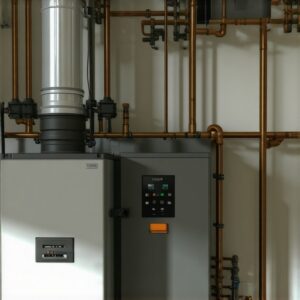
Don’t think that just because we’re in a dry climate we can ignore the heating side. Boiler maintenance services and furnace ignition repair are critical for safety. A cracked heat exchanger doesn’t just stop the heat; it leaks carbon monoxide. It’s a silent killer that no amount of ‘suction line’ cooling can fix. Understanding how to identify when furnace repair is urgent and why can literally save your life. Whether it’s portable heater safety checks or a deep dive into your variable speed furnace services, the goal is the same: keep the fire inside the box and the fumes outside the house. A professional technician—not a ‘Sparky’ (electrician) trying to moonlite in HVAC—is the only one who should be touching your gas valve or your heat exchanger.
Conclusion: Don’t Void Your Peace of Mind
At the end of the day, your HVAC system is the most expensive appliance in your home. Treating it like a ‘set it and forget it’ box is a recipe for a mid-July breakdown. Between the A2L transition, the rising costs of parts, and the strictness of manufacturer warranties, professional maintenance is the only logical path. Whether you need contact us for a simple swamp cooler maintenance or a complex HVAC load calculation services, remember that airflow is king. Don’t let a ‘Sales Tech’ talk you into a $15,000 system when a $200 maintenance visit could have saved your warranty and your compressor. Comfort isn’t magic; it’s physics. Keep your coils clean, your filters changed, and your service logs updated. Your wallet—and your family—will thank you when the mercury hits 110.