The Ghost in the Attic: Why Your Second Floor is a Hot Mess
I’ve spent thirty years dragging my tool bag through crawlspaces and over frost-covered shingles, and if I’ve learned one thing, it’s that physics doesn’t care about your thermostat settings. You’re sitting downstairs in a cool 72-degree breeze while your upstairs bedrooms feel like the inside of a pizza oven. Most folks think they need more ‘juice’—more refrigerant—or a bigger ton unit. They’re wrong. My old mentor, a grizzly tin knocker named Gus, used to scream it at me every time I miscalculated a return air drop: ‘You can’t cool what you can’t touch!’ This is the fundamental law of airflow. If the air isn’t moving through the coil and getting distributed correctly, you’re just burning electricity to make noise. The problem isn’t your capacity; it’s your distribution. This is where we stop talking about ‘AC units’ and start talking about the Airflow Manifesto.
“The most expensive equipment in the world cannot overcome a bad duct system.” – Industry Axiom
In our neck of the woods, where we deal with legitimate winters and humid summers, the ‘Upstairs Heat Problem’ is a structural failure of traditional HVAC design. Your central system is trying to push cold air up a narrow duct trunk against the weight of rising heat. It’s a losing battle. By the time that air reaches the master bedroom, it’s lost its velocity and half its sensible cooling capacity. This is why efficient HVAC repairs often require looking past the outdoor unit and into the mechanical anatomy of the home itself. When you have a boiler system—common in our older Northern stock—you don’t even have ducts for cooling, leaving you stuck with window units that leak air and let in the noise of the street. Whether you’re dealing with steam boiler repair issues or a furnace that won’t kick over, the core issue remains: zoning is the only way to achieve true thermal equilibrium.
[IMAGE_PLACEHOLDER]
Static Pressure: The Silent Compressor Killer
Most ‘Sales Techs’ will try to sell you a 5-ton unit to replace a 3-ton because they think brute force solves everything. But here’s the technical reality: if your ductwork is only rated for 1200 CFM (Cubic Feet per Minute) and you slap a 5-ton unit on it, you’re going to freeze the evaporator coil faster than a pond in January. High static pressure is like trying to breathe through a cocktail straw while running a marathon. It kills compressors, leads to modulating furnace repair calls, and ensures your upstairs stays sweltering. This is where MERV filter upgrades often backfire; homeowners put in a high-density filter thinking they’re helping their lungs, but they’re actually choking the system. You need to understand the ‘Suction Line’—it should be ‘beer can cold,’ but not frosted. If it’s frosted, you’ve got an airflow death grip.
Enter the Mini-Split: Surgical Thermodynamic Striking
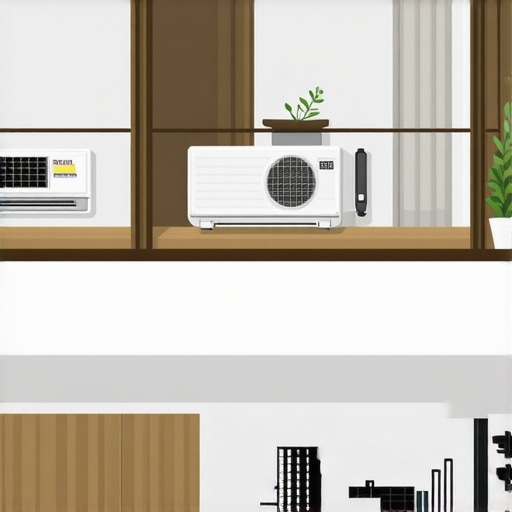
Ductless mini-splits are the ‘Zoning King.’ Instead of trying to force air from the basement all the way to the third-floor attic conversion, we bring the evaporator directly to the heat load. We’re talking about an inverter-driven compressor that doesn’t just turn ‘on’ and ‘off’ like a caveman’s club. It modulates. If the room only needs 2,000 BTUs to maintain 68 degrees, it sips just enough power to provide exactly that. This is the same logic used in modulating furnace repair—precision over power. For homeowners in cold climates, these units now come with hyper-heat technology, meaning they can pull heat out of the air even when it’s 15 degrees below zero outside, which is a perfect supplement to boiler maintenance services. No more hot spots, no more ‘short cycling’ where the downstairs cools in ten minutes but the upstairs stays damp and heavy.
“Standard 62.2 defines the roles of mechanical systems in maintaining indoor air quality, yet comfort is inextricably linked to the removal of latent heat through proper evaporator dwell time.” – ASHRAE Standards
The Physics of Comfort: Latent vs. Sensible Heat
In our humid summers, the ‘swamp feeling’ upstairs is caused by latent heat—the moisture in the air. If your system is oversized or poorly zoned, it runs a ‘short cycle.’ It hits the temperature setpoint (sensible heat) and shuts off before the coil has a chance to wring the water out of the air. You end up with 70-degree air that feels sticky and gross. A mini-split solves this through extended run times at lower speeds, essentially acting as a whole-home dehumidifier. If you’re already looking into top HVAC repair strategies, adding a dedicated zone for the upper floor is the smartest move you can make. It’s about demand-controlled ventilation—placing the cooling where the people (and the heat) actually are.
Why Your Thermostat Wiring Upgrades Aren’t Enough
I’ve seen plenty of ‘Sparkies’ try to fix an upstairs heat problem by just swapping out a thermostat. They install a fancy smart screen and think the problem is solved. But a thermostat is just a switch. If the ‘Tin Knockers’ didn’t size the returns correctly, no amount of Wi-Fi connectivity is going to move air through a blocked path. You might need thermostat wiring upgrades to support multi-stage equipment, but the real work happens in the refrigerant lines and the duct seals. If your ‘Pookie’ (mastic) is cracking and your ducts are leaking into the attic floor, you’re paying to cool the squirrels, not your kids’ bedrooms. This is why choosing the right HVAC fixes requires a technician who understands the psychrometric chart, not just someone who can read a multimeter.
Winter Realities: Boilers and Snow Melt Systems
Since we’re in a Northern zone, we have to talk about the heating side of the equation. If you’re struggling with heat upstairs in the winter, it’s often because your steam boiler repair was a ‘patch job’ rather than a system balance. Steam is temperamental; it wants to follow the path of least resistance. If your air vents are clogged, that steam will never reach the radiator at the end of the line. And for those with high-end setups, snow melt systems installation is a godsend for driveways, but it puts a massive load on the boiler. You need to ensure your bypass humidifier repair is up to date as well, because dry winter air feels colder than it actually is. It’s all one big thermodynamic loop.
The Verdict: Precision Zoning vs. Central Exhaustion
Stop trying to make your old central system do a job it wasn’t designed for. If you have a room that’s consistently 5-10 degrees off from the rest of the house, the ductwork has failed you. Mini-splits provide a surgical solution that bypasses the ‘Airflow Manifesto’ failures of the past. Whether it’s pilot light relighting for an old floor heater or a full-scale HVAC repair, the goal is always the same: comfort through physics. Don’t let a ‘Sales Tech’ talk you into a bigger unit. Demand a manual J load calculation and look into zoning. Your attic—and your electric bill—will thank you.