
The Sound of a Failing Giant and the Consultant’s Lie
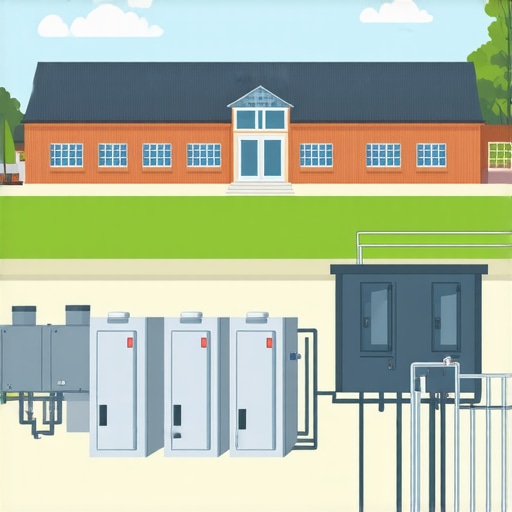
I followed a “Sales Tech” last winter into a district mechanical room that smelled like scorched iron and wet basement. This guy was wearing a suit that cost more than my first truck and was trying to convince the school board that their 1970s-era, 6-million BTU cast-iron sectional boiler was a total loss and needed a direct replacement of the same massive scale—at a cost of nearly a quarter-million dollars. All the old beast really needed was a series of urgent furnace repairs involving some basic electrical work. But here’s the kicker: even if I fixed it, that old monster was a dinosaur eating the school’s budget alive. I watched the gas meter spinning so fast it looked like a ceiling fan. That’s when I sat the superintendent down and explained why sticking with a single, massive point of failure is the worst mistake a facility manager can make. The world has moved on to modularity, and for good reason. Comfort isn’t about horsepower; it’s about control.
The Death of R-410A and the Efficiency Mandate
We are currently staring down a regulatory cliff that is changing how we heat and cool everything from a kindergarten classroom to a university dorm. With the A2L transition and the push for SEER2 compliant upgrades, the old ways of simply “oversizing the unit to be safe” are dead. In the world of industrial heating, we are seeing the same shift. Old atmospheric boilers were lucky to hit 70% efficiency. The rest of that heat was just escaping up the stack, which is why a proper chimney liner installation was so critical back then—to protect the masonry from the acidic condensate of inefficient combustion. Today, modular plants use condensing technology to squeeze every drop of energy out of the gas, often hitting 95% or higher thermal efficiency. If you are still running a single-stage giant, you are burning money to heat the clouds.
“The design and installation of the venting system shall be in accordance with the boiler manufacturer’s instructions and the National Fuel Gas Code, NFPA 54.” – ASHRAE Standard 155P
The Physics of Turndown Ratios: Why Modular Wins
Let’s talk thermodynamics. On a 45°F day, a school doesn’t need 6 million BTUs. It might only need 500,000. When you have one giant boiler, it has to fire at full blast, heat up thousands of gallons of water, and then shut down. This is called short-cycling, and it’s the silent killer of equipment. It’s like floor-boarding your car and then slamming on the brakes every thirty seconds. Modular plants use a “lead-lag” system. If the building only needs 10% of its total capacity, only one small boiler fires up. It runs at its peak efficiency, while the others sleep. This prevents the thermal shock that cracks heat exchangers and leads to expensive furnace repair myths being told to boards. Plus, if one modular unit goes down, you still have 90% of your heat. If the giant goes down, the kids go home. That redundancy is why air handler repair and modular upgrades are the gold standard for 2025.
The Airflow Manifesto: Static Pressure and Steam
You can have the most expensive modular plant in the state, but if your static pressure testing reveals a botched duct system, you’re still failing. I’ve seen schools spend a fortune on boilers but ignore the air handler repair needed to actually move that heat. In the North, where steam systems still reign in older buildings, steam boiler repair is a dying art. These systems are under high stress; the water chemistry has to be perfect, or you’ll scale up the heat exchanger in a single season. I always tell the “Sparky” on-site to check the remote sensors first. Often, the boiler isn’t the problem—it’s a bad limit switch replacement or a remote thermostat access issue that’s keeping the system from communicating. We also see a massive need for steam humidifiers in these environments because as we heat that cold northern air, the relative humidity drops to desert levels, cracking the wood in the gym and making the kids sick. Proper furnace filter replacement on the air handlers is the most basic, yet most ignored, part of this equation. A clogged filter increases static pressure, which makes the blower motors work harder and eventually burn out.
“System performance is highly dependent on the integrity of the distribution system. No amount of equipment efficiency can compensate for a 30% loss in the ducts.” – ACCA Manual N for Commercial Load Calculation
The Trap of the Lowest Bidder
Schools are notorious for taking the lowest bid, but in the age of high-efficiency hydronics, that’s a dangerous game. A cheap installer won’t perform the static pressure testing or balance the system properly. They’ll slap it in, use some cheap tape instead of high-quality “Pookie” (mastic) on the seams, and walk away. This leads to “hot spots” and “cold spots” that drive teachers crazy. I’ve seen districts finally move toward financing for heat pump installs to augment their boiler plants. It’s a smart move for shoulder seasons, but it requires a tech who understands the “Juice” (refrigerant) and the specific pressures involved with newer, mildly flammable A2L refrigerants. If your “Tin Knocker” isn’t talking about CFM and delta-T, he’s just a parts changer, not a technician. For more on how to manage these complex systems, check out these efficient HVAC repair strategies. Long-term savings come from precision, not just hardware. Don’t let a sales tech talk you into a prehistoric giant when a smart, modular array is what the physics actually demand. Stay on top of your preventative HVAC repair tips and keep that air moving correctly.