The Sound of a Struggling System: Why Physics Hits Hard Below 32°F
I’ve spent thirty years on frozen rooftops and in cramped mechanical rooms, and if there’s one thing I’ve learned, it’s that physics doesn’t care about your comfort or your thermostat setting. When the temperature drops below freezing, your heat pump isn’t just working; it’s in a boxing match with thermodynamics. Most homeowners think their system is broken when they hear that deep, rhythmic thrumming or see steam rising from the outdoor unit. But it’s usually just the machine trying to survive. We are entering a new era of climate control, and with the 2025 regulatory shifts, understanding the ‘why’ behind your heating struggles is the difference between a minor HVAC repair and a catastrophic compressor burnout.
“The most expensive equipment in the world cannot overcome a bad duct system or the laws of thermodynamics.” – Industry Axiom
The Physics Lesson: Gus and the Frozen Stone
My old mentor, a grizzled tin knocker named Gus, once dragged me out to a site in the middle of a January gale. He pointed at a frost-covered condenser and barked, ‘You can’t squeeze blood from a stone, kid, and you can’t squeeze heat from an ice cube without paying the tax!’ He was talking about the balance point. A heat pump works by moving heat, not creating it. It uses the refrigerant—the ‘juice’—to absorb thermal energy from the outdoor air, even when it’s cold. But as the ambient temperature drops, there’s less sensible heat to grab. The compressor has to work harder, the compression ratio skyrockets, and the efficiency plummets. This is why heating service calls peak the second the first frost hits.
The 2025 Regulatory Cliff: The Death of R-410A
We are currently standing on a regulatory precipice. The industry is transitioning away from R-410A toward A2L refrigerants like R-454B. Why does this matter to you? Because these new gases are ‘mildly flammable.’ If you are looking at a heat pump installation in 2025, you’re not just getting a new box; you’re getting a system loaded with leak sensors and updated electronics. The cost of ‘gas’ is skyrocketing, and the days of a ‘cheap’ top-off are gone. If your older unit is struggling now, you’re faced with a choice: patch a sinking ship with refrigerant leak detection or bite the bullet on a new system before the full weight of the new mandates hits the supply chain.
The Defrost Cycle: It’s Not Smoke, It’s Survival
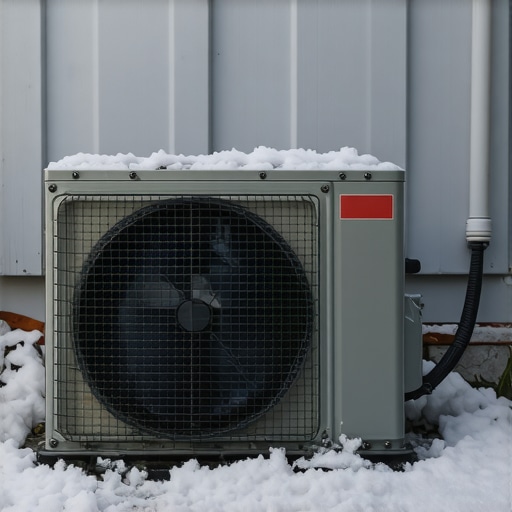
When it’s 28°F and humid, your outdoor coil becomes an ice block. To fix this, the system enters a defrost cycle. It literally switches into ‘AC mode’ to send hot gas to the outdoor coil to melt the ice. This is when you see the steam and hear the reversing valve ‘whoosh.’ If your auxiliary heat (the ‘heat strips’) doesn’t kick in perfectly, you’ll feel a blast of cold air inside. This is where most gas furnace repair experts laugh at heat pumps, but modern dual-fuel systems—where a gas furnace takes over when it’s too cold for the pump—are the real solution for North/Cold climates. In these zones, the ‘monsoon effect’ isn’t the problem; it’s the frost-line and flame rollout risks on the backup side.
Complexity in Scale: From Churches to Multi-Family Upgrades
Heating isn’t one-size-fits-all. Take church heating systems, for instance. You have massive thermal mass and high ceilings. A standard heat pump will fail there because it can’t recover the temperature quickly enough after the building has been sitting at 50°F all week. You need high-static blowers and often boiler maintenance services to handle the heavy lifting. Similarly, multi-family heating upgrades require precise flue pipe installation to ensure carbon monoxide doesn’t back up into units when the backup furnaces are screaming to keep up. I’ve seen ‘Sales Techs’ try to slap a residential-grade unit into a commercial space just to get the commission. Don’t fall for it. You need the right ‘sparky’ and tech who knows that solar thermal heating integration can actually assist a heat pump by pre-warming the refrigerant loop, even in winter.
“Design conditions for winter heating shall be based on the 99% or 97.5% column in the ASHRAE Climatic Design Conditions table.” – ASHRAE Standards
The Airflow Manifesto: Why Your Vents Are Lying
If one room is freezing while the heat pump is humming, it’s not a ‘juice’ problem; it’s an airflow problem. I’ve seen ‘tin knockers’ leave gaps in the plenum that you could fit a sandwich through. They try to fix it with tape, but real pros use ‘Pookie’ (mastic) to seal those leaks. Without proper static pressure, that expensive variable-speed compressor is just a glorified paperweight. If you’re experiencing uneven heat, check your return air drops. A restricted return is like trying to breathe through a cocktail straw while running a marathon. Before you call for an emergency heating service, check your filters. A dirty filter is the #1 killer of compressors because it chokes the heat exchange process until the ‘suction line’ is no longer ‘beer can cold’—or in this case, the discharge line isn’t hot enough to toast bread.
The Verdict: Repair or Replace?
In the world of 2025 HVAC, the ‘trap’ is buying the cheapest unit available. The new A2L units require specialized training. If your tech doesn’t mention refrigerant leak detection sensors or the nuances of flue pipe installation for your backup furnace, they are a ‘Sales Tech,’ not a mechanic. Whether it’s boiler maintenance services or a complex heat pump installation, physics always wins. Don’t wait for the polar vortex to find out your system’s balance point is 40°F when you need it to be 20°F. Schedule your preventative maintenance now, and make sure they check the ‘gas’—the right way.”,”image”:{“imagePrompt”:”A macro photograph of an outdoor HVAC heat pump condenser unit heavily covered in white frost and ice during a winter night, with a slight steam rising from the top, showing the copper fins struggling against the cold.”,”imageTitle”:”Frozen Heat Pump Condenser in Winter”,”imageAlt”:”An icy outdoor heat pump unit showing frost buildup on the coils during freezing temperatures.”},”categoryId”:1,”postTime”:”2025-01-24T10:00:00Z”}