The Physics Lesson: Why Airflow is King
My old mentor, a man we called ‘Gears’ because he could hear a failing motor bearing from three blocks away, used to scream at us greenhorns: ‘You can’t cool what you can’t touch!’ He wasn’t talking about the unit; he was talking about the molecules. He’d stand over a frozen evaporator coil, ignore the frantic business owner, and point to the layer of grease and dust. If the air doesn’t touch the copper, the heat doesn’t move. It’s that simple. Most of these ‘Sales Techs’ running around today want to sell you a new 20-ton rooftop unit (RTU) because they don’t understand static pressure or latent heat. They see a flat capacitor and quote a whole system replacement. It’s a disgrace. In 30 years of crawling through commercial plenums, I’ve learned that a real maintenance plan isn’t a checklist—it’s a diagnostic strategy designed to keep the thermodynamic cycle from eating itself alive.
1. Low-GWP Refrigerant Retrofits and Leak Detection
We are standing on the edge of a regulatory cliff. As of 2025, the industry is pivoting hard away from R-410A. If your current maintenance plan doesn’t include refrigerant leak detection and a roadmap for low-GWP refrigerant retrofits, you are being left behind. Refrigerant—or ‘juice’ as the old-timers call it—is a closed loop. If you’re low, you have a leak. Period. Anyone ‘topping off’ your system every June is a thief. In a commercial setting, a small pinhole in the suction line can lead to compressor burnout because the returning gas isn’t cool enough to keep the motor windings from melting. We now use ultrasonic leak detectors because we care about the equipment’s life, not just making a quick buck. Transitioning to mildly flammable A2L refrigerants requires specialized sensors and updated handling protocols. If your ‘tin knocker’ or service tech isn’t talking about R-454B yet, find someone who is.
“Ventilation for acceptable indoor air quality is not a luxury; it is a fundamental requirement of the built environment.” – ASHRAE Standard 62.1
2. Duct Design Services and Airflow Management
You can buy the most expensive high-efficiency unit on the market, but if it’s hooked up to the same strangled ductwork from 1985, it will fail. This is why duct design services are the backbone of any commercial plan. We see it all the time: a business upgrades to a higher SEER unit, but the static pressure is so high the blower motor burns out in two years. I’ve seen plenums held together with nothing but ‘Pookie’ (mastic) and prayers. A proper maintenance technician evaluates the total external static pressure. We look for ‘hot spots’ that aren’t magic—they’re physics. Often, the solution isn’t more horsepower; it’s better returns. By optimizing the path of the air, we ensure the evaporator coil drops below the dew point to effectively remove latent heat, preventing that ‘cold swamp’ feeling common in poorly designed office spaces. This is essential for extending your system’s life through balanced airflow.
3. Carbon Monoxide Safety and Chimney Liner Installation
In colder climates where the winter wind howls, the heating side of the HVAC equation becomes a life-and-death matter. A cracked heat exchanger in a 200,000 BTU furnace isn’t just an inconvenience; it’s a gas chamber. Any legitimate commercial plan must include carbon monoxide detector installation and regular testing. We don’t just ‘look’ at the flame; we use combustion analyzers to check for high CO levels and flame rollout. Furthermore, the venting system is frequently ignored. Chimney liner installation is critical for older commercial buildings transitioning to high-efficiency boilers or furnaces. If the flue gases aren’t hot enough to rise naturally due to a massive, cold masonry chimney, they condense. That acidic condensate will eat through mortar and eventually leach back into the building. It’s technical, it’s messy, and it’s mandatory. Understanding when furnace repair is urgent is the difference between a minor fix and a catastrophic failure.
“Equipment shall be sized according to the heating and cooling loads calculated by Manual J or other approved methods.” – ACCA Manual S
4. Specialized Commercial Exhaust and Humidity Control
If you’re running a commercial kitchen, restaurant kitchen exhaust repair is your primary fire prevention tool. Grease-laden vapors are fuel. If the ‘Sparky’ (electrician) didn’t wire the interlocks correctly, or the belt on your upblast fan is slipping, you’re creating a vacuum that pulls conditioned air right out the door while leaving the heat in the kitchen. We also integrate dehumidification services and steam humidifiers depending on the season. In the winter, dry air shrivels wooden fixtures and makes the air feel colder than it is, forcing the boilers to work harder. In the summer, latent heat is the enemy. A high-quality maintenance plan balances the psychrometrics of the space, ensuring that the HEPA filter systems can actually do their job without being blinded by moisture or excessive particulate load.
5. Precision Control with Thermostat Installation and HEPA Systems
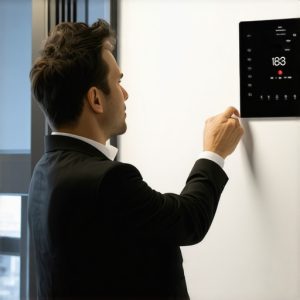
The days of the ‘mercury bubble’ thermostat are long gone. Modern thermostat installation in a commercial environment involves building automation and precise sensor placement. If your thermostat is under a supply vent, it’s lying to the compressor. We also prioritize HEPA filter systems that don’t just catch dust but manage the pressure drop. A HEPA filter is like a brick wall for air; if your blower isn’t designed for it, you’ll kill the motor. True maintenance means measuring the pressure drop across those filters and ensuring the ‘gas’ and air are in perfect harmony. Don’t let a sales tech talk you into a ‘UV light’ fix-all when your return air is undersized and your filters are collapsing into the fan housing. Focus on the basics: clean coils, tight seals, and proper physics. Check out our expert tips for 2025 success to stay ahead of these technical shifts.