The Forensic Diagnosis: Why Your Furnace Is a Ticking Time Bomb Without a Professional Eye
There is a specific kind of silence that only exists in a house when the outdoor temperature is five below zero and the furnace decides to quit. It’s not just quiet; it’s a heavy, oppressive stillness that tells you the thermal mass of your home is losing its fight against the second law of thermodynamics. I’ve spent thirty years listening to that silence. Usually, it’s followed by the sound of a homeowner’s voice cracking over the phone at 3:00 AM because they skipped a $150 tune-up and are now looking at a $4,000 emergency furnace repair. My old mentor, a man who could identify a gas leak by the taste of the air, used to scream at me, ‘You can’t heat what you can’t move!’ This is why airflow matters more than horsepower. He wasn’t just talking about the blower; he was talking about the entire mechanical anatomy of the system. If you aren’t paying attention to the physics of your heat exchanger, you’re just waiting for a catastrophic failure.
“The most expensive equipment in the world cannot overcome a bad duct system.” – Industry Axiom
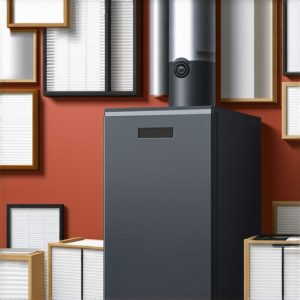
In the frozen North, where the frost line digs deep into the soil, your HVAC system isn’t just a luxury; it’s life support. When we talk about 5 reasons your maintenance plan pays for itself by mid-winter, we aren’t talking about ‘checking filters’—any homeowner can do a furnace filter replacement. We are talking about deep-tissue mechanical forensics. [image_placeholder_1] Reason 1: The Physics of Combustion and Flame Sensor Integrity. Your furnace uses a process called flame rectification. A tiny rod, the flame sensor, sits in the burner path. It detects a microscopic flow of electricity—measured in microamps—through the flame itself. Over the season, carbon buildup creates an insulating layer. If that sensor is dirty, the system won’t see the flame and will shut down to prevent a gas explosion. Professional furnace flame sensor cleaning is the difference between a warm house and a ‘no-heat’ service call that costs three times what a maintenance plan does. This is a primary focus in furnace repair myths debunked by industry experts.
The Anatomy of Heat: Why Your Air Handler Is Gasping for Breath
Reason 2: Overcoming Static Pressure in the Air Handler. People think the ‘fan’ just blows air. In reality, your blower motor is fighting a war against the resistance of your ductwork—what we calls ‘Static Pressure.’ When you neglect air handler repair or leave a dirty filter in for six months, the motor has to ramp up its torque. On a variable speed furnace services call, I see these motors burning out prematurely because they are over-amping to push air through a ‘plugged’ system. A maintenance plan ensures the blower wheel is clean (because even 1/16th of an inch of dust reduces CFM by 20%) and that the ‘Pookie’ (mastic) on your plenums hasn’t dried out and cracked. If your static pressure is too high, you’re essentially redlining your engine while sitting in the driveway.
“Standard 62.1-2022: The indoor environment must be maintained within limits that promote human health and comfort through proper ventilation and filtration.” – ASHRAE Standards
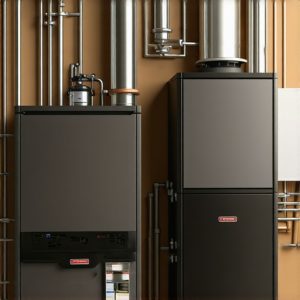
Reason 3: Identifying the Silent Killer—The Cracked Heat Exchanger. This is where the ‘Sales Techs’ love to scare people, but the physics are real. A heat exchanger is a metal chamber where combustion happens. Its job is to keep the poisonous ‘gas’ (flue gases) separate from the ‘juice’ (the air you breathe). Over years of expansion and contraction, the metal fatigues. During a maintenance visit, we don’t just look; we use combustion analysis tools to check the flue pipe installation and CO levels. If we find a crack, the system is ‘Red Tagged.’ Identifying this in October via HVAC load calculation services is a manageable event. Identifying it in January when the CO detector is screaming is a life-threatening emergency. You can learn more about these critical timings in our guide on how to identify when furnace repair is urgent.
From Pellet Stoves to Industrial Heaters: The High Cost of Neglect
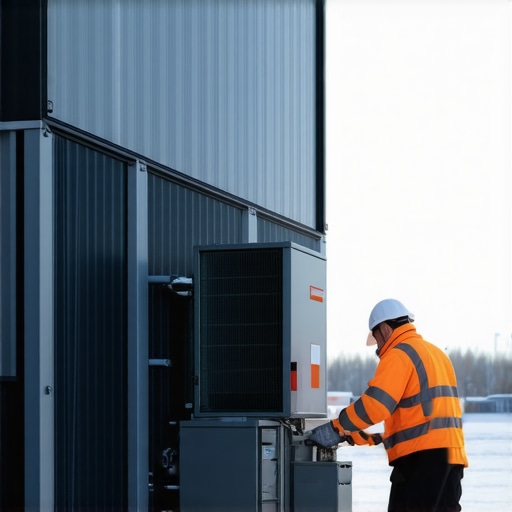
Reason 4: Diversified Heating Systems and Specialized Maintenance. Not every home relies on a standard gas furnace. I’ve seen wood burning stove installation jobs that were practically chimneys waiting to catch fire because the flue wasn’t swept. Similarly, pellet stove repair often comes down to a failed auger motor or a dirty burn pot—all of which are covered in a standard preventative check. For larger buildings, industrial heater services require even more precision because the scale of the gas pressure and the size of the blowers are massive. Whether it’s a tiny pellet stove or a 500k BTU warehouse heater, the logic is the same: soot is an insulator. If there is soot on your heat transfer surfaces, you are paying the utility company for heat that is going right out the chimney instead of into your rooms. Check out preventative HVAC repair tips for more on this.
Reason 5: The ROI of Efficiency and Warranty Protection. Most manufacturers (Trane, Carrier, Lennox) require annual maintenance to keep their warranties valid. If your compressor or heat exchanger fails and you can’t prove a licensed ‘Sparky’ or tech has looked at it, you’re on the hook for the full $5,000+ replacement. A maintenance plan is your insurance policy. Furthermore, a tuned system runs shorter cycles. We call it ‘short cycling’ when a system turns on and off too frequently—it’s the hardest thing you can do to a mechanical system. By calibrating the gas pressure and cleaning the burners, we ensure long, efficient run times that lower your bill and extend the equipment life. This is the core of efficient HVAC repairs and the blueprint for comfort. Don’t let a ‘Tin Knocker’ tell you otherwise; the math doesn’t lie. For professional help, you can always contact us directly.
{“@context”: “https://schema.org”, “@type”: “HowTo”, “name”: “How to Maintain Your Furnace for Winter Success”, “step”: [{“@type”: “HowToStep”, “text”: “Perform a furnace filter replacement to ensure proper airflow and low static pressure.”}, {“@type”: “HowToStep”, “text”: “Schedule a furnace flame sensor cleaning to prevent ignition failure.”}, {“@type”: “HowToStep”, “text”: “Inspect the flue pipe installation for any signs of corrosion or venting blockages.”}, {“@type”: “HowToStep”, “text”: “Verify the integrity of the heat exchanger using combustion analysis.”}], “totalTime”: “PT60M”}