The Physics of the Hearth: Why Your Choice Matters
My old mentor used to scream, ‘You can’t cool what you can’t touch!’ and while he was talking about evaporator airflow, the inverse is just as true for heating. You can’t heat what you can’t saturate. When you are standing in a drafty mudroom in the middle of a January whiteout, the difference between a cast iron stove and a welded steel one isn’t just about aesthetics; it is about the thermodynamic profile of how heat moves from the firebox to your frozen marrow. In thirty years of crawling through crawlspaces and troubleshooting urgent furnace repair issues, I have seen homeowners make the same mistake: they buy for looks and ignore the physics of thermal mass. Heating a home is a battle against the Second Law of Thermodynamics, and if you do not understand how your stove radiates energy, you are bringing a knife to a gunfight.
“The most expensive equipment in the world cannot overcome a bad duct system.” – Industry Axiom
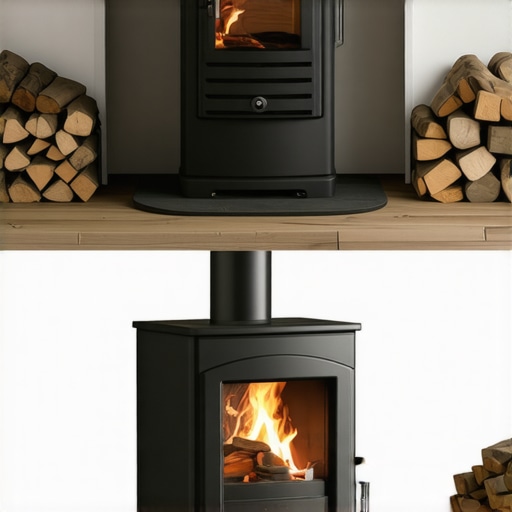
Whether you are looking at biomass boiler services or a simple wood-burning setup, you have to look at the material science. Cast iron is essentially the ‘slow and steady’ approach. It is poured into molds, creating a thick, dense structure that acts like a thermal flywheel. Once that iron gets hot, it stays hot. This is what we call ‘thermal lag.’ On the other hand, steel stoves are cut from large sheets and welded together. They are the ‘sprinters’ of the HVAC world. They heat up fast, get the room up to temperature in a hurry, but once the fire dies down, the heat vanishes like a ‘Sparky’ on a Friday afternoon. If you are dealing with a gas furnace repair or a steam boiler repair, you are used to the system cycling on and off. A wood stove is a continuous combustion engine, and the material of that engine dictates the comfort curve of your living room.
The Forensic Diagnosis: Cast Iron Anatomy
In the trade, we talk about ‘sensible heat’—the temperature change you can actually measure with a thermometer. Cast iron excels at storing this heat. Think of it like a hot water heater repair where the tank holds 50 gallons of energy; the cast iron body holds the BTUs and bleeds them out slowly. This makes it ideal for 24/7 heating in deep-freeze climates like Chicago or the Northeast. However, cast iron has a weakness: it moves. Because it is a series of plates bolted together with furnace cement, it expands and contracts. Eventually, those seals can leak. If you have ever seen a ‘Tin Knocker’ try to seal a leaky return with Pookie (mastic), you know that keeping air where it belongs is half the battle. With a cast iron stove, you eventually have to rebuild it. It is much like a church heating system—it is beautiful and built to last, but the maintenance is high-stakes. If the seals go, your efficiency drops, and you might as well be burning $20 bills to stay warm.
The Steel Sprint: Rapid Response Heating
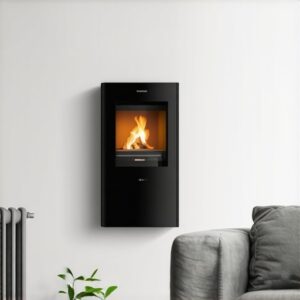
Steel stoves are the modern answer to the slow-to-wake cast iron. Because the steel is thinner and often welded into a single piece, there are no gaskets or furnace cement to fail in the main firebox. For a homeowner who needs heat *now* after getting home from work, steel is the winner. It is the HVAC equivalent of a modulating furnace repair—it responds quickly to the demand. But here is the catch: steel does not have the mass. Once the flames are out, the metal cools rapidly. In a cold climate, this leads to ‘the roller coaster effect.’ You are sweating at 8:00 PM and shivering by 3:00 AM. This is why I often recommend a smart thermostat setup for people with secondary heat sources; you need the primary system to bridge the gap when the steel stove loses its ‘Juice.’ Without that automation, your home’s thermal envelope becomes an unstable mess.
“Proper sizing and installation are the foundations of energy efficiency and occupant comfort.” – ACCA Manual J
Thermodynamic Zooming: The Role of Infrared and Convection
We need to talk about how the heat actually hits your skin. Cast iron is a master of infrared heater installation principles. It emits long-wave radiant energy that warms objects (like you and your couch) rather than just the air. Steel stoves often utilize a double-wall design to facilitate convection—moving air around the firebox and out into the room. If your house has high ceilings, convection is your enemy; all that heat stays at the ceiling while your feet stay ‘beer can cold’ on the floor. This is where ventless gas heater services or even infared heater installation can supplement a poorly chosen stove. If you are struggling with cold spots, it is usually an airflow issue. Remember: if the air can’t move, the heat can’t reach you. This is why I tell people that HVAC maintenance plans are not just about cleaning filters; they are about verifying that the total system—wood, gas, or electric—is working in harmony with the home’s physics.
The Economics of the Hearth: Repair vs. Replace
When I go out for a steam boiler repair, the first thing the customer asks is, ‘How much longer has she got?’ The same applies here. A high-quality cast iron stove can last 50 years if you are willing to re-gasket it every decade. A steel stove might only last 15 to 20 before the firebox warps or thins out from the intense heat of modern secondary combustion. It is the same logic we use when comparing a gas furnace repair to a full replacement. If the heat exchanger is cracked, the game is over. If the stove’s firebox is warped, the ‘Gas’ (combustion products) won’t stay contained, and you have a carbon monoxide factory in your living room. Always look for the EPA 2020 certification. Whether it is a wood stove or biomass boiler services, efficiency is king. A high-efficiency unit means less creosote, and less creosote means your chimney won’t turn into a Roman candle in the middle of the night.
Maintenance and the Longevity Trap
Don’t be fooled by ‘Sales Techs’ who tell you these things are maintenance-free. Everything that burns fuel needs a HVAC maintenance plan. For a wood stove, that means checking the baffle plates, the firebricks, and the catalytic combustor if it has one. If you ignore this, you’ll end up needing gas furnace repair because you’ve over-stressed your backup system when the stove failed. I’ve seen it a hundred times: a homeowner thinks they’re saving money with wood, but because they didn’t clean the flue or check the gaskets, they end up with a house full of smoke and a $1,200 bill for an emergency heating call. You can find more about this in our preventative repair tips. Comfort is not a luxury; it is a result of calculated physics and regular maintenance. Choose the material that fits your lifestyle—cast iron for the long-haul, steady heat; steel for the quick, occasional warmth—but never forget that the ‘Suction Line’ of your home’s comfort depends on the air you can touch and the heat you can hold.