The Sound of a Silent Furnace and the Gravity of Radiant Heat
When the grid goes dark in the middle of a February whiteout and your high-efficiency blower motor hums its last tune, the silence isn’t peaceful—it’s expensive. I’ve spent thirty years crawling through frozen crawlspaces and diagnosing transformer replacement issues on units that gave up the ghost because the owner didn’t understand basic thermodynamics. My old mentor, a grizzly veteran who could smell a gas furnace repair need from the curb, used to scream at me, ‘You can’t heat what you can’t touch!’ He wasn’t talking about the air; he was talking about the building’s thermal mass. This is the fundamental truth behind a wood-burning stove and, more importantly, the hearth it sits on. If you treat a hearth as a decorative rug, you’re not just risking a fire; you’re wasting the most primitive and effective heat transfer method known to man. In the North, where the snow melt systems installation on your driveway is the only thing keeping you from being trapped, your indoor hearth is your survival anchor.
“Proper sizing of any heating appliance, including solid fuel burners, requires an accurate HVAC load calculation service to prevent oversized cycling or insufficient heat delivery.” – ACCA Manual J
The Anatomy of the Hearth: Why Materials Dictate Comfort
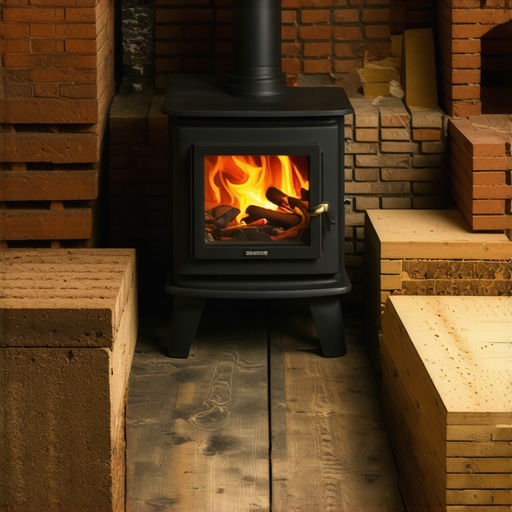
A hearth isn’t just a slab of rock; it’s a heat battery. Just like hotel boiler services rely on massive reservoirs to maintain temp, your hearth should store sensible heat. If you’re looking at wall furnace installation as a comparison, you’ll notice they lack mass—they heat the air and the air leaves. A stove, however, radiates. Soapstone is the king of this realm, though I hate to use that word—let’s call it the heavy hitter of the trade. It has a specific heat capacity that puts brick to shame. I’ve seen homeowners try to use thin ceramic tile over plywood, and I’ve had to follow the leak detector integration guys in when the radiant heat started off-gassing the subfloor glue. That’s a ‘Sales Tech’ move. A real tech knows that a hearth needs a high R-value to protect the house and high thermal mass to keep the room warm after the fire burns down to embers.
The Forensic Diagnosis: When Materials Fail Under Pressure
Why do some hearths crack while others last a century? It’s the same reason a modulating furnace repair gets complicated: thermal expansion. If you use a material with low thermal shock resistance, like certain types of granite or marble with high moisture content, the first time you get that stove up to 600°F, you’re going to hear a ‘crack’ that sounds like a transformer replacement popping in a thunderstorm. Brick is the old reliable, but it’s porous. If you’ve got a hot water heater repair leak nearby or high humidity, those bricks soak up moisture and then ‘spall’ when the heat hits. This isn’t magic; it’s physics. You need non-combustible materials that are rated for continuous high-temp exposure. We often see this in hotel boiler services where the refractory brick fails—if it can happen in a commercial boiler, it’ll happen in your living room.
“The selection of hearth materials must account for the thermal resistance (R-value) required to protect combustible flooring from radiant heat.” – ASHRAE Standard 62.1
Static Pressure and the Airflow Manifesto
You might think airflow is only for the tin knocker working on your ductwork, but your wood stove is an atmospheric vacuum. If your house is tight, that stove will compete with your water heater for air, potentially leading to backdrafting. This is why system performance testing is vital. I’ve been in homes where the owner was complaining about ‘smoky smells’ and thought they needed a gas furnace repair, only to find the wood stove was pulling carbon monoxide back down the furnace flue. We solve this by ensuring the hearth installation includes a dedicated outdoor air intake. Just like you wouldn’t run a high-tonnage AC without a proper return air drop, you shouldn’t run a wood stove in a vacuum. If you’re curious about how these systems interact, check out these furnace repair myths debunked by industry experts.
The Math of Comfort: Repair vs. Replace
When is it time to pull the plug on an old hearth or a failing stove? If the clearance to combustibles is less than what’s required by the NFPA 211, you don’t ‘patch’ it with some pookie (mastic) and hope for the best. You tear it out. The cost of a proper hearth ($1,500 – $3,000) is a drop in the bucket compared to a house fire. It’s the same logic I use for modulating furnace repair; if the heat exchanger is pitted, the unit is a boat anchor. For those looking at long-term efficiency, integrating heating service hacks for comfort and savings in 2025 is about more than just the stove; it’s about the entire envelope. This includes leak detector integration for your gas lines and ensuring your hot water heater repair needs are met so you aren’t fighting multiple failures at once.
The Technical Trap: Avoiding the Scam Tune-Up
Every year, I see guys offering ‘hearth inspections’ for $49. It’s a foot in the door to sell you a $10,000 liner you might not need. A real inspection involves system performance testing and a look at the chimney’s structural integrity. They should be checking the transformer replacement on your blower if the stove has one, and ensuring the wall furnace installation in the next room isn’t creating a negative pressure zone. If you want the truth about your system’s health, look into heating service innovations transforming 2025 climate control. Don’t let a ‘Sales Tech’ tell you that a cracked hearth is ‘just character.’ It’s a thermal bridge to your floor joists, and that’s a bridge to a very bad day.
Final Specs for the Airflow Architect
Whether you’re installing a new hearth or maintaining a snow melt systems installation, the goal is the same: controlled heat transfer. Use pookie to seal your venting, ensure your sparky has grounded any electrical components properly, and never skip the HVAC load calculation services. Comfort isn’t a feeling; it’s a measurable state of physics. If you’ve got questions about how to balance your home’s heating, or if you’ve realized your current setup is a ‘cold swamp’ in the making, reach out for efficient HVAC repairs or visit our contact page to get a real tech on the line. Stop guessing and start measuring.