The Silence of a Cold House: More Than Just a Pilot Light
There is a specific kind of silence that wakes an HVAC man up at 3 AM. It is not the silence of sleep; it is the silence of a furnace that has quit in the middle of a sub-zero cold snap. When that draft inducer motor repair you did three years ago is still humming but the burner refuses to kick, you know you are looking at a safety circuit failure. Most ‘Sales Techs’—those guys who look like they’ve never seen a crawlspace and carry shiny tablets instead of pipe wrenches—will walk up to a dead furnace, sniff the air, and tell a homeowner they need an $8,000 system. They’ll skip the diagnostics because they don’t know how to use a multimeter for anything other than checking for a heartbeat. But if you understand the physics of heat, you know that sometimes the smallest component is the one holding the line between a warm living room and a frozen pipe disaster.
The Physics Lesson: You Can’t Burn What You Can’t Vent
My old mentor used to scream, ‘You can’t cool what you can’t touch!’ but in the frozen North, he’d modify that for gas: ‘You can’t burn what you can’t vent, and you can’t vent what you can’t prove!’ This is the essence of furnace safety. In the world of heating, we deal with the ‘North/Cold’ reality: cracked heat exchangers, flame rollout, and the constant threat of carbon monoxide. Whether you are running geothermal heat pump systems or a standard high-efficiency gas furnace, the logic of the safety loop is the same. The thermocouple is the unsung hero of the standing pilot era, and its successor, the flame sensor, does the same job in modern rigs. It’s a bimetallic junction that creates a tiny, tiny amount of electrical ‘juice’—we’re talking millivolts—when it gets hot. No heat? No millivolts. No millivolts? The gas valve slams shut so you don’t turn your basement into a bomb. This is thermodynamic zooming at its finest: we are converting the kinetic energy of a flame into an electrical signal through the Seebeck effect.
“A thermocouple should generate between 25 and 30 millivolts under an open-circuit load to ensure reliable gas valve operation.” – Standard Service Manual Axiom
The Forensic Diagnosis: Anatomy of the Thermocouple Test
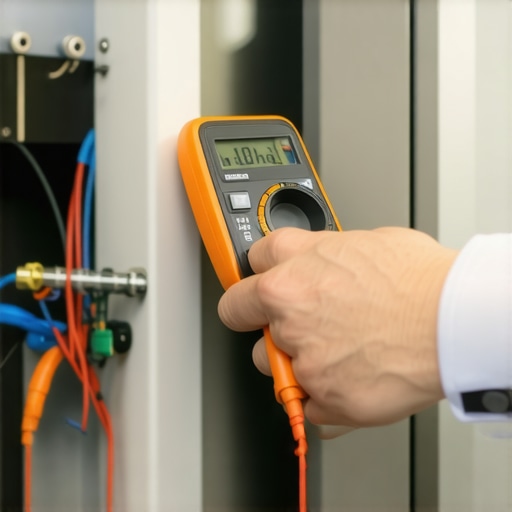
When I step into a mechanical room and smell that faint, metallic tang of a heat exchanger that’s been struggling, I go straight for the multimeter. Testing a thermocouple is a step-by-step process of elimination. First, I check the pilot flame. If it’s dancing around like a tin knocker on a Friday night, it’s not hitting the sensor correctly. It needs to be a steady, blue flame enveloping the top 1/2 inch of the thermocouple tip. If the flame is good but the burner won’t stay lit, it’s time to pull the multimeter. Set your meter to DC Millivolts. You’re looking for the small stuff here. Unscrew the thermocouple from the gas valve, hold the pilot button down, light it, and touch one lead to the copper lead and the other to the outer shell. If you aren’t seeing at least 20-30mV, the part is junk. It’s a $20 fix that saves a homeowner from being scammed into a whole new unit by a ‘Sparky’ who doesn’t understand gas. If the thermocouple tests fine, then we start looking at the bigger culprits, like a blower motor replacement or a failing gas valve solenoid.
Why Modern Systems Aren’t Immune
Even if you’ve moved on to cold climate heat pumps or biomass boiler services, sensors remain the primary point of failure. Modern high-efficiency systems use flame rectification—a slightly more advanced version of our old thermocouple friend. In these cases, we aren’t looking for millivolts; we are looking for microamps. The principle is identical: physics doesn’t care about your WiFi thermostat integration or your voice control setup Alexa Google. If the sensor can’t prove flame, the board won’t let the gas flow. I’ve seen guys replace entire draft inducer motors when the only problem was a dirty sensor or a bad ground. If you’re struggling with constant lockouts, check out these furnace repair myths debunked by industry experts to see why simple sensor cleaning often beats a component swap. Don’t let a tech sell you a biomass overhaul when a piece of steel wool could fix your lockout.
The Math: Repair vs. Replace in the 2025 Regulatory Cliff
We are approaching a weird time in the industry. With the move toward A2L refrigerants and the death of R-410A, the cost of a new install is skyrocketing. I tell my customers that if the heat exchanger is solid, we fix the small stuff. A thermocouple, a capacitor, or even a blower motor replacement is a drop in the bucket compared to the $12,000 to $15,000 for new geothermal heat pump systems or high-end variable speed units. However, if I see flame rollout or a crack in that ‘clamshell’ heat exchanger, I stop. Carbon monoxide isn’t a joke. That’s when we talk about how to identify when furnace repair is urgent and why. Safety is the only thing that overrides my ‘repair first’ mentality. If you are facing a total system failure, look into financing for heat pump installs or federal rebates that make the transition to cold climate tech more palatable. For more on the upcoming changes, check the heating service hacks for comfort and savings in 2025.
“Proper vent sizing and the verification of combustion safety circuits are essential for the safe operation of Category I appliances.” – NFPA 54 National Fuel Gas Code
Preventive Maintenance vs. The ‘Scam’ Tune-Up
I hate ‘Sales Tech’ tune-ups. They spend twenty minutes with a rag, wipe the dust off the cabinet, and call it a day. A real tech is checking static pressure, looking for ‘Pookie’ (mastic) leaks in the return air, and testing the thermocouple millivoltage even if the unit is working. We use predictive maintenance alerts and WiFi thermostat integration to see problems before the house drops to 50 degrees. If your tech doesn’t pull a multimeter out of his bag, he isn’t a tech; he’s a salesman in a work shirt. Proper maintenance—including humidifier installation to protect your wood floors and skin during the dry winter—is the only way to extend the life of your equipment. Learn the top hvac repair strategies to extend your systems life and keep your money in your pocket instead of the utility company’s.
Conclusion: Comfort is Physics, Not Magic
At the end of the day, your furnace is just a box that manages a controlled explosion and moves the resulting heat into your ductwork. Whether it’s a simple gas valve or a complex geothermal heat pump system, the basics of testing and proving safety circuits remain the same. Testing a thermocouple with a multimeter is the baseline skill of a true professional. It’s about precision, logic, and a refusal to take the easy way out. If you’re cold, don’t panic. Check the pilot, test the millivolts, and keep your airflow clear. Physics will do the rest. If you need help navigating the complex world of modern installs, read our ultimate guide to ac installation expert tips for 2025 success or contact us for a real diagnosis from a tech who actually knows what ‘beer can cold’ and ‘millivolt drop’ mean.