It starts with a silence that is louder than any noise. You are sitting in your living room in the dead of a Midwestern January, the wind howling against the siding, and you realize the familiar rumble of your furnace hasn’t kicked in for twenty minutes. You go to the closet, and there it is—that rhythmic, mechanical clicking of an igniter that just won’t catch. That is the sound of a thermocouple reaching its expiration date. My old mentor, a tech who spent forty years in the ‘Tin Knocker’ trade, used to scream at me, ‘You can’t burn what you can’t prove!’ This was his shorthand for the physics of the thermocouple. He wasn’t just being a cranky old-timer; he was teaching me the fundamental law of gas safety: if the control board doesn’t see a flame signal, it shuts the party down to prevent your basement from filling with unburnt gas. This sensor is the ultimate gatekeeper, and when it fails, it doesn’t just inconvenience you; it protects your life.
The Forensic Diagnosis: Anatomy of a Failing Sensor
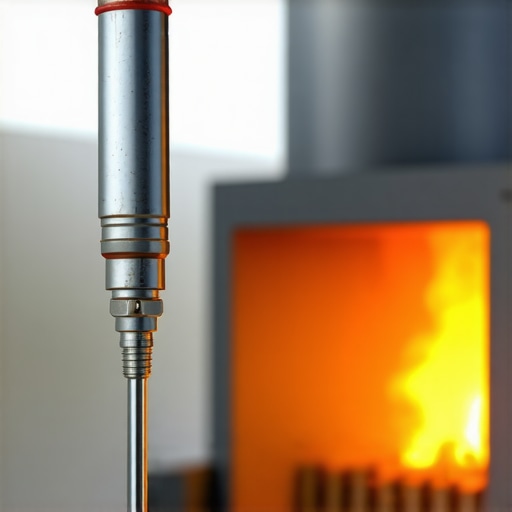
In the world of gas furnace repair, the thermocouple is often misunderstood as a simple thermometer. In reality, it is a tiny power plant operating on the Seebeck effect. When you have two dissimilar metals joined at one end and exposed to the heat of a pilot flame, they produce a tiny amount of direct current—usually between 20 to 30 millivolts. This microscopic ‘juice’ is exactly what keeps the electromagnetic coil in your gas valve open. When that sensor starts to oxidize or the internal junction degrades, that voltage drops. Once it hits the floor, the valve snaps shut. You might notice the pilot light won’t stay lit even when you hold the button down, or the furnace cycles on and off rapidly—a phenomenon we call short-cycling. If you are experiencing these early warnings, you need to understand how to identify when furnace repair is urgent and why before the mercury in your house drops to dangerous levels.
“All gas-fired appliances must be equipped with a flame-sensing device that will automatically shut off the gas supply if the flame is extinguished.” – NFPA 54 / ANSI Z223.1 National Fuel Gas Code
The failure isn’t always the sensor’s fault, though. Sometimes, the draft inducer motor repair you ignored last season is the culprit. If the inducer isn’t pulling enough of a draft, the flame doesn’t wrap around the thermocouple correctly, leading to ‘lazy’ voltage. This is why a proper furnace repair diagnostic involves more than just swapping parts. I’ve seen wall furnace installation jobs where the installer didn’t account for the vent height, leading to backdrafts that eventually cooked the thermocouple’s lead wire. We have to look at the whole system as a breathing organism.
The Math: Repair vs. Replacement and the Safety Chain
When I’m out on a call, I’m looking at the safety chain. If I find a bad thermocouple, I’m also looking at the limit switch replacement history. These components are your furnace’s nervous system. A thermocouple is a cheap fix—usually under a couple hundred bucks for a pro to swap—but it’s often the ‘canary in the coal mine.’ If the sensor is coated in heavy soot, it means your combustion air is dirty, or your heat exchanger might be failing. This is where the preventative maintenance contracts prove their worth. A tech who isn’t a ‘Sales Tech’ looking for a commission will clean that pilot assembly and check the millivolts before you’re stuck in a polar vortex without heat.
“Properly sized and maintained venting systems are critical to the safe operation of category I, II, III, and IV gas furnaces.” – ACCA Manual D and G standards
Modernizing your system can also help you spot these issues early. Integrating programmable thermostat programming or remote thermostat access allows you to see if your home temperature is dropping while you’re at work, giving you a head start on a repair before you come home to frozen pipes. If you’re tired of the old-school gas bill, some homeowners are even looking into solar thermal heating integration to offset the load, but the core of the home’s reliability still rests on that gas valve and its sensors. Don’t fall for the furnace repair myths debunked by industry experts; a thermocouple cannot be ‘cleaned’ with sandpaper forever—once the metal is fatigued, the physics of the junction are gone. It’s time for a new one. For more technical insights, check out preventative hvac repair tips for year-round efficiency to keep your system from failing when you need it most.
Conclusion: Don’t Ignore the Small Signs
If your furnace is hesitating to start, or if you hear the gas valve clicking repeatedly before it finally catches, that’s your thermocouple screaming for help. Don’t wait until the flame signal dies completely. Whether you need a simple sensor swap or thermostat wiring upgrades to ensure better communication with your control board, taking action now is the difference between a minor service call and an emergency night-rate disaster. Keep the ‘Pookie’ (mastic) on the ducts and the millivolts in the sensors high, and your furnace will actually do what it was designed to do: keep you warm without killing the budget. If you need a pro who knows the difference between a real fix and a sales pitch, you can always contact us for an honest diagnosis.