The Frigid Silence of a Failed Pilot
There is a specific kind of silence that hits you at three in the morning during a polar vortex. It isn’t just quiet; it’s heavy. It’s the sound of a furnace that has decided to quit because a thin piece of copper and nickel—the thermocouple—refuses to do its job. I’ve spent three decades crawling into crawlspaces where the ground is frozen solid, only to find a homeowner staring at a box of ‘universal’ parts they bought at a big-box store, wondering why their pilot light relighting efforts keep failing. The truth is, in the world of precise combustion physics, ‘universal’ is often a polite word for ‘doesn’t quite fit anything right.’
The Physics Lesson: Why You Can’t Sense What You Can’t Touch
My old mentor, a grizzled tin knocker who could smell a gas leak from the curb, used to scream at me, ‘You can’t heat what you can’t sense!’ He wasn’t just being cranky. He was talking about the Seebeck effect. A thermocouple isn’t just a wire; it’s a heat-to-electricity transducer. When that pilot flame licks the tip, it creates a tiny millivoltage (usually between 25mV and 30mV) that tells the gas valve it’s safe to open the floodgates. If that signal is weak because a ‘universal’ kit doesn’t sit perfectly in the flame’s path, the valve stays shut. You stay cold. This is the foundation of propane conversion services and natural gas safety alike.
“The most expensive equipment in the world cannot overcome a bad duct system or a mismatched safety control.” – Industry Axiom
The Anatomy of a Thermocouple Failure
When I perform electric heater services or gas furnace diagnostics, I look at the thermocouple as the heart’s pacemaker. In a cold climate like the Northeast, these components take a beating. The constant expansion and contraction of metal under extreme temperature swings lead to internal resistance. A ‘universal’ kit often uses thinner capillary tubing or inferior alloys that can’t handle the high-static environments of modern high-efficiency furnaces. If the millivolt drop is too high, the system enters a hard lockout. This is often misdiagnosed by ‘sales techs’ who want to sell you a $12,000 unit when you just need the right $40 OEM part. You can find more on avoiding these pitfalls in our furnace repair myths guide.
Thermodynamic Zooming: Latent Heat and the Limit Switch
It isn’t just about the pilot flame. We have to look at the whole system through a psychrometric lens. If your airflow measurement services reveal that your blower isn’t moving enough CFM, the heat exchanger overheats. This triggers the limit switch replacement cycle. A ‘universal’ thermocouple might lack the thermal response time to shut the gas down before the heat exchanger cracks. When the heat exchanger goes, you aren’t just looking at a repair; you’re looking at a carbon monoxide factory. This is why dryer vent cleaning and filter changes are actually part of your combustion safety protocol—blocked vents lead to backdrafting that kills pilot assemblies.
The ‘Universal’ Trap: When ‘Close Enough’ Isn’t
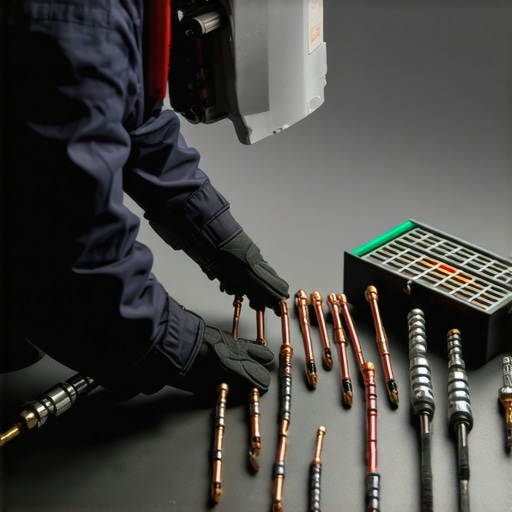
Universal kits fail for three main reasons: Mounting Brackets, Length, and Millivolt Stability. Many modern ventless gas heater services require a specific thermocouple-interrupter block that ‘universal’ kits simply don’t include. If the bracket doesn’t hold the tip exactly in the hottest part of the flame (the outer mantle), the voltage output will fluctuate. I’ve seen app-controlled heating systems throw error codes that baffle younger techs because the ‘universal’ part was creating electrical noise on the control board. For those looking at 2025 tech, including low-GWP refrigerant retrofits and inverter-driven compressors, the margin for error with ‘off-the-shelf’ parts is narrowing to zero.
“All gas-fired appliances shall be installed in accordance with the manufacturer’s instructions, which take precedence over general mounting hardware.” – NFPA 54 / National Fuel Gas Code
The Math: Repair vs. Replace
I always tell my customers that if you’re replacing the thermocouple for the third time in three years, the part isn’t the problem—the environment is. Are you getting soot buildup? Is there a draft blowing the pilot out? Sometimes, the smartest move is to stop patching an antique. If your system is over 15 years old, you should check out the ultimate guide to HVAC installation to see if a modern, high-efficiency system makes more sense than another ‘universal’ patch job.
The Professional Verdict
Stop buying the ‘Gas-n-Go’ specials. If you want your heating system to survive a North American winter, you need parts that match the engineering specs of your specific cabinet. Using a ‘universal’ kit is like putting bicycle tires on a freight truck—it might roll for a block, but it won’t finish the trip. For a real diagnosis, you need a tech who understands airflow measurement services and the delicate dance between the pilot and the gas valve. If you’re struggling with a stubborn furnace, don’t guess. Consult our urgent furnace repair guide or contact the pros who actually know what a Sparky or a tin knocker contributes to your home’s safety. Comfort isn’t magic; it’s physics, and physics doesn’t accept ‘universal’ excuses.