The silence of a dead furnace at 3 AM in the dead of a Midwestern winter has a specific frequency—it sounds like money leaving your bank account. I’ve spent three decades in crawlspaces where the frost on the joists is thicker than my coveralls, and I can tell you that the most common call I get isn’t about a total system meltdown. It’s about a pilot light that refuses to stay lit. You’re sitting there with a long-reach lighter, cursing the wind, while your family shivers. Usually, the first thing a DIYer or a green ‘Sales Tech’ (the kind who wears a suit to a furnace repair) wants to do is swap the thermocouple. But sometimes, you’re just putting a fresh Band-Aid on a sucking chest wound. Understanding the thermal physics of gas regulation is the difference between a $30 fix and a midnight emergency.
The Physics Lesson: Why Airflow Dictates Combustion
My old mentor, a man who had more soot in his lungs than a chimney sweep, used to scream, ‘You can’t burn what you can’t control!’ This is why airflow matters more than horsepower. He’d watch a rookie try to bypass a limit switch and lose his mind. He taught me that a furnace is a delicate balance of pressure and heat. If your duct design services were botched twenty years ago, your furnace is likely ‘hunting’ for air, causing the heat exchanger to overheat and the gas valve to cycle more than it was ever designed to.
“The most expensive equipment in the world cannot overcome a bad duct system.” – Industry Axiom
This isn’t just talk; it’s thermodynamics. When we talk about high-efficiency furnace installation, we’re dealing with AFUE ratings that demand perfect combustion. If the airflow isn’t there, the flame quality degrades, the thermocouple gets coated in carbon, and the whole dance stops.
The Forensic Anatomy: The Thermocouple’s Job
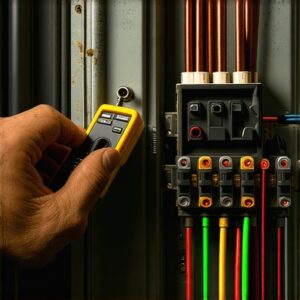
To understand when to pull the plug on a gas valve, you have to understand the Seebeck Effect. A thermocouple is just two dissimilar metals joined at one end. When you heat that junction with a pilot flame, it generates a tiny amount of electricity—about 25 to 30 millivolts. That ‘juice’ is just enough to power an electromagnetic coil inside the gas valve. This coil holds the safety magnet open. No flame means no millivolts, which means the magnet drops and shuts off the gas. It’s a beautifully simple fail-safe. If you’re getting a contactor repair on your AC in July, you’re dealing with 24 volts; here, we’re dealing with a thousandth of that. If your thermocouple is clean but isn’t producing at least 20mV under load, it’s toast. You can learn more about these nuances in our guide on furnace repair myths debunked by industry experts.
When the Gas Valve is the True Culprit
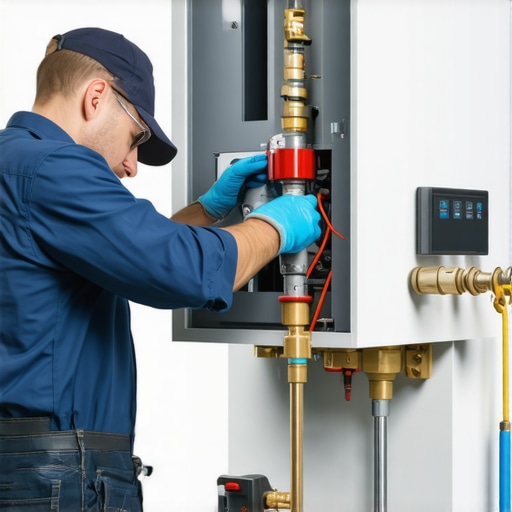
So, when is the thermocouple just a distraction? I’ve seen ‘Tin Knockers’ swap three thermocouples in a row because they didn’t want to admit the gas valve’s internal diaphragm was ruptured. If you have the required millivolts hitting the valve but the burner still won’t engage, the internal solenoid is stuck or gummed up with ‘drip leg’ residue—that oily gunk that settles out of natural gas lines. In a garage heater installation, this is common because those units sit idle for months, allowing the gas to go stagnant.
“Gas-fired appliances must be inspected for flame rollout and proper manifold pressure to ensure safety and longevity.” – NFPA 54 / ANSI Z223.1
If you smell a faint, sweet-sour metallic scent near the valve, that’s often the smell of a slow leak in the manifold. At that point, you aren’t just looking for a repair; you’re looking at a safety hazard. This is where leak detector integration becomes vital. If the valve is sticking, replace it. Don’t try to clean it. You can’t rebuild a modern sealed gas valve in the field without risking a ‘flame-out’ or worse.
The Climate Factor: Heat Recovery and Efficiency
In our northern climate, we don’t just worry about staying warm; we worry about the air quality inside the ‘tight’ envelopes of modern homes. If you’re looking into heat recovery ventilators or inverter-driven compressors for your hybrid system, you’re dealing with complex electronics that don’t play nice with failing gas valves. A sticking valve can cause ‘short cycling,’ which is the silent killer of high-efficiency furnace installation components. If your system is old enough to still use a standing pilot thermocouple, you might want to consider if you’re throwing good money after bad. Sometimes a ductless mini-split installation for a problem room is a better investment than trying to revive a 25-year-old atmospheric furnace. Check out how to identify when furnace repair is urgent to see where your system stands.
The Math of Repair vs. Replace
A thermocouple costs about $20-$50 and takes 20 minutes to swap. A gas valve? You’re looking at $200-$500 plus labor. If your furnace is over 15 years old and the valve fails, you have to ask about the heat exchanger. I always perform system performance testing before I let a client drop $600 into an old unit. If I find a crack in that exchanger, that new gas valve is just a shiny part on a piece of scrap metal. For those with radiant floor heating installation, the boiler valves are even more critical because a failure can lead to frozen pipes in the slab—a nightmare no amount of ‘Pookie’ (mastic) can fix. If you’re unsure, consulting the blueprint for efficient repairs can help you decide. Whether it’s a simple fix or a total overhaul, remember: physics doesn’t care about your budget. It only cares about the pressure, the heat, and the flow of the gas.