The Sound of Silence and the Smell of Cold
There is a specific kind of silence that hits you when you walk into a workshop or a home addition in the middle of a January freeze in Chicago. It is a dense, heavy silence that tells you the heating system has surrendered. I remember my old mentor, a grizzly veteran who could diagnose a bad inducer motor by the vibration in the floorboards, used to scream at me, ‘You can’t cool what you can’t touch, and you can’t heat what you can’t calculate!’ This is why airflow matters more than horsepower. He was right. Most people think a heater is just a box that makes fire. They go to a big-box store, grab the biggest ventless gas heater on the shelf, and wonder why their windows are dripping with condensation and their eyes are stinging. Sizing a heater is not about the size of the box; it is about the thermodynamic load of the space and the oxygen availability. If you are looking for heating service hacks, the first hack is simple: stop guessing.
The Physics of the Blue Flame: Why Ventless is Different
When we talk about ventless gas heaters, we are talking about 99.9% efficiency. A ‘Sales Tech’ will use that number to sell you a unit that is three times larger than what you need because they want the commission. But here is the catch: in a vented furnace, the combustion byproducts—carbon monoxide, nitrogen dioxide, and water vapor—go up the flue. In a ventless unit, those byproducts stay in the room. This is where ‘Thermodynamic Zooming’ comes in. Natural gas combustion (CH4 + 2O2) creates heat, CO2, and H2O. For every hour that heater runs, it is pumping moisture into your air. If the unit is oversized, it short-cycles. It hits the setpoint too fast, shuts off, and leaves a pocket of stagnant, humid, and potentially oxygen-depleted air. You do not just need ‘juice’ or gas; you need a precise calculation of British Thermal Units (BTUs).
‘Proper equipment sizing is mandatory to ensure that the heating system can maintain the design temperature without excessive cycling or fuel waste.’ – ACCA Manual J Residential Load Calculation
The Math of BTUs: Calculating Your Load
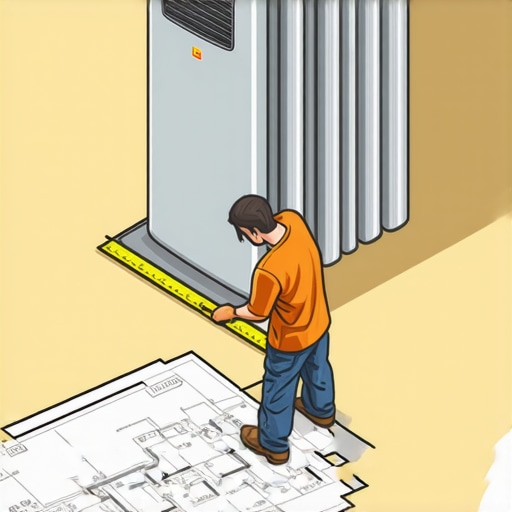
To size a ventless heater, you do not just measure the floor; you measure the volume. A standard rule of thumb for a moderately insulated space in a cold climate is 40 BTUs per square foot. However, if you are heating a drafty shop, that number jumps to 50 or 60. Let us say you have a 500-square-foot garage. At 40 BTUs/sq ft, you need 20,000 BTUs. If you buy a 30,000 BTU unit thinking ‘more is better,’ you are asking for a moisture nightmare. The excess latent heat will condense on cold surfaces, leading to mold and rust on your tools. This is why efficient HVAC repairs often start with correcting the previous guy’s sizing mistakes. If your heater is constantly tripping, you might not need a transformer replacement; you might just have a unit that is choking on its own exhaust because the room is too small for the output.
The Anatomy of the Heater: Beyond the Burner
When I go in for a furnace repair, I am looking at the whole system. For ventless heaters, the critical components are the Oxygen Depletion Sensor (ODS) and the thermocouple. If your heater keeps dying, it is usually the ODS doing its job. It is sensing that the oxygen levels in the room have dropped below 18%. This is often caused by lack of make-up air. You cannot have fire without oxygen. A ‘Tin Knocker’ knows that even a ventless system needs a path for fresh air. We also need to talk about the electrical side. Even a gas heater often needs a contactor repair or wiring repair for heating systems if it uses a blower fan to move that heat. If the fan fails, the heat sits in the cabinet, and you will be looking at a transformer replacement sooner than you think because the internal heat will cook the control board.
The Airflow Manifesto: Why Sealing Matters
You can have the perfectly sized heater, but if your ‘Pookie’ (mastic) application is failing or you have zero HVAC duct sealing in the surrounding areas, you are just heating the outdoors. In a cold climate like the Northeast, the ‘Stack Effect’ is your enemy. Warm air rises and escapes through gaps in the ceiling, pulling cold air in through the floor. This makes your ventless heater work overtime. I have seen people try to integrate voice control setup Alexa Google to manage their heaters, but no app can fix a drafty door. Before you buy the heater, seal the space.
‘Infiltration of outdoor air into a building can account for up to 40% of the total heating and cooling load.’ – ASHRAE Fundamentals Handbook
Maintenance and the Longevity Trap
Ventless heaters are low-maintenance, but they are not ‘no-maintenance.’ Dust is the killer. Dust in the pilot assembly leads to a yellow flame, which means incomplete combustion and carbon monoxide. I always recommend priority service memberships for anyone relying on gas heat as their primary source. A quick check of the refrigerant leak detection (if it is a dual-fuel heat pump system) or just a simple cleaning of the burner can save you a 2 AM emergency call. And don’t let a sales tech talk you into an inverter-driven compressor system for a detached shop unless you really need the cooling too; for pure heating in a small square footage, a properly sized ventless unit is often the most cost-effective path, provided you have a warranty service plan that actually covers the parts that fail, like the gas valve or the igniter.
Conclusion: Respect the BTU
Stop looking at the square footage on the box and start looking at your specific environment. Are your ceilings 12 feet high? That is 50% more air to heat than an 8-foot ceiling. Is the room over a cold crawlspace? That is a massive sensible heat loss. Sizing a ventless gas heater is about balancing the comfort of today with the safety of tomorrow. If you treat your HVAC system like a precision instrument instead of a brute-force appliance, it will keep you warm without making your house feel like a swamp. Do the math, seal the cracks, and for heaven’s sake, keep the dust out of the pilot light. If you are stuck, stop guessing and call a pro who knows the difference between a BTU and a hole in the wall.