The Silence of the Spa: A Tech’s Guide to Pressure Switch Diagnostics
There is a specific kind of silence that hits you when you walk into a mechanical room or step onto a pool deck. It is the silence of a system that thinks it is running but isn’t doing a lick of work. I have spent over three decades in the HVAC trade, and if there is one thing I have learned while crawling through crawlspaces and balancing on ladders, it is that the simplest components are usually the ones that cause the biggest headaches. My old mentor used to scream at me until he was blue in the face: ‘You can’t cool what you can’t touch!’ He was talking about airflow and the way air molecules have to physically hit the evaporator coil to transfer heat, but the same physics apply to water. If you don’t have flow, you don’t have heat, and in the world of spa heaters, the pressure switch is the grumpy gatekeeper of that flow. Whether you are dealing with geothermal heat pump systems or a standard gas-fired heater, the pressure switch is the safety sentinel that prevents the unit from turning into a localized bomb.
The Mechanical Anatomy: Why Flow is King
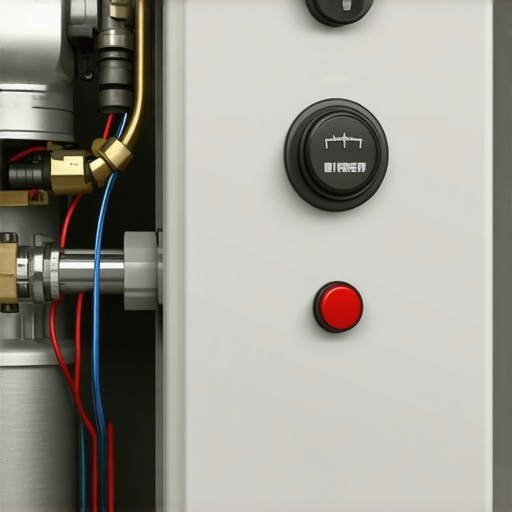
In the heating world, we talk a lot about sensible heat—that’s the temperature you can actually feel on your skin. When your spa heater is running, it is transferring that heat into the water. But if the water stops moving and the fire keeps burning, you hit a catastrophic thermodynamic limit. The pressure switch is a diaphragm-driven microswitch designed to sense the ‘head pressure’ created by the pump. When the pump kicks on, it pushes water against a rubber disc, which in turn clicks a small metal contact into place. This completes the circuit to the control board diagnostics, telling the system it is safe to fire. If that switch fails, your heater is a paperweight. It is no different than the vacuum switches I see during pellet stove repair; if the pressure differential isn’t right, the logic board shuts everything down to prevent a meltdown. I have seen ‘Sales Techs’ try to sell a homeowner a whole new heater for five grand when the only problem was a fifteen-dollar rubber diaphragm that had dry-rotted over the winter.
“Pressure-actuated switches shall be installed to prevent heater operation in the event of inadequate water flow, ensuring the sensible heat transfer remains within safe metallurgical limits of the heat exchanger.” – ASHRAE Standard 90.1
The Forensic Diagnosis: Spotting the Failure
How do you know the switch is the culprit? First, look for the ‘FLO’ or ‘Pr’ error codes on your display. If you have WiFi thermostat integration for your pool system, you might even get a predictive maintenance alert on your phone before you even put your trunks on. But for those of us who like to get our hands dirty, the signs are more tactile. You might hear the ‘Sparky’ (the electrician’s) relay click, but the heater never actually ignites. Or, more commonly, the heater ‘chutters’—cycling on and off rapidly. This ‘short cycling’ is the enemy of longevity. It wears out the contactor repair isn’t always an option; often you’re just replacing the whole component. In my thirty years, I have seen pressure switches get stuck in the ‘closed’ position too. This is dangerous. If the switch is stuck closed, the heater might try to fire even when the pump is off, which leads to the sour, acidic smell of a scorched heat exchanger. Knowing how to identify when furnace repair is urgent is a skill that translates directly to spa heaters; if you smell anything like burnt plastic or sulfur, kill the breaker immediately.
Thermodynamic Zooming: The Physics of Resistance
Let’s talk about resistance. In a home HVAC system, we worry about MERV filter upgrades. If you put a filter that is too thick in your return air, you increase the static pressure and choke the blower. In a spa, the equivalent is a dirty filter or a clogged impeller. This reduces the water pressure hitting that switch. When the pressure drops below the set point—usually between 1.0 and 2.0 PSI—the switch opens. This is a ‘Normally Open’ circuit. If you are troubleshooting, you can use a multimeter to check for continuity. If the pump is screaming but you have no continuity across the switch terminals, that diaphragm is likely shot. This is the same logic we use in new construction heating design; we have to calculate the friction loss of every foot of pipe to ensure the equipment can actually breathe. If you have recently installed geothermal heat pump systems for your pool, the flow requirements are even more stringent because we are dealing with refrigerant-to-water heat exchange, where a lack of flow can freeze the plates and crack the entire unit.
The Math: To Fix or to Fold?
I always tell my customers that comfort is physics, not magic. If you have an older heater, you might be tempted to just keep patching it up. But let’s look at the numbers. A pressure switch is a cheap fix, but if your control board diagnostics are showing multiple failure points, or if you have a cracked heat exchanger (the ‘flame rollout’ equivalent in the spa world), you are throwing good money after bad. Modern systems now utilize inverter-driven compressors and two-stage furnace installation logic to maximize efficiency. If your spa heater is a relic from the 90s, you are likely burning twice the gas you need to. Following top HVAC repair strategies can extend a system’s life, but there comes a point where the ‘Tin Knocker’ (the duct guy) and the service tech have to agree: it’s time for a replacement. For more on making that call, check out choosing the right HVAC fixes before you sign a contract with a Sales Tech who just wants a commission.
“The most expensive equipment in the world cannot overcome a system with restricted flow; diagnostics must begin and end with the verification of design pressure.” – Industry Axiom
Advanced Maintenance and the 2025 Standard
As we move into 2025, the technology in our backyards is getting as complex as the tech in our basements. We are seeing more integration between home heating and recreational heating. Predictive maintenance alerts are becoming standard, using sensors to monitor the health of the contactor repair cycles and the millivolt output of thermopiles. If you want to keep your system running through a North-style winter, you need to be proactive. That means flushing the heater to prevent scale buildup and checking the pressure switch for ‘pitting’ on the contact points. If you are unsure where to start, looking at preventative HVAC repair tips can give you a baseline for what to expect. At the end of the day, your spa should be a place of relaxation, not a source of mechanical stress. If you’re struggling with a system that won’t fire, don’t let a ‘Sales Tech’ talk you into a $15,000 replacement without a second opinion. Reach out to a real veteran who knows the difference between a bad switch and a dead heater at our contact page. Keep the water moving, keep the ‘gas’ (refrigerant or fuel) flowing correctly, and always remember: airflow—or in this case, waterflow—is king.