The Fresh Air Myth and the Physics of the Exchange
I remember my old mentor, a man we called ‘Iron Lung’ because he could smell a cracked heat exchanger from two floors away, used to scream at me every time I opened a window on a job site: ‘You can’t heat what you can’t touch, and you can’t control what you don’t contain!’ This is why airflow matters more than horsepower. He was right. In our line of work, especially when we are dealing with a high-efficiency furnace installation or a complex multi-family heating upgrade, the biggest enemy isn’t the cold—it’s the stale, poison air we trap inside these ‘tight’ modern buildings. We spend all this time sealing every crack with Pookie (mastic) and weatherstripping, only to realize we’ve turned the house into a petri dish. That is where the battle between Heat Recovery Ventilators (HRV) and Energy Recovery Ventilators (ERV) begins. Most tin knockers just throw whatever is on the truck into the attic, but if you don’t understand the psychrometrics of the exchange, you’re just moving bad air around in circles.
“The design and installation of the air distribution system is the most critical factor in the overall performance of the HVAC system.” – ACCA Manual D
Thermodynamic Zooming: How the Core Actually Works
When we talk about IAQ improvement services, we aren’t just talking about a fancy 4-inch pleated filter. We are talking about the mechanical exchange of energy. An HRV is a sensible heat machine. It takes the thermal energy from your exhausted, indoor air—air that you’ve already paid to heat with your warehouse heating solutions or steam boiler—and uses it to pre-warm the freezing intake air from outside. The two streams never touch; they pass through a series of plates where the physics of conduction does the heavy lifting. But here is the catch: an HRV only cares about temperature. It doesn’t give a damn about the ‘juice’ (the moisture) in the air. In a Northern winter, when the air is as dry as a desert bone, an HRV can actually make your skin feel like parchment paper. That’s why we look at ERV systems for specific applications. An ERV uses a desiccant-permeable core to transfer both sensible heat and latent heat (humidity). It keeps the moisture where you want it—inside during the winter and outside during the summer.
The Static Pressure Trap: Why Your Vents Are Wheezing
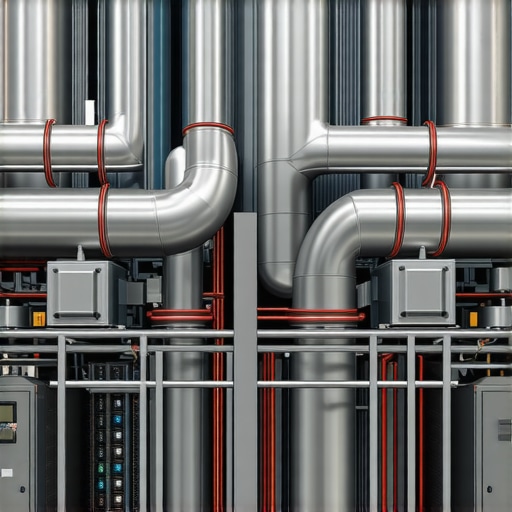
I’ve walked into too many buildings where the owner complains about ‘stuffy’ rooms despite having a brand-new ventilator. I pull out my manometer for some airflow measurement services and find the static pressure is through the roof. Why? Because somebody thought they could run 6-inch flex duct 40 feet with three 90-degree turns. You can’t fight physics. If the static pressure is too high, the blower motor in your HRV or ERV is going to hunt and scream until the bearings fail. This is why HVAC maintenance plans are useless if the initial install was botched. You need a dedicated return and supply for ventilation that doesn’t just piggyback off the main trunk line without a balanced damper. For those managing larger properties, smart building management systems can now monitor these pressure drops in real-time, telling you exactly when your HEPA filter systems are loaded with dander and construction dust before the compressor starts ‘slugging’ or the heat exchanger overheats.
“Adequate ventilation is necessary to provide for the health and comfort of the occupants.” – ASHRAE Standard 62.2
Steam Boilers and Warehouse Realities
In the world of steam boiler repair and heavy iron, ventilation is often an afterthought because the heat is so radiant and ‘heavy.’ But in a warehouse, you have massive vertical stratification. The heat stays at the ceiling while the ‘sparkies’ (electricians) and workers freeze on the floor. Integrating an ERV into warehouse heating solutions isn’t just about fresh air; it’s about destratification. By pulling that hot, buoyant air from the ceiling through a heat exchanger, we can temper the fresh air coming in at the floor level. This reduces the load on your high-efficiency furnace and prevents the ‘short cycling’ that kills equipment. Whether you are looking for expert tips for 2025 success or trying to fix a legacy system, you have to treat the building as a single lung.
The Cost of Ignoring Airflow
Is a repair always the answer? If I’m looking at a 20-year-old ventilator with a seized motor and a cracked core, I’m going to tell you to scrap it. Understanding what homeowners need to know about repairs versus replacements comes down to the math of efficiency. A modern ERV with an ECM motor uses less electricity than a 60-watt lightbulb but can move 200 CFM of air. Compare that to an old shaded-pole motor that sucks ‘gas’ and generates more heat than airflow. If you are dealing with a spa heater service or a high-moisture indoor environment, an HRV is usually the wrong move because it won’t manage the latent load, leading to mold in the ‘pookie’ and the ‘tin.’ For real comfort, you need a strategy that includes hacks for comfort and savings, like balancing dampers and properly sized HEPA bypasses. Don’t let a ‘sales tech’ talk you into a $15,000 system when your real problem is a $200 duct restriction. Physics doesn’t lie, and neither does a manometer. Reach out to us for professional consultation before you spend a dime on equipment you don’t need.