My old mentor, a grizzly guy named Dutch who chewed tobacco and could smell a refrigerant leak from the curb, used to scream at me while I was shivering in a crawlspace, ‘You can’t cool or heat what you can’t touch!’ He wasn’t just talking about the juice hitting the evaporator; he was talking about the air itself. Air is the medium. If your air is stagnant, your house is a tomb for smells, pollutants, and humidity. Most folks think a kitchen hood is the end-all for odors, but they don’t understand the physics of pressure. You pull air out, and it has to come from somewhere. Usually, it’s pulled through the cracks in your attic or the gaps in your rim joist, bringing in dust, mold spores, and God knows what else. This is where IAQ improvement services and specifically Energy Recovery Ventilators (ERVs) come into play. They don’t just ‘vent’; they manage the exchange of energy so you aren’t throwing money out the window.
The Airflow Manifesto: Why Your House Smells Like Last Night’s Salmon
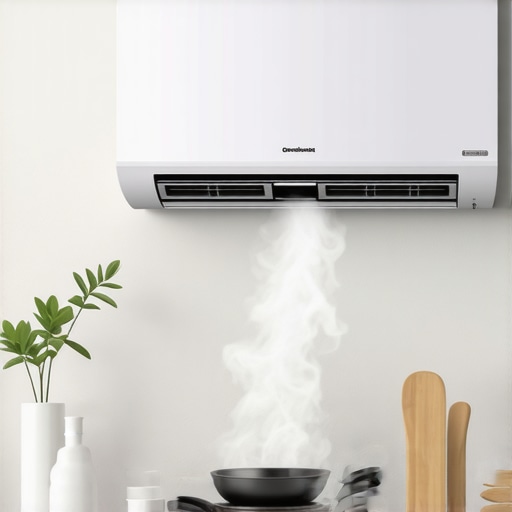
The problem with modern, tight construction is that we’ve built houses that are basically plastic bags. In the old days, houses were drafty. You had ‘natural’ ventilation, which just meant you paid to heat the neighborhood. Now, we seal everything with pookie and spray foam, and the odors have nowhere to go. When you’re cooking, you’re releasing VOCs and moisture. If you have a high-efficiency furnace, you might think you’re covered, but that system just recirculates the same stale, smelly air. This is a static pressure nightmare. If your return air isn’t balanced, your system is struggling, and those kitchen odors are just being baked into your carpets.
“The most expensive equipment in the world cannot overcome a bad duct system.” – Industry Axiom
We see this all the time during top hvac repair strategies visits. Homeowners complain about smells, and we find a system that’s literally choking because it can’t breathe. An ERV is the solution because it uses two fans: one to exhaust the stinky, humid kitchen air and one to bring in fresh, filtered outdoor air. The magic happens in the core, where the heat (and in summer, the moisture) is transferred from one stream to the other without them ever mixing. It’s thermodynamic efficiency at its finest.
Thermodynamic Zooming: The ERV Core and Latent Heat
Let’s talk about the physics of the exchange. We aren’t just moving air; we are managing enthalpy. In a cold climate like ours, where we deal with cracked heat exchangers and the need for constant furnace repair urgency, an ERV is a lifesaver. When it’s 10°F outside and 70°F inside, you don’t want to just pump in 10°F air. The ERV core—a cross-flow or counter-flow heat exchanger—takes the heat from the exhaust air and ‘pre-heats’ the incoming fresh air. But unlike an HRV (Heat Recovery Ventilator), an ERV also manages latent heat (humidity). It allows a certain amount of moisture to transfer. In the winter, this prevents your house from becoming a desert; in the summer, it keeps the humidity out so your AC doesn’t have to work overtime to drop the dew point. If you’re running heating service innovations like geothermal heat pump systems, an ERV is the perfect partner because it keeps the load consistent.
“Ventilation shall be provided in accordance with ASHRAE Standard 62.2 to ensure acceptable indoor air quality in residential buildings.” – ASHRAE Standards
The Anatomy of a Service Call: More Than Just a Filter Change
I’ve walked into too many houses where a ‘Sales Tech’ tried to sell a whole new $15,000 system when the real issue was a clogged ERV core or a dead blower motor. When we do preventative hvac repair, we check the control board diagnostics on these units. Sometimes the sensors are fouled by years of grease because someone didn’t use their kitchen hood. If you’re smelling onions in the bedroom, your zoning system installation might be part of the problem, but the ERV is the primary fix. We also look at the ‘tin knocker’ work. If the ducts for the ERV are poorly sized or the ‘pookie’ (mastic) is peeling off the joints, you’re losing all that fresh air into the attic. We see this often during efficient hvac repairs. You need a technician who understands static pressure, not just someone who knows how to swap a capacitor.
2025 Regulatory Cliff: Low-GWP Refrigerants and IAQ
As we move into 2025, the industry is changing fast. We are dealing with low-GWP refrigerant retrofits (R-454B and R-32) which are ‘mildly flammable.’ This means IAQ is more important than ever. If you have a leak, you need a system that can move air. We are also seeing a massive push for voice control setup Alexa Google integration so homeowners can boost their ventilation rates when they start searing a steak. But no amount of ‘smart’ tech can fix a dirty system. That’s why furnace repair myths often lead people astray—they think the furnace cleans the air. It doesn’t. You need heat exchanger cleaning and a dedicated ventilation strategy. If you have a gas line installation for furnaces, you also need to ensure that your ERV is balanced so it doesn’t cause back-drafting of your water heater or furnace flue. This is why 24/7 heating emergency response teams like ours have to be experts in more than just fire; we have to be experts in fluid dynamics.
The Verdict: Comfort is Physics, Not Magic
Stop letting kitchen odors dictate your life. If your house feels ‘heavy’ or smells like yesterday’s grease, you don’t need more ‘juice’ in your AC; you need a ventilation overhaul. From furnace ignition repair to ac installation secrets, the common thread is always airflow. An ERV is the heart of a healthy home. It’s the difference between living in a stagnant box and a fresh, vibrant environment. Don’t fall for the ‘Sales Tech’ trap—invest in the physics of your home. If you’re ready to fix the air you breathe, contact us today. We don’t just fix units; we fix environments.”