The Silence of a Dead Boiler and the Invisible Threat
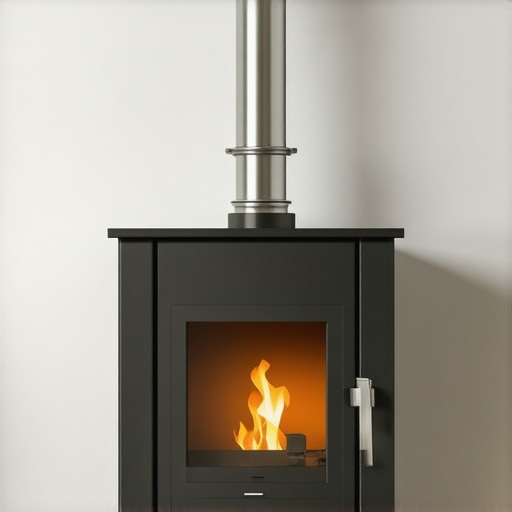
The coldest nights don’t usually start with a bang. They start with a metallic ‘ping’—the sound of a heat exchanger cooling down because the system locked out. As a tech who’s spent three decades lugging manifolds through snow-covered crawlspaces, I’ve learned that the most dangerous part of your furnace isn’t the fire; it’s how that fire leaves the building. When you’re staring at a commercial furnace repair or a failing residential boiler, the flue pipe is the only thing standing between your family and a lethal dose of Carbon Monoxide. It’s not just a pipe; it’s a life-support system for your home’s air quality. If the pitch is wrong, or if a ‘tin knocker’ got lazy with the sealant, you’re not just losing efficiency—you’re risking everything. Understanding how to identify when furnace repair is urgent often starts with looking at that exhaust run.
The Physics Lesson: Why Airflow is King
My old mentor, a guy who could smell a cracked heat exchanger from the driveway, used to scream at me, ‘You can’t vent what you don’t supply!’ This is the core of the physics lesson I give every rookie. Whether we are talking about baseboard heater repair involving gas-fired units or high-end boiler repair services, the draft is the engine of the system. In cold climates like ours, the ‘stack effect’ is what keeps the exhaust moving up and out. If the flue is oversized, the gases cool down too fast, lose their buoyancy, and spill back into the mechanical room. If it’s undersized, the backpressure will trip the rollout switch faster than a sparky can pull a fuse. This is why demand-controlled ventilation and proper flue sizing are non-negotiable for 2025 standards.
“The most expensive equipment in the world cannot overcome a bad duct system—or an improperly drafted flue.” – Industry Axiom
The Forensic Diagnosis of a Flue Failure
When I walk into a mechanical room, I don’t look at the thermostat first. I look at the ‘pookie’ (mastic) and the joints on the vent pipe. If I see white, crusty deposits (calcification) or rust on the draft hood, I know we have a condensation problem. This is common in cold climate heat pumps that have a backup gas furnace or during a garage heater installation where the vent isn’t insulated. In Northern zones, the temperature differential is brutal. If that flue pipe is running through an unconditioned attic, the acidic condensate will eat through the metal in a single season. This isn’t just about air handler repair; it’s about structural integrity. If you’re seeing these signs, you need to look into heating service innovations that address high-efficiency venting.
The 2025 Regulatory Cliff: SEER2 and AFUE
We are currently hitting a wall with SEER2 compliant upgrades. High-efficiency furnaces (90% AFUE and above) use PVC venting because the exhaust is so cool it would condense and rot out a traditional B-vent pipe. However, if that PVC isn’t sloped back to the unit properly, the water traps the exhaust, the pressure switch opens, and the unit goes into hard lockout. It’s a common ‘service call’ that shouldn’t exist. For those with commercial furnace repair needs, the stakes are even higher. Large-scale RTUs (Rooftop Units) require precise flue termination to prevent re-entrainment—where the exhaust gets sucked right back into the fresh air intake. This is where occupancy sensor installation and smart thermostat setup come into play, modulating the system to ensure we aren’t just burning fuel for the sake of it.
“All products of combustion shall be vented to the outdoors in accordance with the manufacturer’s instructions and local building codes to ensure the safety of the occupants.” – ASHRAE Standards
The Math of Survival: Repair vs. Replace
I’ve seen plenty of ‘Sales Techs’ try to quote a $15,000 system because a draft inducer motor died. If your heat exchanger is solid, a $600 inducer and a flue realignment is a better investment. But if that flue has been back-drafting and has rotted the top of the furnace cabinet, the ‘juice’ isn’t worth the squeeze. When considering baseboard heater repair or a full boiler repair service, the safety of the venting is the deciding factor. If I can’t guarantee that the CO is leaving the building, I’m pulling the disconnect. For anyone looking for a reliable tech, I always suggest checking out our professional services before the first frost hits. Safety isn’t a ‘tapestry’ of options; it’s a binary state: it’s either vented correctly, or it’s a hazard.