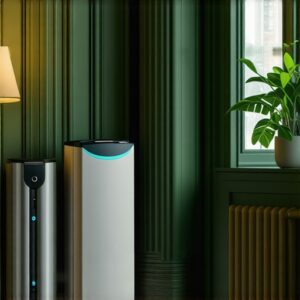

The Curse of the Tight Envelope: Why Modern Homes Stink
My old mentor, a guy we called ‘Iron Lung’ Pete because he could sniff out a refrigerant leak from three driveways away, used to scream at me every time we stepped into a new construction project: ‘You can’t cool what you can’t touch, and you can’t live in what you can’t vent!’ He was right. Back in the day, houses were drafty. You had air infiltrating through every window sill and baseboard. It was inefficient as hell, but you never had a ‘stale’ house. Today, we build homes like Tupperware containers. We seal them up with spray foam and triple-pane glass to hit those efficiency targets, but then we wonder why the air feels heavy, humid, and smells like a mix of last night’s salmon and the off-gassing from the new carpet. This is where the physics of airflow takes over, and if you aren’t paying attention to duct design services, you’re just circulating poison.
“The most expensive equipment in the world cannot overcome a bad duct system.” – Industry Axiom
When you seal a house that tight, you create a stagnant environment. In my thirty years of crawling through attics, I’ve seen homeowners try to solve this with candles or those plug-in oil diffusers. All they’re doing is adding more particulates to a soup of Carbon Dioxide and Volatile Organic Compounds (VOCs). The actual solution is an Energy Recovery Ventilator (ERV). An ERV isn’t just a fan; it’s a thermodynamic exchange engine. It pulls fresh air from the outside and exhausts the stale, ‘spent’ air from the inside. But here’s the kicker: it doesn’t just swap the air. It swaps the energy. If it’s 10°F outside in the middle of a Chicago winter, you don’t want to just pump that freezing air into your bedroom. The ERV uses a desiccant-coated core to transfer the heat and moisture from the outgoing air to the incoming air. This is what we call latent heat management, and it’s the difference between a ‘fresh’ home and a drafty, expensive nightmare.
Thermodynamic Zooming: How the ERV Core Defies the Seasons
Let’s talk about the ‘desiccant wheel’ or the fixed-plate exchange core. Most guys in a shiny branded polo will tell you ‘it just swaps air.’ That’s sales talk. I’m a tech. I look at the enthalpy. In a humid summer, your indoor air is cool and dry (thanks to your evaporator coil dropping below the dew point). The outdoor air is a swamp. As the ERV brings in that wet outdoor air, the desiccant material in the core pulls the moisture out of the incoming stream and dumps it into the outgoing exhaust stream. This is critical because moisture is ‘latent heat.’ If you just brought in the humidity, your AC would have to work twice as hard to condense that water off the air before it could even begin to lower the temperature. By the time that air hits your inverter-driven compressors, it’s already been pre-dehumidified. This prevents the ‘short cycling’ that kills compressors and causes those dreaded capacitor replacement services calls in the middle of a heatwave. When your system doesn’t have to fight the humidity of the entire neighborhood, it runs longer, smoother, and more efficiently.
In the winter, the process reverses. Heating systems—especially hydronic heating systems or those where we’ve done propane conversion services—tend to dry out the air. A standard Heat Recovery Ventilator (HRV) just moves heat. An ERV moves moisture too. It keeps that humidity inside so your skin doesn’t flake off and your hardwood floors don’t gap like a bad set of teeth. We’re talking about maintaining a balanced indoor environment. If you’re seeing moisture on your windows, your ‘envelope’ is too tight and your ventilation is failing. You need to look into heating service innovations transforming 2025 climate control to understand how we’re integrating these ERVs into the total home ecosystem.
The Math of Comfort: Manual J and Static Pressure
I’ve followed enough ‘Sales Techs’ to know their game. They walk into a house, look at the old unit, and say, ‘Yep, you need a 5-ton.’ They don’t even look at the ducts. That’s how you end up with a system that whistles like a freight train and dies in five years. Before we even talk about an ERV or a garage heater installation, we have to perform manual J calculations. This isn’t a suggestion; it’s the law of physics. We need to know the heat gain and loss of every room. If your ‘Tin Knocker’ (the duct guy) just slapped some flex duct together with a bit of tape, your static pressure is likely through the roof. High static pressure is the ‘silent killer’ of blowers. An ERV needs its own dedicated ductwork or a very specific integration into the return air drop to function without choking your main system. I always tell customers: if your tech doesn’t pull out a manometer to check your static pressure, they aren’t a tech; they’re a part-swapper.
Proper duct design services ensure that the fresh air from the ERV actually reaches the bedrooms and living areas, not just the hallway where the thermostat sits. We’re seeing a huge shift toward ac installation secrets that hvac pros wont tell you, specifically regarding how we balance these systems. If you have a room that’s always two degrees warmer than the rest, it’s not a ‘ghost’; it’s a CFM (Cubic Feet per Minute) issue. We use dampers and proper sizing to ensure the air is distributed evenly. And don’t get me started on ‘Pookie.’ If you aren’t using mastic (Pookie) to seal your duct joints, you’re just heating your attic and wondering why your bills are high.
The 2025 Shift: Geofencing and Inverter Tech
We are moving into an era of ‘Smart Air.’ It’s not just about turning the heat up or down anymore. With geofencing temperature control, your ERV and HVAC system can ramp up the fresh air exchange the moment your phone signals you’re ten minutes from home. This ensures that the air is scrubbed and fresh the second you walk through the door, without running the fans while the house is empty. This level of control is only possible with inverter-driven compressors that can modulate their output. Traditional compressors are either ‘On’ or ‘Off’—they’re binary. Inverters are analog; they can run at 30% capacity just to keep the air moving and the humidity low. This synergy between the ERV and the compressor is the ‘secret sauce’ for a home that smells like the mountains even if you’re living next to a freeway.
However, more tech means more things that can go sideways if not maintained. I’ve seen ‘high-tech’ systems fail because someone ignored a basic portable heater safety checks and plugged in a space heater that tripped a breaker, or worse, someone neglected their annual maintenance and the ERV filters became a matted mess of pet hair and dust. If you’re in a situation where the air has stopped moving entirely, you need a 24/7 heating emergency response team that knows more than just how to change a filter. You need someone who understands the entire psychrometric chart. Check out how to identify when furnace repair is urgent and why to avoid a midnight service call that costs you a week’s pay.
“Ventilation is the intentional introduction of outdoor air into a space to control air quality.” – ASHRAE Standard 62.1
The Veteran’s Verdict: Is an ERV Worth It?
Look, I’ve spent thirty years in the ‘juice’ (refrigerant) and the dust. I’ve seen every fad come and go. ERVs are not a fad. They are a necessity for any home built or retrofitted in the last ten years. Without them, you are living in a stagnant box. You’re breathing in VOCs from your furniture, CO2 from your breath, and moisture from your showers. It leads to mold, it leads to allergies, and it leads to that ‘old house smell’ in a brand-new building. If you’re tired of the ‘Sales Tech’ trying to sell you a UV light as a magic cure for smells, tell them you want to talk about airflow. Ask about an ERV. Ask about their manual J calculations. If they look at you like you’ve got two heads, find a real ‘Tin Knocker.’ For more on making the right choice for your specific climate, read up on choosing the right hvac fixes what homeowners need to know. At the end of the day, comfort isn’t about the number on the thermostat; it’s about the quality of the air you’re pulling into your lungs. Don’t settle for ‘cold and stale’ when you can have ‘cool and fresh.’ And for the love of all things holy, keep your coils clean and your ‘Pookie’ thick.