The Silence of the Cold: Why Wall Furnace Airflow Is Not Magic, It is Physics
I remember my old mentor, a man who smelled perpetually of PVC glue and burnt electrical contactors, screaming at me in the middle of a frozen January in a basement in South Philly.
“You can’t cool what you can’t touch, and you can’t heat what you won’t vent!” – Industry Axiom
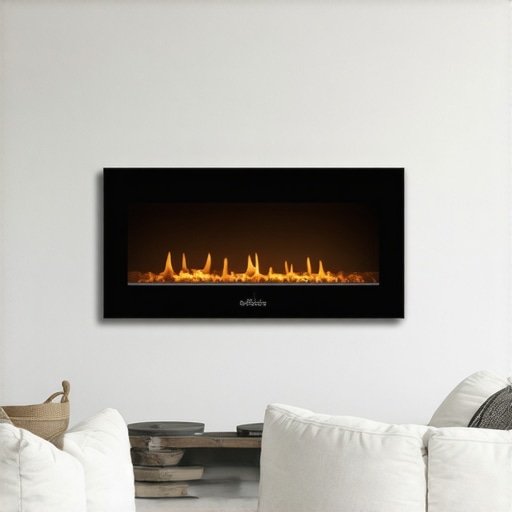
He was right. Most guys look at a wall furnace and see a metal box. I see a thermodynamic exchange where every millimeter of clearance and every cubic foot of air determines whether the homeowner survives the night without a CO alarm going off. In the North, where the polar vortex turns your window panes into sheets of ice, a wall furnace isn’t just an appliance; it is a lifeline. But the ‘Sales Techs’ out there? They want to sell you a 5-ton central system for a 900-square-foot cottage. That is not engineering; that is a heist. Compact heating requires a forensic understanding of the home’s anatomy.
The Forensic Diagnosis: Anatomy of a Wall Unit
When a wall furnace fails, it doesn’t just stop. It signals. You hear the rhythmic tink-tink-tink of a heat exchanger struggling to expand against restricted airflow, or the frantic clicking of a gas valve that isn’t getting the millivolts it needs. Professional installation starts with control board diagnostics. If your unit has a modern brain, it’s telling a story through LED flashes. But if we are talking old-school gravity units, we are looking at the thermocouple and the pilot light relighting process as a diagnostic tool, not just a maintenance task. If that flame is dancing or lifting, you’ve got a draft issue that a ‘Tin Knocker’ could fix in ten minutes but a salesman will use to justify a $10,000 replacement.
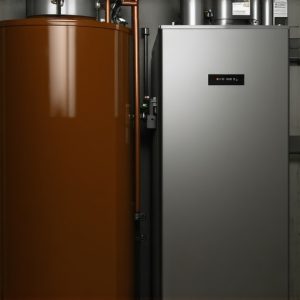
Thermodynamically, these units work on convection. The cold air at the floor is sucked in, passes over the heat exchanger—where the gas is combusting inside a sealed chamber—and the air is heated through sensible heat transfer. We aren’t adding ‘heat’; we are exciting molecules. If that heat exchanger is cracked, those combustion gases, including the silent killer carbon monoxide, enter the living space. This is why chimney liner installation is non-negotiable. An unlined chimney in a cold climate allows the flue gases to cool too quickly, causing acidic condensation that eats your masonry from the inside out. You don’t just shove a unit in a wall and walk away. You have to ensure the ‘stack effect’ is working in your favor.
The Airflow Manifesto and the MERV Myth
One of the biggest mistakes I see ‘Sparky’ or a DIYer make is slapping a high-restriction filter on a unit not designed for it. Everyone wants MERV filter upgrades because they saw a commercial about allergies. But listen to me: if you put a MERV 13 filter on a compact wall furnace designed for a fiberglass throwaway, you are essentially putting a plastic bag over the lungs of your heater. The static pressure rises, the heat exchanger overheats, and the limit switch trips. Now you’re calling me at 2 AM because your house is 50 degrees.
“Improper airflow is the primary cause of premature heat exchanger failure in residential heating systems.” – ACCA Manual D
I tell people all the time, furnace repair myths often start with the idea that ‘more is better.’ More filtration is only better if your blower can handle the ‘Pookie’ and the static load.
The 2025 Regulatory Cliff: R-454B and Your Future
We are currently standing on the edge of the R-454B refrigerant transition services era. While wall furnaces are primarily gas, many of my clients in church heating systems or large residential complexes use hybrid systems. The industry is moving away from R-410A because the EPA decided its Global Warming Potential was too high. The new ‘juice’—R-454B—is an A2L refrigerant, meaning it’s ‘mildly flammable.’ If your tech doesn’t know how to handle refrigerant leak detection on these new systems, or doesn’t understand that you need spark-proof tools, you’re living with a ticking clock. This is why rebate application assistance is so critical right now. The government is pushing these new standards, and there is money on the table for homeowners who upgrade to high-efficiency, compliant systems, including those doing steam boiler repair or pool heater repair as part of a total home energy overhaul.
When to Pull the Plug: Repair vs. Replace
I followed a guy last week who told a retiree she needed a whole new furnace because her ‘control board was fried.’ I looked at it, saw a loose common wire, tightened it, and the unit fired right up. That’s the difference between a tech and a salesman. However, if I see a rusted-out burner tray or a heat exchanger that looks like Swiss cheese, I’m pulling the plug. For urgent furnace repair, safety is the only metric that matters. If you’re looking at a $800 repair on a 20-year-old wall unit, you’re throwing good money after bad. A new, professionally installed unit with control board diagnostics and a proper chimney liner installation will pay for itself in three seasons through lower therm usage and the fact that you won’t be waking up to a freezing house.
For those managing complex environments like church heating systems, the stakes are even higher. You aren’t just heating a room; you’re managing massive volumes of air with zero insulation. Professional wall furnace installation in these ‘compact’ zones of a large building allows for localized control, preventing the need to fire up a massive steam boiler just to heat a small office or choir room. It’s about surgical heating, not carpet bombing the building with BTUs. If you need a pro who knows the difference between a suction line and a liquid line, and who won’t lie to you about your ‘gas’ levels, reach out to someone who actually understands the physics of the trade at our contact page. We don’t do ‘seamless’—we do hard work that lasts.