The Airflow Manifesto: Why Your Furnace Location is a Life-or-Death Decision
My old mentor, a man who had more soot in his lungs than a Victorian chimney sweep, used to scream at me every time I pulled a tape measure: ‘You can’t heat what you can’t touch!’ This wasn’t just old-man rambling; it was a fundamental law of physics that most modern ‘sales techs’ have forgotten. They want to sell you a high-efficiency unit and slap it wherever the gas line currently pokes through the floor, but if you don’t respect the convection cycle, you’re just burning money to keep the drywall warm. In my 30 years of crawling through crawlspaces and sweating in utility closets, I’ve seen that the best spots for a wall furnace installation in small apartments aren’t always the most convenient for the installer.
“The most expensive equipment in the world cannot overcome a bad duct system—or in the case of a wall furnace, a bad placement strategy.” – Industry Axiom
The Forensic Diagnosis: Why the Living Room Corner is a Thermal Trap
Most apartments suffer from what I call ‘Stagnant Air Syndrome.’ You have a 600-square-foot box, and the landlord wants the furnace tucked away in a corner so it doesn’t ‘ruin the aesthetic.’ Bad move. A wall furnace relies on natural convection—hot air rising, cool air falling. If you tuck that unit in a corner or behind a couch, you’re creating a short-circuit. The thermostat, usually mounted right on the unit or nearby, will satisfy almost instantly because the hot air is trapped in that pocket. Meanwhile, the bedroom feels like a meat locker. We need to look at the apartment like a circulatory system. The furnace is the heart, and if you put the heart in the pinky toe, the brain is going to starve. This is where proper HVAC planning becomes critical. Before we even touch a drill, we perform a Manual J calculation. I don’t care if it’s a studio; you need to know the heat loss of those windows and that thin-as-paper exterior wall to know if a 25k BTU unit is enough or if you’re just whistling in the dark.
The Technical Guts: Gas Lines, Relays, and the ‘Tin Knocker’s’ Nightmare
When we talk about gas line installation for furnaces, we aren’t just talking about hooking up a flex line and calling it a day. In small apartments, you’re often dealing with shared lines. I’ve seen units starve for ‘juice’ (gas) because the plumber didn’t size the manifold correctly for the water heater and the furnace running simultaneously. You need a dedicated shut-off and a drip leg to catch the sediment before it gums up the gas valve. Then there’s the electrical side. A lot of these older wall units use a simple millivolt system, but the newer, safer ones require a 24-volt transformer and a contactor repair or relay services when the ‘Sparky’ (electrician) messes up the wiring. If your furnace is clicking but not firing, 9 times out of 10, your relay is shot or your contactor is pitted and sticking. Don’t let a sales guy tell you that you need a whole new system just because a $30 part died. That’s a scam. You can learn more about furnace repair myths to save yourself from these predatory tactics.
The Thermodynamic Reality of the North/Cold Climate
In a cold climate zone like the Northeast or Chicago, the enemy is the cracked heat exchanger. Wall furnaces are notorious for this because they go through massive thermal expansion cycles. You hear that tink-tink-tink sound? That’s the metal groaning. Eventually, it snaps. This brings us to carbon monoxide detector installation. In a small apartment, a CO leak is a death sentence in minutes, not hours. If the furnace isn’t vented perfectly through the roof or wall with a B-vent that is properly sealed with ‘Pookie’ (mastic), you’re breathing in the byproduct of combustion. I always install a CO detector five feet away from the unit and one in the sleeping area. No exceptions. It’s also why occupancy sensor installation and energy recovery ventilators (ERVs) are becoming the new standard. In tight, modern apartments, you aren’t getting any fresh air. An ERV swaps out the stale, CO2-laden air for fresh outdoor air without losing your sensible heat. It’s the only way to breathe in a ‘sealed’ environment.
“Standard 62.1 requires a specific ventilation rate to ensure acceptable indoor air quality, which is often neglected in small-scale furnace retrofits.” – ASHRAE Standards
The R-454B Transition and the Future of Apartment Heat
You might think refrigerants don’t matter for a gas furnace, but you’d be wrong. We are currently in the middle of the R-454B refrigerant transition services era. This means new leak sensors and safety protocols are being integrated into all HVAC equipment, including hybrid heating systems. If you’re opting for a heat pump/wall furnace combo, you’re going to see A2L (mildly flammable) refrigerant sensors that can shut down the whole system if a leak is detected. This isn’t something a DIYer should touch. It requires specialized training to handle the ‘gas’ and the new electronics. If you’re noticing your system is acting up, knowing when furnace repair is urgent is vital to prevent a minor sensor issue from becoming a catastrophic failure. Whether it’s a steam boiler repair in an old brownstone or a modern wall furnace, the physics of safety never changes.
Conclusion: Precision Placement is the Only Path to Comfort
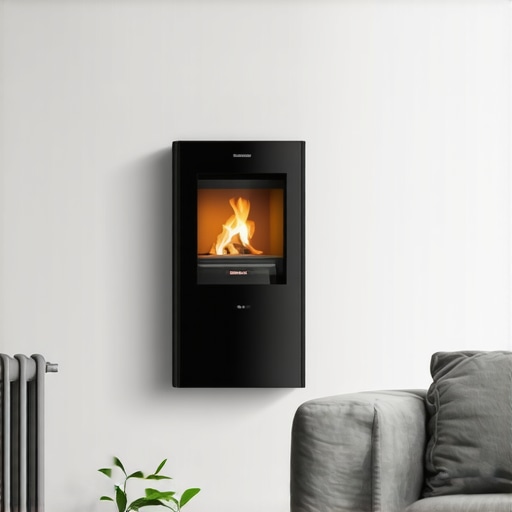
Stop letting ‘Tin Knockers’ and sales techs dictate your comfort. The best spot for your wall furnace is a central, interior wall, away from drafts, with at least 12 inches of clearance from any ‘combustibles’ (that means your curtains and your IKEA bookshelf). It needs a clear path to circulate air through the entire ‘envelope’ of the apartment. Anything less is just a fire hazard that leaves you shivering. Remember, comfort is a matter of physics, and physics doesn’t care about your floor plan. If you’re seeing signs of wear, like a yellow flame instead of a crisp blue one, or if you’re hearing a screech from the blower, look into strategies to extend your system’s life before the first frost hits. Stay warm, stay safe, and for the love of all that is holy, keep your filters clean.